


Latest by
-
 South Korea to Build AI Training Center in Tanzania with $170 Million Support The Ministry of Economy and Finance will establish an advanced technology training center in Tanzania to cultivate professionals in artificial intelligence (AI) and digital fields. The project will receive a $170 million loan from the Economic Development Cooperation Fund (EDCF), supporting the entry of domestic AI and edtech companies into the African market.On August 23, the ministry held the 159th EDCF operation committee meeting and approved the construction project for the AI and digital technology training center in Tanzania, along with amendments to the EDCF operational management regulations.The initiative aims to train personnel in Tanzania's AI and digital industries by establishing a training center that will offer four departments: AI, robotics, data analysis, and the Internet of Things (IoT). The government plans to provide a $170 million EDCF loan for this purpose.The training center will feature high-performance AI training facilities equipped with AI computing devices, high-bandwidth memory (HBM), and high-speed networking. The center will also actively utilize domestic AI technologies and educational models in its operations and training programs.This project will be implemented through a 'tied' loan method, which restricts procurement of goods and services necessary for the project to South Korean companies. The government expects this approach will expand opportunities for domestic companies in AI, edtech, and construction sectors to enter the African market.The Tanzanian government plans to use this training center as a model for establishing additional educational institutions and constructing large-scale data centers, which is likely to create further opportunities for domestic companies.The EDCF's review and management system will also be strengthened. In the future, large projects exceeding $100 million will require approval from the fund operation committee, which includes relevant ministries, and the involvement of private experts will be expanded during project implementation.The government has also established a basis for directly proposing projects to developing countries by gathering opinions from relevant ministries. It will clarify the criteria and approval process for feasibility studies and conduct annual assessments of the appropriateness of the EDCF interest rate system, taking necessary actions as needed.A ministry official stated, "This project for the construction of the AI and digital technology training center in Tanzania will accelerate the discovery of K-AI package projects. We will continue to enhance the transparency and fairness of the EDCF by expanding the participation of private experts and relevant ministries."* This article has been translated by AI. 2026-08-23 12:04:10
 -
Paid Infertility Treatment Leave Extended to Four Days with Increased Salary Cap Starting November 27, the paid portion of infertility treatment leave will increase from 2 days to 4 days. Additionally, the maximum salary cap for workers at priority support companies will rise from 168,000 won to 337,000 won.The Ministry of Employment and Labor announced these changes on August 23, along with the release of a guide titled 'Utilization Guide for Infertility Treatment Leave for Employers and HR Personnel.'Infertility treatment leave is a legal leave that allows workers to take up to 6 days annually for treatments such as artificial insemination or in vitro fertilization. With the extension of the paid leave to 4 days starting November 27, the government subsidy for workers at priority support companies will also increase from 2 days to 4 days.The scope of eligible leave has also expanded. Since August of last year, workers can use this leave not only for medical procedures and recovery periods immediately following treatments but also for necessary preparations before treatments, such as infertility testing and ovulation induction.A new penalty regulation will take effect on November 27, prohibiting employers from treating workers unfavorably for taking infertility treatment leave. Previously, employers were already restricted from disclosing a worker's use of this leave against their will.To alleviate concerns about revealing infertility treatment during the leave application process, some companies have improved the naming and approval procedures for the leave. The Ministry has included examples of companies that minimize personal information exposure in the guide for reference by other businesses.Lotte Shopping's department store division has renamed the leave to 'Family Planning Leave' to prevent the disclosure of treatment details during the application process. EcoPro has implemented a separate approval system where only the HR team can access leave requests, bypassing department heads. Incheon International Airport Security has categorized infertility treatment leave under 'personal leave' to reduce exposure of the leave reason to department heads or colleagues.The documentation required for applying for leave has also been simplified. Since May of this year, workers can submit the 'Notification of Support Decision for Infertile Couples' issued by the Ministry of Health and Welfare instead of a medical institution's diagnosis.The importance of infertility support is growing. According to the Ministry of Health and Welfare, 48,981 children were born last year through government and local government support for infertility treatment costs, accounting for 19.2% of all births. This means that approximately 1 in 5 newborns was born with the help of infertility support.Cho Jung-sook, Director of Employment Support Policy at the Ministry of Labor, stated, "As the age of pregnancy and childbirth rises, the need for government support for infertility treatment leave is increasing. We will create an environment where workers can use this system without feeling self-conscious at work."* This article has been translated by AI. 2026-08-23 12:04:00
-
Energy Self-Sufficient Villages to Utilize Food Waste and Livestock Manure 음식물류 폐기물과 가축분뇨로 만든 바이오가스와 폐열을 난방·농업에 활용하고 발전 수익을 주민과 나누는 에너지 자립마을 조성이 추진된다. 정부는 올해 후보지 5곳 이상을 선정해 마을당 최대 5억원의 설계비를 지원할 계획이다.기후에너지환경부는 24일 서울 용산구 서울역 스페이스쉐어에서 기초 지방정부를 대상으로 '바이오매스 기반 에너지 자립마을 조성사업' 설명회를 개최한다고 23일 밝혔다.바이오매스 기반 에너지 자립마을은 지역에서 발생한 음식물류 폐기물과 가축분뇨 등 유기성 폐자원을 활용해 에너지를 생산하고 지역에서 소비하는 지산지소형 사업이다. 바이오가스와 폐열은 마을 난방이나 시설하우스 작물 재배 등에 공급하고, 발전으로 발생한 수익은 주민과 공유한다.폐기물 처리 과정에서 발생하는 에너지를 지역에서 다시 이용해 마을의 외부 에너지 의존도를 낮추는 동시에 주민 소득과 지역경제 활성화로 연결하겠다는 구상이다.기후부는 지난 20일부터 지방정부를 대상으로 사업 공모를 진행하고 있다. 다음 달 11일까지 신청서를 접수한 뒤 내·외부 전문가로 구성된 평가위원회의 심사를 거쳐 최종 사업 후보지 5곳 이상을 선정할 예정이다.선정된 마을에는 기본구상과 설계 비용으로 올해 최대 5억원의 국고보조금이 지원된다. 국고보조율은 50%다. 정부는 설계 이후 사업이 실제 시설 조성으로 이어질 수 있도록 향후 에너지 생산·이용 설비 구축 비용도 지원할 방침이다.한국환경공단 바이오가스센터는 공모 신청서 작성에 어려움을 겪는 지방정부를 대상으로 현장 실사와 개별 상담을 제공한다. 기후부는 선정된 마을의 사업계획을 토대로 바이오매스 기반 에너지 자립마을의 표준모델도 연내 마련할 계획이다.김고응 기후부 자원순환국장은 "바이오매스 기반 에너지 자립마을은 폐자원을 에너지로 이용하는 순환고리의 핵심 매개체 역할을 하면서 지역사회에 활력을 가져다줄 것"이라며 "사업의 원활한 추진을 위해 재정적·정책적 지원을 아끼지 않겠다"고 밝혔다.* This article has been translated by AI. 2026-08-23 12:04:00
-
South Korean Prime Minister Emphasizes Urgent Need for Real Estate Stability and Tax Reform South Korean Prime Minister Han Seung-soo emphasized the urgent need for stabilizing the real estate market and rationalizing the tax system during a high-level government meeting on August 23. He stated that careful planning is essential for real estate tax and housing supply policies.During the meeting held at the Prime Minister's residence in Jongno, Seoul, Han noted, "Tax reform and real estate issues are of significant public interest, and even minor changes in the system can have a substantial impact on people's lives."He added, "We need to examine various aspects closely and consider how to swiftly implement the 2026 tax reform plan and housing supply measures in the metropolitan area, as well as address livelihood legislation."Han stressed the importance of collaboration between the government and the ruling party, stating, "We must review and enhance key points together to improve the lives of our citizens, rather than pushing policies unilaterally. It is crucial to reflect the opinions of the party and the Blue House to develop practical solutions."Regarding the upcoming regular National Assembly session, he mentioned, "The special committee on budget and settlement will kick off, followed by major parliamentary schedules, including government audits. I intend to use this as an opportunity to explain the content and intent of government policies to the public."Han also called for close cooperation between the government and the ruling party during the National Assembly schedule, stating, "If the party can address the areas of public concern, it will greatly aid in effectively communicating the achievements of government policies."He referenced the recent declaration of special disaster areas in parts of Geoje and Tongyeong, which were affected by heavy rainfall. Han assured that the government would make every effort to ensure that affected residents can quickly return to their daily lives, stating, "The economy should improve the lives of the people, and safety is essential for protecting their daily routines."* This article has been translated by AI. 2026-08-23 11:52:00
-
Government Urged to Provide Clear Housing Supply Plans for Greater Seoul Area 강훈식 대통령 비서실장은 23일 수도권 주택 공급과 관련해 “언제, 어디서, 얼마만큼 공급되는지 명확한 일정을 제시해야 한다”고 강조했다. 강 실장은 이날 서울 종로구 총리공관에서 열린 고위당정협의회 모두발언에서 “주택 공급은 무엇보다 시장에 주는 신호가 중요하다”며 “주거 불안은 막연한 약속이 아니라 구체적인 계획으로 해소할 수 있다”고 밝혔다. 특히 강 실장은 수도권 주택 공급에서 가장 어려운 과제로 용지 확보를 꼽았다. 그는 “수도권 공급 확대의 핵심은 용지 확보”라며 “지역 사정에 밝은 여당 지역위원장과 지방자치단체장들이 단기간에 확보할 수 있는 주택 용지를 제시한다면 청와대가 적극적으로 검토하겠다”고 약속했다. 정부가 공급 물량을 일방적으로 정하는 방식에서 벗어나 지역 현장에 밝은 여당과 지방정부의 제안을 반영해 가용 용지를 추가로 발굴하겠다는 의미로 풀이된다. 또한 강 실장은 내년도 세제개편안에 대해서는 국민 의견을 반영해 정책의 완성도를 높이겠다는 방침을 밝혔다. 강 실장은 정부가 지난 3일 잠재성장률 반등 지원과 민생경제·지방 지원 확대, 공정과세를 위한 조세개혁에 중점을 둔 세제개편안을 발표했다고 설명했다. 이어 “세제개편안은 결정된 정책을 일방적으로 발표한 것이 아니라 국민의 의견을 듣기 위한 출발점”이라며 “이재명 정부는 어느 정부보다 국민의 목소리에 귀를 기울이고 합리적인 의견을 정책에 반영하는 데 주저하지 않고 있다”고 강조했다. 강 실장은 입법예고 기간에 접수된 국민 의견과 당·정부·청와대가 각각 청취한 현장의 목소리를 충분히 검토해야 한다고 주문했다. 그러면서 “현장의 목소리를 다시 세심하게 살펴 정책의 완성도와 국민 수용성을 한층 높여야 한다”고 역설했다. 정기국회를 앞두고 민생·경제 법안의 신속한 처리도 요청했다. 강 실장은 “정책이 국민의 삶 속에서 구현되는 마지막 단계는 입법”이라며 “법과 제도로 완성되지 않으면 국민이 정책의 효과를 체감하기 어렵다”고 지적했다. 이어 “정부는 시급한 민생·경제 법안의 우선순위를 분명히 하고 국회에 법안의 필요성을 설명할 것”이라며 “여야의 폭넓은 공감대를 이끌어 국민에게 필요한 법안이 처리되기를 바란다”고 밝혔다. 강 실장은 “당·정·청이 원팀이 돼 긴밀히 소통하고 국민이 체감하는 성과로 답해야 한다”며 “국민께 드린 약속을 하나하나 성과와 결과로 만들어 대체 불가 대한민국으로 나가겠다”고 말했다.* This article has been translated by AI. 2026-08-23 11:44:10
-
AI Revolutionizes Agriculture in South Korea "The transition to artificial intelligence is an innovation that goes beyond simple technology adoption, enhancing the reliability and quality of public services provided by the Korea Rural Community Corporation (KRC)." Kim In-jung, president of KRC, is accelerating the integration of AI in agriculture. The focus is on using AI to predict droughts and water shortages, manage agricultural water efficiently, and ensure safety in rural areas. At first glance, agriculture and AI may seem unrelated. However, with the aging rural population, labor shortages, and the climate crisis, agriculture has emerged as one of the sectors most in need of AI. Before AI can directly engage in farming, a competition has begun to create an "AI-friendly farming environment." Data is the new competitive edge in agriculture. One of the most critical resources in agriculture is water. It is essential to accurately assess when it will rain, how much water is left in reservoirs, and which areas require more water. The challenge lies in climate change. With extreme droughts and heavy rainfall becoming more frequent, managing agricultural water based solely on past experiences and statistics is increasingly difficult. This is where AI comes into play. By analyzing vast amounts of data, including weather information, reservoir levels, crop conditions, and water demand, AI can identify the likelihood of droughts and water shortages earlier. It can also provide more precise assessments of when and where water is needed. A key feature of KRC's AI transition is that AI will be integrated directly into rural areas. Satellites monitor farmland, and AI predicts water shortages. KRC is also participating in the European Union's research and innovation program, Horizon Europe, this year. Through the PROTEUS project, which involves 19 institutions across nine countries, KRC aims to combine satellite data with on-site measurements. The goal is to develop a model that can detect drought and crop stress early and suggest optimal agricultural water supply solutions. Satellites observe the condition of farmland. Sensors collect data from the field. AI analyzes the potential for drought and water shortages. Based on these results, agricultural water is supplied to the necessary areas. In the past, responses were made after droughts occurred; in the future, AI will predict droughts, allowing proactive measures in agriculture. AI also detects algal blooms before they occur. AI is being utilized for water quality management in agricultural reservoirs. KRC employs an AI water quality prediction system that uses historical water quality data and weather information to predict reservoirs at high risk for algal blooms and respond proactively. Previously, the approach was to check the site and respond after algal blooms occurred. With AI, the process changes. Data is collected, and AI analyzes risks, allowing for early identification of reservoirs that are likely to have problems. The true value of AI lies not in quickly generating reports after issues arise but in detecting risks before they become problems. Kim In-jung's bold move: KRC-AX Kim is expanding this transformation beyond individual projects to a comprehensive AI transition across the organization. KRC launched the KRC-AI Strategy Committee at the end of 2025 and established the KRC-AX initiative. Kim serves as the committee's chair. Key objectives include building an AX foundation, achieving zero major accidents through AI, innovating operations via AI, and engaging the public with AI. Ethical standards for AI have also been established to prepare for potential risks associated with expanded AI use. This is not merely about introducing a few AI programs in the information department; it signifies a fundamental shift in how agriculture and rural management will be conducted, centered around AI. AI colleagues will also emerge alongside employees. AI is making its way into KRC's offices as well. The organization is implementing a KRC generative AI system that provides employees with relevant information by searching internal documents and data in response to their inquiries. KRC handles many specialized tasks related to farmland, agricultural water, rural development, and production infrastructure. The vast amount of accumulated project data, regulations, and field experience over decades is significant. By connecting this knowledge with AI, the experiences held by individual employees can be shared across the entire organization. Kim described this as "a turning point that fundamentally innovates the way the organization operates and its decision-making structure." Employees will transition from merely searching for documents to making decisions alongside AI. AI will also be the first to identify risks in rural areas. KRC manages not only farmland but also numerous facilities such as reservoirs, waterways, and drainage systems across the country. Thus, safety management is a crucial area for AI application. One of the main strategies of KRC-AX is achieving zero major accidents through AI. The use of smart safety equipment, such as AI CCTV, will help identify risks on-site more quickly. In the future, if AI analyzes data collected by sensors and CCTV in real-time, the chances of detecting risky behaviors or anomalies in facilities that humans might overlook will increase. This represents a shift from post-incident investigations to a proactive safety management approach where AI identifies potential accidents before they occur. Next comes "Agricultural Physical AI." What is noteworthy is the next phase. Currently, AI primarily plays a role in data analysis and supporting human judgment. However, when AI connects with agricultural machinery, robots, reservoirs, waterways, and automated agricultural facilities, the narrative changes. Weather AI predicts rainfall. Agricultural water AI calculates the amount of water needed for each crop. Sensors monitor the status of reservoirs and waterways. Automated facilities deliver water where needed. Robots and autonomous agricultural machinery operate based on crop conditions. This is the vision of "Agricultural Physical AI." KRC's strength lies here. While it is not a big tech company developing AI models, it possesses vast physical environments such as farmland, reservoirs, waterways, and drainage systems where AI can operate effectively. This could become a massive testbed where AI and the real world intersect. Could South Korea's "AI agriculture" become an export industry? The potential extends beyond domestic borders. Agriculture worldwide faces similar challenges as South Korea. Climate change is exacerbating water shortages, and rural populations are declining. Productivity must increase while using less water and energy. If South Korea can integrate its expertise in agricultural water management, smart farming, agricultural machinery, and AI prediction technologies, a new export model could emerge. Rather than exporting a single smart farm, the goal would be to export a "K-AI agricultural package" that combines agricultural water management, smart farming, agricultural machinery, and AI. This approach could create new markets for South Korean agricultural AI, especially in countries in Asia, the Middle East, and Africa that are simultaneously facing water shortages and labor shortages in rural areas. The era of AI in agriculture is upon us. The national transition to AI is not limited to semiconductors, data centers, and manufacturing. Agriculture, directly linked to food production, is also at the forefront of the AI transition. KRC's AI strategy has two main branches. One is to transform the working methods of employees and the organization through generative AI. The other is to bring AI into agricultural water management, drought, water quality, disaster, and safety management in real rural settings. When these two trends converge, the face of agriculture will change. Agriculture will shift from being experience-dependent to data-driven, from reactive to proactive in disaster response, and from human-only management to a collaborative approach between AI and humans. The core of this transformation is not AI replacing human labor in farming but rather enabling humans to farm more safely and efficiently with less water and labor. This is why KRC, which has managed South Korea's agricultural water and farmland, is gaining renewed attention in the AI era. : Kim In-jung, President of KRC: Kim is a seasoned agricultural policy expert, having served as the director of the Rural Policy Bureau and the Food Policy Bureau at the Ministry of Agriculture, Food and Rural Affairs, as well as deputy minister. He was appointed as the 12th president of KRC in May 2025. He leads the KRC-AI Strategy Committee, establishing KRC-AX and ethical standards for AI, and is driving the integration of AI into agricultural water management, disaster response, safety management, and overall internal operations at KRC.* This article has been translated by AI. 2026-08-23 11:44:00
-
Kim Min-seok: Long-Term Holding Tax Exemption Should Not Negatively Impact Rental Market Kim Min-seok, the leader of the Democratic Party, emphasized on August 23 that the government should ensure that any reforms to the long-term holding tax exemption (long-term holding special deduction) do not adversely affect the rental market. He made these remarks during a high-level party-government meeting, his first since taking office as party leader.At the 10th high-level party-government meeting held at the Prime Minister's residence in Samcheong-dong, Seoul, Kim acknowledged the government's proposal to abolish the long-term holding tax exemption as having a positive aspect in promoting a real residence-centered housing market. However, he cautioned that any changes should be carefully monitored to avoid negative repercussions on the rental market.Kim also called for the government to recognize a variety of reasons for non-resident homeowners to ensure they are not adversely affected. He stated that there needs to be in-depth discussions regarding the government's plans to adjust the comprehensive real estate tax exemption amounts and raise the tax burden cap to 200%.He highlighted that the proposed reforms to real estate taxation and housing supply in the metropolitan area are of significant public interest, and he pledged to engage in vigorous discussions with the government to establish policies that benefit the public.Furthermore, Kim stressed the necessity for aggressive expansion of housing supply in the metropolitan area to ensure residential stability for citizens, promising that the party would actively support these efforts.He stated, "We must mobilize all available means and methods to secure land and expand real estate supply," adding that the party will focus on legislative activities to expedite approval processes and eliminate various regulations to enhance the speed of real estate supply.* This article has been translated by AI. 2026-08-23 11:36:00
-
South Korean Prime Minister Expresses Regret Over Police Investigation Failures South Korean Prime Minister Han Seung-soo expressed strong regret on August 23 over the controversy surrounding the police's handling of recent missing person investigations in Jeju. He directed a thorough investigation into the matter and called for measures to prevent future occurrences.In an emergency directive issued that morning, Han instructed the National Police Agency to conduct a comprehensive investigation into the entire process of the missing person case.He further ordered a meticulous review to ensure there were no instances of the police prematurely closing cases or mishandling reports of missing persons, and requested a prompt report on fundamental prevention measures.Han also emphasized the need to mobilize all available police resources to search for missing individuals and to respond strictly to prank calls or fake news that exacerbate the distress of the families of the missing.The controversy arose following criticisms of the police's initial response and search efforts related to a missing person case in Jeju, highlighting the need for improvements in the police's missing person investigation system.Mi-ran Jang, who went missing after leaving her home in Hallim-eup on the night of May 12, has been unaccounted for for over three months.* This article has been translated by AI. 2026-08-23 11:32:10
-
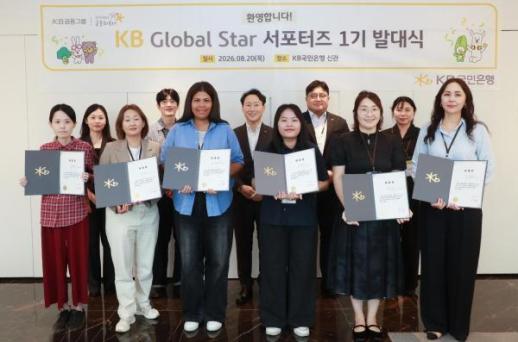 KB Bank taps foreign residents to reshape services for growing customer base SEOUL, August 23 (AJP) - KB Kookmin Bank is bringing foreign residents into its product feedback process as the Korean lender expands financial services targeting the country's growing international population. The bank said Saturday it launched the first group of "KB Global Star Supporters," a 12-member customer panel made up of foreign residents in their 20s to 40s. The panel will test KB's banking services, including foreign exchange products, and provide feedback on inconveniences, accessibility and potential improvements through surveys and other assignments. KB said it plans to use the feedback in developing and refining products and services for foreign customers. The initiative comes as the lender expands its push into the segment. KB this year consolidated products and services targeting foreign customers under its "Global Star" brand and introduced savings and credit loan products designed for them. The first panel was launched at KB Kookmin Bank's headquarters in Yeouido, Seoul, on Thursday. "As the number of foreign customers residing in Korea continues to grow rapidly, we hope to gather a broad range of views through the program," a KB Kookmin Bank official said. "We will continue expanding services so that customers can access financial services more conveniently." 2026-08-23 11:31:39
 -
 Blizzard rules out Korea-only balance patches for Overwatch BUSAN, August 23 (AJP) - Blizzard Entertainment will keep balancing Overwatch as a single global game rather than tailoring patches to Korea even under its new Nexon partnership, its game director said, even as Korean players keep pulling the shooter's meta in their own direction. "We typically don't try to balance the game differently per region," Aaron Keller said at a press conference at BEXCO, on the second and final day of Overwatch Day, the fan festival staged by Nexon. Regional data, platform data and community sentiment all feed the process, Keller said, with the team meeting multiple times a week to weigh them. "One of the regions that we always specifically do a deeper dive on is Korea, because there are differences in the way Koreans play," he said. "Some of the heroes are more popular in Korea than they are in the rest of the world, and some of the heroes even have different win rates in Korea than they do in the rest of the world." Korean habits have redrawn the global game before, most famously with GOATS, the Korean-born composition that dominated for about a year and prodded Blizzard into introducing role queue. Keller put the gap down to temperament. "In Korea specifically, there's a very competitive mindset for playing Overwatch, and a lot of players take getting better and practicing at the game very seriously," he said. Players elsewhere, he said, do not chase the metas and trends "in the same way that some of the Korean players do." Nexon took over Overwatch's Korean PC service on Aug. 12, the first time a domestic publisher has run the community, a day after D.Mon joined the roster as its 53rd hero. Walter Kong, Blizzard's senior vice president and head of development for live games and mobile, said the groundwork was laid as far back as 2022, as Overwatch settled into its live-service era. "Korea really was an opportunity we were very excited about, given the way that Korean players had supported Overwatch very strongly and passionately," Kong said, describing a wide-open strategy review that eventually narrowed to partnership. Nexon scored high against Blizzard's checklist, he said, citing live-service operating experience, genre expertise and familiarity with the market and its players. The switch has not been frictionless, with players who link their Battle.net accounts to Nexon finding it harder to queue with friends overseas, a trade-off raised repeatedly at the session. "When we started this, we looked very closely and thought a lot about how that change would affect people," Kong said, adding that match quality had held up and that Blizzard would continue to monitor it. Ben Bell, executive producer and senior vice president for Overwatch, cast the deal as a bid for proximity. "The whole goal of this partnership is to get closer to our fans," he said. Nexon's reach among Korean PC players, Bell said, gives Blizzard "an opportunity to listen more closely and understand what is gonna make the game better for players here in this region." Keller promised a busy back half of the year: two more heroes, another map, further chapters of Overwatch's first annual narrative, and a Halloween event in season 5. Kong called the Busan visit "a bit like a homecoming," recalling the Overwatch Festival held in the city before the game launched in 2016. Korean players, he said, "have become really part of the building of Overwatch's history along with us." Bell, on his first visit to Busan, said meeting fans at a signing session had been the highlight, calling it "real special" to hear personal stories about why people play. "When they opened the doors to this event yesterday, the fans just came streaming in, and they didn't stop coming," Keller said. "There's a reason why the two professional gamers in the Overwatch universe, D.Va and D.Mon, are from Korea," he said, calling the country the imagined epicenter of competitive gaming culture. 2026-08-23 11:26:55