


Latest by
-
 Seogyo-rim Claims First Major Title at KLPGA Championship Seogyo-rim triumphed over her rival Kim Min-sol in a dramatic playoff at the BC Card-Hankyung 48th KLPGA Championship held at the Pocheon Hills Country Club in Gyeonggi Province on August 23. Seogyo-rim shot a final round of 2-over par 74, with two birdies and four bogeys, finishing with a total score of 8-under par 280.After tying with Kim Min-sol, Seogyo-rim secured the victory by making a birdie on the first playoff hole, the par-5 18th, earning a prize of 270 million won.This win brings Seogyo-rim's total earnings to 1.286 billion won, placing her narrowly ahead of Kim Min-sol, who has 1.286 billion won. Seogyo-rim also leads in the number of wins this season with four, as well as in points (490) and average score.Last year, Seogyo-rim won the Rookie of the Year award without any victories. This year, she has claimed consecutive titles at the Celltrion Queens Masters and the Inca Financial The Heaven Masters in June, and she added another win at the Mediheal-Korea Daily Championship last week. With this latest victory, she has achieved her first major title and is the first player to win four times in a season since Lim Jin-hee in 2023.After her win, Seogyo-rim expressed her satisfaction, saying, "I am really proud to have won two consecutive weeks during the season and to achieve my goal of winning my first major title in the second half of the year. I was worried and nervous because things weren't going well today, but I feel good about how it ended." Entering the final round, Seogyo-rim held a three-shot lead over Kim Min-sol. However, she made consecutive bogeys on the 3rd (par-5) and 5th (par-4) holes, and her second shot on the 7th hole (par-4) landed in a penalty area, resulting in another lost stroke. This allowed Kim Min-sol to catch up, and they ended the regular round tied.Reflecting on her early struggles, Seogyo-rim said, "I was very nervous. My heart was racing, and my hands were shaking. I didn't even know what I was thinking while playing. Overall, my shots weren't good. But I trusted my game and kept playing, even though it was frustrating and difficult." She credited her caddy for helping her stay calm, saying, "Every time I felt anxious, my caddy would say, 'It's okay, there are still many holes left,' which helped me relax." The turning point came on the 16th hole (par-3), where Seogyo-rim made her first birdie of the day while Kim Min-sol made a bogey, allowing them to tie again. Both players made birdies on the 18th hole (par-5), finishing the regular round tied.In the playoff, Seogyo-rim's tee shot went into the rough, but she managed to place her third shot just 60 centimeters from the hole for a decisive birdie, while Kim Min-sol could only make par, settling for second place.Seogyo-rim described her feelings during the playoff, saying, "Entering the playoff, I felt a mix of nerves and excitement. It was my first playoff in the first division, so I couldn't help but be nervous. But I thought, 'Let's experience this,' and I played confidently, which led to a good result." After her victory was confirmed, Seogyo-rim shed tears, stating, "The pressure was intense. As that tension melted away, I felt relieved that it ended in victory, and I think I cried without realizing it." Seogyo-rim and Kim Min-sol, both born in 2006, have been fierce competitors, each winning three times before this tournament. Their rivalry has captivated fans, who have dubbed their contests "Solrim Battle" or "Rimsol Battle." When asked if the name should change to "Rimsol Battle" after her win, Seogyo-rim laughed and said, "Since I won four times first, maybe it should." She added, "I've been friends with Min-sol for a long time, so I think this competition is actually good for both of us. I feel like we are improving our skills through this rivalry. I believe our competition will continue until the end of the season." Finally, Seogyo-rim stated her goals for the season, saying, "I want to finish first in points for sure. Winning more titles is also a goal, so I want to achieve that." 2026-08-23 18:12:00
 -
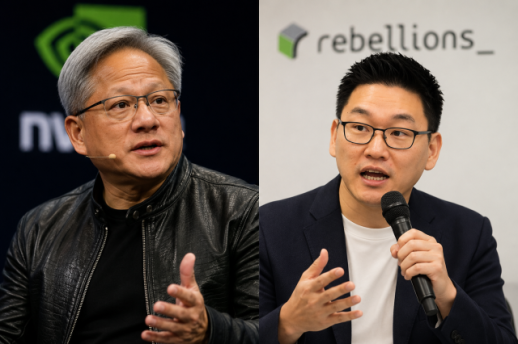 Nvidia meets Korea's would-be challenger Rebellions as AI chip lines blur SEOUL, August 23 (AJP) - Nvidia CEO Jensen Huang has recently met with the head of South Korean AI chip startup Rebellions, bringing the world's dominant AI chipmaker face to face with a company built partly around offering an alternative to Nvidia-powered inference. A Rebellions official confirmed to AJP on Sunday that Huang and Rebellions co-founder and CEO Sunghyun Park had recently met. "The two recently met," the official said, adding that the company was still checking details of the discussions. The confirmation follows a Bloomberg report that the two executives met at Nvidia's headquarters in Santa Clara, California, to discuss a potential tie-up. The discussions are at an early stage and could range from a technology partnership and investment to a possible acquisition, Bloomberg reported, citing people familiar with the matter. There is no certainty that the talks will result in a transaction. The meeting is particularly notable given Rebellions' positioning in the rapidly expanding AI inference market. Founded in 2020, the South Korean fabless startup develops neural processing units, or NPUs, designed primarily to run AI models after they have been trained, a market gaining importance as generative AI shifts from model training toward large-scale deployment. Park has previously acknowledged Nvidia's entrenched position in AI training while setting an ambition for Rebellions to become a leading player in the "non-Nvidia" ecosystem. A potential partnership would therefore mark an unusual convergence between the industry's dominant incumbent and one of the Korean startups seeking to build an alternative AI computing architecture. Rebellions has grown rapidly since merging with Sapeon Korea, formerly SK Telecom's AI semiconductor unit, and has attracted backing from major Korean technology companies including SK hynix and SK Telecom. The company raised 640 billion won ($460 million) in a pre-IPO financing round in March at a valuation of 3.4 trillion won. The financing included 250 billion won from the state-backed National Growth Fund and 50 billion won from Korea Development Bank. The government backing could add another layer of complexity should discussions with Nvidia eventually move beyond technical cooperation or investment toward an acquisition. Rebellions was selected as the first direct investment recipient of the National Growth Fund, part of Seoul's broader effort to foster a globally competitive domestic AI semiconductor industry. The company is preparing for a Kospi listing, currently targeted for the first half of next year. The Nvidia talks also come as global technology companies increasingly look toward South Korea's emerging AI chipmakers. Meta previously explored an acquisition of Korean NPU developer FuriosaAI before talks ended without a deal, underscoring growing interest in inference-chip startups as Big Tech companies seek alternatives and complements to conventional GPU infrastructure. For Nvidia, the Rebellions meeting comes amid a broader expansion of its ties with South Korea's technology industry. Huang has held talks in recent months with leaders of Samsung Electronics, SK Group, Hyundai Motor Group, Naver and LG Group, with Nvidia expanding partnerships spanning semiconductors, AI infrastructure, robotics and mobility. Whether the latest meeting leads to cooperation, investment or something more remains unclear. For now, however, it puts one of Korea's most prominent would-be Nvidia alternatives into direct talks with the company it was built to challenge. AJP Takeaways: Rebellions confirmed that CEO Sunghyun Park recently met Nvidia CEO Jensen Huang, while details of their discussions are still being checked. Bloomberg reported that early discussions could range from technology cooperation and investment to a potential acquisition, though no transaction is assured. Any deeper deal would be notable because Rebellions has positioned itself as a player in the "non-Nvidia" AI inference ecosystem and has received substantial backing from the Korean government. 2026-08-23 18:10:30
 -
350 Furniture Companies from 15 Countries to Gather for KOFURN 2026 The Korea Furniture Industry Cooperative Federation announced on August 23 that the '2026 Korea International Furniture and Interior Industry Fair (KOFURN)' will be held from the 27th to the 30th at KINTEX Hall 2 in Ilsan, Gyeonggi Province.KOFURN is an international furniture exhibition showcasing the latest trends in furniture and interior design. This year's event, marking its 37th edition, will feature 350 furniture companies from 15 countries.The exhibition will cover a wide range of items across the furniture industry, including home living furniture, office furniture, home decor, interior design, raw materials, and woodworking machinery. A B2B consultation session will also be held to facilitate business opportunities between domestic and international buyers and participating companies.Major domestic participants include Emons, Tempur, Amos Ains, and Dreaming Joseph, who will offer discounts and unveil new products.New national pavilions will be operated by Vietnam, India, and Indonesia, alongside China. The Indian pavilion will showcase products developed by a startup that utilizes agricultural byproducts to create interior boards without added formaldehyde.The exhibition will also feature the Korea International Woodworking Machinery Exhibition, which presents various furniture-related products at reasonable prices, as well as a furniture living design competition and an exhibition of works from industry-academic cooperative organizations.A representative from the Korea Furniture Industry Cooperative Federation stated, "KOFURN will serve as a platform for expanding sales channels for furniture companies and fostering domestic and international business exchanges. We expect that the participation of foreign companies with new materials and manufacturing technologies will further enhance our global network."* This article has been translated by AI. 2026-08-23 18:08:00
-
Banks Exceed Household Loan Limits, Shift Focus to Group Loans Banks that have exceeded household loan limits are now turning their attention to group loans. While they are reducing the limits on mortgage loans, competition is intensifying for balance loans based on apartment collateral.According to the financial sector on the 23rd, Hana Bank has suspended the acceptance of new mortgage and jeonse loans through loan solicitors for the November execution period.Other banks are also continuing to reduce household loans. KB Kookmin Bank lowered the limit for mortgage loans for home purchases to 300 million won across all regions on July 10. Shinhan Bank reduced the limit for new credit loans to a maximum of 100 million won based on annual income and lowered the limit for overdraft accounts to 50 million won on August 5.The banks are unable to ease their grip on household loan management as they have already surpassed their annual management targets. As of August 20, the five major banks (KB Kookmin, Shinhan, Hana, Woori, and NH Nonghyup) reported a household loan balance of 651.151 trillion won, an increase of over 6.1 trillion won compared to the end of last year. This figure exceeds the existing annual increase target of 4.3363 trillion won.Despite regulations on credit loans, related indicators have decreased for the first time in four months. The balance of credit loans at the five major banks was 109.7462 trillion won as of August 20, a decrease of 7.1 billion won from the end of the previous month.In contrast, group loan operations are showing an active stance. Financial authorities have decided to manage group loans, including moving expenses, interim payments, and balance loans, separately from the total amount targets for each financial institution.As banks competitively shift their focus to group loans, the related balance has increased by over 700 billion won in a month. The balance of group loans at the five major banks was 148.9823 trillion won as of August 20, an increase of 739.8 billion won from the end of July. This marks an increase of nearly 90 billion won compared to the growth in July. For instance, the five major banks have raised the balance loan limit for the large apartment complex 'The D.H. Bangbae' in Seocho-gu, Seoul, from 100 billion won to between 200 billion and 400 billion won.As financial authorities are expected to allocate total amounts for youth and low-credit loans and group loans soon, competition among banks for additional lending capacity is likely to intensify.In particular, there is a possibility of fierce interest rate competition centered on group loans. KB Kookmin, Shinhan, Woori, and NH Nonghyup banks are offering rates around 4.68% by lowering their added interest rates. Hana Bank is applying a rate of 4.766% based on financial bonds, which can be reduced to as low as 4.566% for families with multiple children.Regarding loans for youth and low-credit borrowers, banks are expected to focus on selecting borrowers with low delinquency risks. However, while financial authorities have instructed banks to actively supply group loans, they have also indicated that monitoring will be strengthened, suggesting that excessive competition may be limited. A financial sector official stated, 'Balance loans are secure as they are collateralized, which can be highly profitable for banks,' adding, 'They will likely compete aggressively for loans related to remaining apartments this year.'* This article has been translated by AI. 2026-08-23 18:04:10
-
Quick Commerce Competition Expands Beyond Food Delivery to Household Essentials As growth in the food delivery market slows and competition over free delivery makes profitability increasingly difficult, delivery platforms are expanding their business into quick commerce, which includes grocery shopping and household essentials. Moving away from a focus solely on food delivery, these companies are targeting the everyday consumer market with rapid delivery times of around 30 minutes. Faced with growth limits, the delivery industry is positioning quick commerce as a new breakthrough and growth driver, intensifying competition for market dominance.According to industry sources, Coupang Eats has been operating its quick commerce service, Coupang Now, in Jeju since late May. A representative from Coupang Eats stated, "We are temporarily piloting the Coupang Now service in select areas based on the existing Eats Mart model."Eats Mart is a direct purchase-based service that delivers groceries and household items such as meat, fruits, vegetables, and ramen immediately. It began pilot operations in Songpa District, Seoul, in 2021 and expanded to areas including Seocho, Gangnam, and Gangdong, but ceased all operations in August of last year. Instead, various stores have been added to the grocery shopping service within Coupang Eats, expanding the range of products available for quick commerce.Industry analysts cite the growth of the quick commerce market and the expansion of competitors as reasons for Coupang Eats' reentry into this sector. With the food delivery market's growth slowing, the strategy is to secure new consumer demand and broaden business areas through quick commerce, which has relatively higher growth potential.According to the National Data Agency's 'Online Shopping Trends,' the transaction value of online food services in 2025 is projected to reach 41.5889 trillion won, an 11.8% increase from the previous year. However, growth has further slowed this year. From January to June, the total transaction value for online food services was 21.7648 trillion won, only an 8.4% increase compared to 20.768 trillion won during the same period last year. The food delivery market, which saw rapid growth during the COVID-19 pandemic, has entered a maturity phase, resulting in single-digit growth rates.In contrast, the quick commerce market is expected to experience rapid growth. According to global market research firm Mordor Intelligence, the South Korean quick commerce market is projected to grow from $3.16 billion (approximately 4.3 trillion won) in 2025 to $4.51 billion (approximately 6.3 trillion won) by 2031.The increase in single-person households and dual-income families has led to a rise in demand for small, immediate purchases, and consumer expectations for fast delivery have expanded into the food and household goods sectors, driving demand for instant delivery.The growth potential is also evident in the performance of major players. Baedal Minjok's quick commerce service, Baemin B Mart, which operates on a direct purchase model, saw sales surge from 421.7 billion won in 2021 to 781.1 billion won last year, an increase of 85.2% in four years. In the first quarter of this year, the number of orders and transaction value increased by 37% and 36%, respectively, compared to the same period last year. The cumulative number of ordering customers has expanded to 8 million.Experts predict that quick commerce will evolve from a mere supplementary service to a core business for delivery platforms. Professor Kim Dae-jong of Sejong University’s Business Administration Department stated, "Quick commerce is an important new growth driver that can break through the growth limits of the food delivery market. The key will be to expand sales in the short term while securing profitability through logistics efficiency and economies of scale in the medium to long term." 2026-08-23 18:04:10
-
Owners of Major Korean Petrochemical Firms See Pay Cuts Amid Industry Slump Owners of major domestic petrochemical companies in South Korea have seen their compensation decrease in the first half of this year compared to last year, as the prolonged slump in the petrochemical sector has prompted restructuring and cost-cutting measures.According to an analysis of semi-annual reports released on August 23, Shin Dong-bin, chairman of Lotte Group, received 1.087 billion won from Lotte Chemical in the first half of this year, down 138 million won, or 11.3%, from 1.225 billion won during the same period last year.Notably, the decline in Shin's compensation from Lotte Chemical stands out when compared to his overall earnings from the group. In the first half of this year, he earned a total of 11.227 billion won from six subsidiaries, including Lotte Holdings, Lotte Shopping, and Hotel Lotte, which is an increase of approximately 13.6% from 9.881 billion won in the same period last year. While his total compensation from the group increased, his earnings from Lotte Chemical decreased.At Hanwha Solutions, the compensation for the owner family also saw significant reductions. Kim Seung-yeon, chairman of Hanwha Group, received 1.68 billion won in the first half of this year, a decrease of 841 million won, or about 33.4%, from 2.521 billion won last year.Kim Dong-kwan, vice chairman of Hanwha Group, also received approximately 1.175 billion won during the same period, which includes a salary of 1.162 billion won and other income of 13 million won. This represents a decrease of about 23.8% from 1.542 billion won in the first half of last year.In Kim's case, the decline in compensation from Hanwha Solutions is particularly notable compared to other subsidiaries. He received 2.52 billion won from Hanwha Corporation, Hanwha Aerospace, and Hanwha Systems, maintaining the same level as last year. However, his earnings from Hanwha Solutions dropped from 2.52 billion won to 1.68 billion won, a decrease of 840 million won.Despite the reduction in owner compensation, major petrochemical companies have shown signs of recovery in their performance this year compared to last year. Lotte Chemical reported consolidated sales of 5.6864 trillion won and an operating profit of 110.1 billion won in the second quarter, reversing from an operating loss of 250.5 billion won in the same quarter last year.Hanwha Solutions also recorded sales of 4.5826 trillion won and an operating profit of 306.5 billion won in the second quarter. Key business segments, including renewable energy, chemicals, and advanced materials, have reported profits for two consecutive quarters, improving overall profitability.However, industry experts suggest that the improvement in performance this year is largely due to lagging effects from the Middle East conflict and inventory valuation gains, indicating that it may be more appropriate to view this as a temporary effect rather than a fundamental improvement.Consequently, the compensation reductions in the first half of this year are interpreted as a reflection of the ongoing industry downturn and the compensation policies of each group, rather than the current performance improvements.An industry insider stated, "Compensation for key executives is determined within the limits set by the board of directors, taking into account factors such as position, leadership, expertise, and contributions to the company. While some companies have seen improvements in performance recently, external uncertainties and global supply-demand imbalances have likely impacted the overall business conditions in the industry."* This article has been translated by AI. 2026-08-23 18:04:00
-
Quick Commerce Competition Heats Up in Delivery Industry The focus of competition in the delivery industry is shifting from '30-minute delivery speed' to who can secure logistics and store networks more densely and at lower costs. Baemin and Coupang Eats are entering the quick commerce infrastructure race with contrasting approaches: Baemin relies on logistics centers, while Coupang Eats connects with local stores.According to industry sources on August 23, Woowa Brothers' Baemin is building its infrastructure around its own logistics network. Baemin B Mart delivers fresh food, processed goods, and daily necessities within 30 minutes to an hour from over 80 urban logistics centers (PPC) across the country. In the first half of this year, Baemin expanded its reach to less densely populated regional cities by establishing new PPCs in Gwangju's Seo-gu and Gwangsan-gu, Mokpo in Jeollanam-do, Gyeongsan in Gyeongbuk, and Yangju in Gyeonggi Province.Additionally, Baemin is partnering with large retailers like Homeplus and convenience stores to enhance the speed of its logistics network while also increasing product variety through existing distribution channels. According to Woowa Brothers, the number of orders for B Mart in the first quarter of this year rose 37% compared to the same period last year. The cumulative number of ordering customers has reached 8 million, and customers shopping through B Mart three times a month or more increased by 54% year-on-year.Coupang Eats, operated by Coupang, shifted its strategy after ending its direct purchase service 'Eats Mart' last August due to the burdens of rent and inventory management. It has since introduced a 'shopping' service that allows local shops, convenience stores, and corporate supermarkets (SSM) to join its app, utilizing existing stores as delivery hubs to reduce initial investment costs.However, Coupang Eats has recently turned its attention back to the direct purchase model. In May, it applied for the trademark 'Coupang Now' and began pilot services in select areas. This model involves purchasing products directly, storing them in urban logistics centers (MFC), and having riders deliver them.The push by delivery platforms into quick commerce is also driven by a strategy to encourage repeat purchases, thereby increasing usage frequency. While food delivery typically involves single-meal transactions, shopping for daily necessities has a shorter repurchase cycle, making it advantageous for boosting platform usage.In a recent report, Samjong KPMG identified the 'lock-in effect' as a reason for the delivery industry's expansion into quick commerce, broadening its scope beyond groceries and essentials to include everyday products and increasing partnerships with retail stores. The lock-in effect refers to the phenomenon where consumers become accustomed to a specific product or service, making it difficult to switch to competitors. Samjong KPMG stated, 'Quick commerce aims to increase users' app engagement time and purchase frequency, thereby strengthening the lock-in effect within its ecosystem.'Amid this backdrop, experts have mixed views on the resumption of direct purchases in the delivery industry. Professor Kim Dae-jong of Sejong University noted, 'The store-based model makes it difficult to standardize services due to varying inventory and product configurations at each location. By incorporating direct purchases, companies can secure high-demand products in advance, enhancing delivery speed and product competitiveness.'Professor Lee Eun-hee of Inha University suggested that Coupang Eats' attempt at direct purchases may also aim to avoid conflicts over commissions with partner stores, stating, 'Direct purchases allow the delivery app to set margins directly, which may help them escape the commission conflict structure.' 2026-08-23 18:04:00
-
People Power Party Criticizes Government's Plan to Transfer Housing Approval Authority The People Power Party criticized the ruling Democratic Party and the government on August 23 for announcing plans to grant local government heads the authority to approve redevelopment and reconstruction projects for housing with fewer than 500 units in Seoul. They stated, "This is effectively transferring the Seoul mayor's approval authority to district heads."Choi Bo-yun, the party's chief spokesperson, issued a statement saying, "Instead of reflecting on their actions, the government has resorted to force, bypassing the Seoul city government and unilaterally announcing housing supply policies."Choi emphasized, "Eliminating the consultation process is not an administrative reform; it is essentially a nullification of the Seoul mayor's powers. This means handing over control to district heads who are mostly aligned with the government. This is not about promoting housing supply but rather about placing loyalists in positions to act according to the government's wishes."She further remarked, "By assigning this responsibility to district heads from the same party who will follow orders, they are merely labeling it 'local autonomy' while ultimately declaring that the government will act as it pleases." She also pointed out that tax policies are no different, noting that the comprehensive real estate tax reform proposal announced on August 3 was already faltering less than 20 days later.Choi stated, "There is nothing wrong with gathering opinions to make changes. The issue is that policies, which were emphasized as 'principled,' are once again wavering. How can the public trust policies that can be overturned with each announcement when planning their lives, selling properties, or paying taxes?"She concluded, "The only thing today’s government meeting demonstrated is the question of who the government is truly serving, as it strips away authority and undermines principles."Earlier, the government and ruling party decided during a high-level meeting at the Prime Minister's residence to push for legislation in the National Assembly that would transfer the authority to designate maintenance zones for housing projects with fewer than 500 units in Seoul to local governments.* This article has been translated by AI. 2026-08-23 18:00:00
-
Veterans Affairs and Starbucks Continue Scholarship Program for Descendants of Independence Activists The Ministry of Veterans Affairs has decided to continue its scholarship program for the descendants of independence activists in collaboration with Starbucks, despite reviewing the program's status following the 'Tank Day' marketing controversy in May.According to Yonhap News on the 23rd, the ministry has confirmed plans to proceed with the scholarship initiative in the second half of this year. Although the recent marketing controversy involving Starbucks caused some delays, the decision to continue was made in light of the benefits the scholarships provide to the descendants of independence activists.As part of this initiative, the ministry and Starbucks will select 50 descendants facing financial difficulties to receive a total of 100 million won in scholarships this year.The Ministry of Veterans Affairs and Starbucks Korea signed a memorandum of understanding (MOU) in 2021 to support the scholarship program, which has provided 100 million won annually to 50 descendants each year.Starbucks has been sponsoring scholarships for descendants of independence activists since 2015. In 2021, it formalized its commitment by signing an MOU with the ministry, continuing to support 50 descendants annually with a total of 100 million won. Over the past 11 years, 483 descendants have benefited from the scholarships, amounting to a cumulative support of 1 billion won.However, the controversy arose in May when Starbucks used phrases like 'Tank Day' and 'Bang on the Desk!' in its marketing, which were criticized for mocking the May 18 Democratic Movement and the torture and death of activist Park Jong-cheol. Following this, the Ministry of Veterans Affairs reviewed whether to suspend the scholarship program with Starbucks.A Starbucks representative stated, "We will work closely with relevant organizations to ensure that the scholarship program for veterans continues and expands."* This article has been translated by AI. 2026-08-23 18:00:00
-
Seoul Accelerates Construction of Shared Housing, Aiming for 40,000 Units by 2031 Seoul is set to accelerate its shared housing and shared town initiatives through a new plan called the 'Rapid Integration Plan for Shared Towns.' The plan aims to expedite construction by improving project management for existing developments and introducing a 'Shared Integration Planning' approach for new projects, allowing for simultaneous planning and establishment of associations to shorten project timelines.On August 23, the city announced that it plans to begin construction on 40,000 shared housing units by 2031 as part of this Rapid Integration Plan.The Shared Integration Planning involves collaboration among the public, experts, and residents from the project's inception, allowing for concurrent management plan development and association establishment. This approach contrasts with traditional sequential procedures, enabling a more efficient project timeline.Seoul will apply the principles of rapid integration, including team planning, concurrent procedures, standard processing times, and project management to the shared housing and shared town initiatives. Notably, the plan incorporates 'subject integration' and 'simultaneous association establishment' involving multiple shared housing residents.The city aims to establish management plans within one year while concurrently forming associations. After the associations are formed, the selected designers and public officials will work together to expedite changes to architectural and management plans, further reducing the time to construction.Through this initiative, Seoul aims to cut the time to construction from approximately six years to about four years and six months, effectively shortening the project duration by one year and six months.Additionally, the city plans to expand the pool of potential sites for Shared Integration Planning, with a goal of selecting a total of 100 new sites by 2030, which will provide a foundation for an additional 120,000 housing units.Selected areas will receive support for management plan development costs, feasibility analysis, and association establishment. Regions that previously prepared proposals for shared towns can also participate in the Shared Integration Planning application using existing consent forms.As large-scale redevelopment projects in downtown Seoul face challenges, shared housing and shared towns are gaining attention as viable alternatives for supplying smaller-scale housing by utilizing aging low-rise residential areas.Myung No-jun, head of the Housing Policy Division at Seoul, stated, 'We will actively support the process from project management to conflict resolution to ensure that planning leads to rapid construction.'* This article has been translated by AI. 2026-08-23 17:40:00