


Latest by
-
 Kakao Splits into Kakao AI and Kakao X, Appoints New Leadership Kakao is splitting into Kakao AI, focused on KakaoTalk and artificial intelligence (AI), and Kakao X, which will handle investments and new business development. Kakao AI aims to integrate AI with KakaoTalk to secure new growth opportunities, while Kakao X will focus on the growth of existing core businesses and new investments. Jeong Sin-a, the current CEO of Kakao, will lead Kakao AI, and Kim Do-young, CEO of Kakao Investment and head of Kakao's Group Investment Strategy Office, will head Kakao X.On August 21, Kakao's board of directors approved the division into the newly established Kakao AI and the continuing Kakao X. The split ratio was determined based on the book value of net assets, with Kakao AI receiving 0.36 and Kakao X receiving 0.64. Existing Kakao shareholders will receive shares in both Kakao AI and Kakao X according to this ratio.Kakao AI Aims for 6 Trillion Won Revenue by 2030Kakao AI plans to grow as an 'AI core company' that connects AI, advertising, and commerce centered around KakaoTalk. The strategy includes creating new user experiences and revenue models using AI within KakaoTalk, particularly in the era of agentic AI. Subsidiaries such as DK Tech and K&Works will also be included under Kakao AI.Kakao has set a goal for Kakao AI to achieve over 20 million daily active users (DAU) by 2030. The plan includes increasing user engagement on KakaoTalk by more than 50% and expanding new revenue models such as AI advertising, agentic commerce, and subscriptions, aiming for an average annual revenue growth of 20% to exceed 6 trillion won by 2030.Kakao X to Focus on Investments with 6 Trillion Won ResourcesKakao X will transform into a 'future value investment company' focused on supporting the growth of major subsidiaries and new investments.It will support the growth of existing core business areas, including Kakao Bank, Kakao Pay, Kakao Pay Securities in the tech-fin sector, Kakao Entertainment, SM Entertainment, and Kakao Piccoma in the content sector, and Kakao Mobility in the mobility sector, while also pursuing new business development and investments in innovative companies.Kakao X plans to utilize approximately 2.3 trillion won secured through asset liquidity and about 4.1 trillion won held by its subsidiaries for investment purposes.Based on the growth of core businesses and new investments, Kakao X aims to achieve an average annual growth rate of 13.3% in major business revenues by 2030, establishing a foundation for over 10 trillion won in revenue. The goal is to create a virtuous cycle of capital where investment results lead to shareholder returns and reinvestment.Kakao plans to hold an extraordinary shareholders' meeting on December 17 to finalize the split by January 1, 2027, followed by the relisting of Kakao AI and the change of listing for Kakao X on January 27, 2027.* This article has been translated by AI. 2026-08-21 10:40:20
 -
Trump Declares 'Golden Age of Space Transportation' with 1,000 Rocket Launches Annually by 2030 Donald Trump, the President of the United States, has declared a "golden age of space transportation" and plans to significantly increase rocket launches through partnerships with private companies. This initiative aims to solidify U.S. space dominance amid competition from countries like China. On August 20, the White House announced that President Trump signed a National Security Presidential Memorandum (NSPM) to revitalize America's leading position in space transportation. The memorandum sets a goal of achieving over 1,000 rocket launches and re-entries annually by 2030, nearly six times the 178 launches recorded last year, according to Reuters. To facilitate this, the President directed relevant government agencies to encourage the joint development of space transportation infrastructure with the private sector and to expedite related permits and reviews. Additionally, he called for exploring commercial options for robotic operations on Mars and human round trips to the planet. The White House stated, "At a time when adversaries threaten U.S. superiority in space, President Trump is securing and defending our key national and economic interests related to space." Michael Kratsios, the White House Chief Technology Officer, commented on the memorandum, saying it aims to position the U.S. as a leader in the next era of space exploration, targeting the sending of Americans to the Moon by 2028 and establishing initial lunar base facilities by 2030, while ensuring rapid and reliable launch capabilities for national security through a commercial-first approach. Previously, President Trump signed an executive order at the end of last year to send astronauts to the Moon by 2028 and establish a lunar base by 2030, with follow-up actions underway. In July, the Federal Aviation Administration (FAA) announced measures to exempt environmental reviews for launch infrastructure. Meanwhile, since taking office last year, President Trump has frequently mentioned Mars exploration missions led by his key supporter, Elon Musk, CEO of SpaceX and Tesla. However, there have been calls in Congress for a focus on NASA's ongoing Artemis lunar exploration program. Currently, SpaceX handles most of the U.S. government's rocket launches, and in May, FAA Administrator Brian Bedford noted that SpaceX aims for an annual launch target of 10,000 within the next five years.* This article has been translated by AI. 2026-08-21 10:40:00
-
Alibaba Aims to Fully Replace Nvidia with New AI Chip Prototype Alibaba, a major Chinese IT company, is set to enter the prototype production phase for its new AI semiconductor in the second half of this year.CEO Wu Yongming announced during an earnings call on August 20 that Pingtouge, a fabless semiconductor design subsidiary, is expected to begin prototype production of its second-generation Chinese AI chip in the latter half of the year, according to a report by China Securities Journal on August 21. Pingtouge plans to hand over the semiconductor design to a foundry for prototype production, with mass production anticipated to follow.Wu did not disclose specific product names or detailed specifications for the next-generation chip. He stated that the chip will have "very strong computational power and inter-chip connection bandwidth," adding that Alibaba believes this chip could completely replace large-scale AI model training currently dominated by Nvidia's high-performance AI accelerators.The 'Zhenwu' series AI chip developed by Pingtouge is already serving over 650 customers as of early August. Additionally, the supernode based on the Zhenwu M890, which was unveiled in May, has recently been commercialized through Alibaba Cloud. The M890 features 144GB of high-bandwidth memory (HBM) and supports an inter-chip connection bandwidth of 800GB/s. Alibaba claims the overall performance of the M890 is three times higher than that of the previous generation Zhenwu 810E.The next-generation chip mentioned by Wu is a successor to the M890. Pingtouge previously announced in its roadmap that it plans to launch the Zhenwu V900 in the third quarter of 2027, aiming for a performance increase of three times compared to the M890. The V900 is expected to feature 216GB of memory and an inter-chip connection bandwidth of 1200GB/s.Wu also highlighted that Pingtouge has already established a combination of self-developed chips encompassing GPUs, CPUs, and network chips. This indicates that Alibaba is not just developing AI chips as standalone products but is also building its own computing ecosystem that includes CPU, AI accelerators, and network chips, with annual generational upgrades.Meanwhile, Alibaba reported a revenue of 268.9 billion yuan for the second quarter of this year, a 9% increase compared to the same period last year. However, net profit fell by 38% year-on-year to 20.7 billion yuan, attributed to investments in AI infrastructure. Capital expenditures for the second quarter rose by 75% year-on-year to 67.6 billion yuan. Earlier, Alibaba announced plans to invest 380 billion yuan (approximately $78 billion) over the next three years.* This article has been translated by AI. 2026-08-21 10:40:00
-
Han Byeong-do Criticizes Jang Dong-hyuk's Remarks on US-South Korea Joint Exercises Han Byeong-do, the floor leader of the Democratic Party, criticized Jang Dong-hyuk of the People Power Party on August 21 for attacking President Lee Jae-myung over the reduction of US-South Korea joint military exercises.Speaking at a Supreme Council meeting in Gangneung, Han stated, "President Donald Trump expressed his intention to reduce the joint exercises to create conditions for dialogue with North Korea, and President Lee fully agrees with Trump's decision, emphasizing that South Korea must take responsibility for its own security."He further questioned, "If you cannot criticize Trump’s decision but only attack President Lee, who is trying to strengthen US-South Korea cooperation towards the same goal, whose politics are you serving?" He also emphasized that the adjustment of the exercises was made after consultations between the defense authorities of both countries, ensuring that essential readiness and training objectives would be maintained.Han added, "The transfer of wartime operational control is not a weakening of the US-South Korea alliance, but a path for South Korea to lead its own defense and strengthen the history of the alliance. To equate diplomatic efforts for peace with a loss of security and to misrepresent the transfer of operational control as a withdrawal of US troops is not just criticism; it is a dangerous falsehood that incites public anxiety."He stressed, "There can be no division in security between parties. There is no room for political strife in front of the public. The People Power Party must immediately stop using national security as a bargaining chip. The Democratic Party will work to ensure peace in the region and along the border based on strong defense and a solid US-South Korea alliance, contributing to the prosperity of peace on the Korean Peninsula and in East Asia."Meanwhile, the US-South Korea joint exercises are set to conclude today, earlier than the originally planned date of August 27.* This article has been translated by AI. 2026-08-21 10:36:00
-
Hyundai Plans to Increase HMGMA Production to 800,000 Units Annually Hyundai Motor is considering increasing the annual production capacity at its MetaPlant America (HMGMA) in Georgia from 500,000 to 800,000 units. This move is seen as a strategy to enhance competitiveness in the North American market and proactively address tariff burdens in the U.S.José Muñoz, CEO of Hyundai Motor, stated in an interview with CNBC on August 20 that the company is exploring plans to expand HMGMA's annual production capacity to between 700,000 and 800,000 units by 2028.If implemented, the share of Hyundai's U.S. sales produced locally would rise from 40% (as of 2024) to over 80% by 2029. An increase in HMGMA's production to 700,000-800,000 units would make it the largest single-plant production facility in the U.S., surpassing Tesla and Toyota.Muñoz emphasized, "The U.S. is the most important market in the world, excluding Korea," explaining that the production capacity expansion is part of a broader plan to invest a total of $26 billion (approximately 36 trillion won) in the U.S. by 2028.This plan is significantly influenced by the tariff policies of President Donald Trump. Muñoz noted, "President Trump's tariffs have helped accelerate our localization plans," adding that fortunately, the company had already begun localization efforts before the tariffs were announced, which has aided in speeding up the process.Currently, HMGMA produces electric vehicles such as the Hyundai Ioniq 5 and Ioniq 9, as well as the Kia Sportage Hybrid. According to market research firm Mobility Global, Hyundai's market share in the U.S. increased from 8.4% in 2020 to 11.2% last year.* This article has been translated by AI. 2026-08-21 10:36:00
-
Tax Deductions Reached 76.1 Trillion Won Last Year, Exceeding Legal Limit The government reported that the total amount of tax deductions for research and development (R&D) expenses and earned income tax credits reached 76.1 trillion won last year. This figure indicates that the national tax reduction rate exceeded the legal limit by 0.4 percentage points.On August 18, the government submitted its first tax expenditure report to the National Assembly, in accordance with the revised Tax Expenditure Limitation Act.According to the Ministry of Finance, the national tax reduction amount increased by 5.6 trillion won compared to the previous year, totaling 76.1 trillion won. This rise is attributed to increases in R&D tax credits, integrated investment tax credits, and integrated employment tax credits.The highest deduction category was special income deductions and special tax credits for insurance premiums, amounting to 7.253 trillion won. This was followed by pension insurance deductions at 4.7581 trillion won, earned income tax credits at 4.6367 trillion won, and income deductions for credit card usage at 4.3243 trillion won.The national tax reduction rate was adjusted down by 0.1 percentage points from the previous estimate of 16.0% to 15.9%. Last year, it exceeded the legal limit of 15.5% by 0.4 percentage points, but the government anticipates compliance with the legal limit this year.The report analyzed 11 major tax expenditure systems in the income tax sector, examining the distribution of tax expenditures by income bracket and tax burden. The analysis revealed that higher-income individuals had a greater share of major tax expenditures and determined tax amounts. Additionally, the proportion of high-income earners was found to be higher in determined tax amounts than in tax expenditures.Insurance premium deductions, pension account deductions, and education expense deductions were predominantly attributed to the top income bracket. In contrast, earned income tax credits and income tax reductions for small and medium-sized enterprise employees were primarily attributed to those in the lower income brackets.* This article has been translated by AI. 2026-08-21 10:32:20
-
Yulchon Law Firm and University of Seoul Sign MOU to Enhance Tax Law Education Yulchon LLC and the University of Seoul's Graduate School of Taxation announced on August 21 that they have signed a memorandum of understanding (MOU) to enhance the training and education of professionals in tax law.The agreement aims to strengthen educational and research capabilities in the field of tax law and to expand practical connections.Under the MOU, the two institutions will actively collaborate on several initiatives, including the joint development and operation of educational programs for tax law professionals, collaborative research to enhance tax law research capabilities, and the joint operation of practical programs such as regular lectures, seminars, and workshops. They will also support educational and research infrastructure.Jeon Young-jun, co-head of Yulchon’s tax group, stated, "Tax law is a field of law that is closely linked to both theory and practice. Through this agreement, we will explore ways to integrate Yulchon’s practical experience into tax law education and research, as well as how to apply the theoretical research outcomes from the Graduate School of Taxation in practice."Jung Ji-sun, head of the Graduate School of Taxation, expressed a similar vision, saying, "We aim to create a leading model of industry-academia cooperation that transcends simple exchanges between the two institutions, integrating education, research, and practice in the field of tax law."The two institutions plan to continuously develop their industry-academia cooperation model through ongoing exchanges and collaboration.Founded in 1997, Yulchon LLC is one of South Korea's leading law firms, providing a wide range of legal services to corporate and individual clients in areas such as corporate law, finance, fair trade, tax, real estate and construction, and litigation.* This article has been translated by AI. 2026-08-21 10:32:00
-
 Newly appointed BOK deputy governor signals focus on stability SEOUL, August 21 (AJP) - Seasoned foreign-exchange expert Kwon Min-soo was appointed senior deputy governor of the Bank of Korea. In his inaugural address on Friday, he highlighted inflation, household leverage, property prices and currency volatility, offering an early glimpse of a policy approach closely aligned with BOK governor Shin Hyun-song but shaped by his three decades of experience in foreign-exchange markets. Kwon said semiconductor strength had lifted growth beyond earlier expectations, while inflation remained above the central bank's target and financial imbalances centered on household debt and housing prices persisted. Exchange-rate volatility and geopolitical and trade risks meant policy decisions would need to remain "cautious and flexible," he said. His remarks stop short of establishing Kwon as a monetary-policy hawk. But the risks he chose to emphasize are largely those that could constrain how quickly the BOK changes course after restarting rate increases last month. The central bank raised its benchmark rate by 25 basis points to 2.75 percent on July 16, its first increase in three-and-a-half years, citing stronger export- and investment-led growth, above-target inflation and persistent financial-stability risks. All seven board members backed the move. Kwon will have a say in what comes next almost immediately. He began a three-year term Friday after being appointed to succeed Ryoo Sangdai, and the senior deputy governor serves ex officio on the BOK's seven-member Monetary Policy Board. His term runs through Aug. 20, 2029. His elevation was not a surprise appointment. Kwon and fellow deputy governor Park Jong-woo had both been cited as leading internal contenders for the post before the decision, while several former BOK executives were also discussed as possible candidates. More revealing than the internal promotion itself may be the expertise the BOK has added to its top leadership. Park built much of his career in monetary policy and financial markets, while Kwon's record is concentrated in foreign exchange, reserve management and international finance. Kwon joined the BOK in 1995 and later worked in foreign-currency operations, the New York office and the Reserve Management Group before heading the International Department's foreign-exchange market team. He subsequently oversaw investment strategy and government-bond portfolios and became head of the Reserve Management Group in 2023. Since becoming a deputy governor in May 2024, he has overseen international finance and cooperation, including responses to heightened FX-market volatility and work with the BIS, World Bank, G20 and EMEAP. That background was visible throughout Friday's address. Kwon pledged to strengthen market analysis and open-market operations, help settle Korea's 24-hour FX trading system and advance won internationalization while ensuring greater market openness does not undermine financial stability. The agenda puts him broadly in step with Shin rather than positioning him as a counterweight to the governor. Kwon explicitly endorsed four priorities set out by Shin when he took office in April: cautious and flexible monetary policy, a stronger financial-stability role, won internationalization and payment-system innovation, and a greater contribution to structural reform. Shin himself made financial stability a central theme of his inaugural agenda, arguing that uncertainty over inflation and growth required flexibility in monetary policy while the central bank broadened its approach to financial risks. He also put won internationalization and payment-system reform among his priorities. The overlap suggests the two officials may differ less over which risks matter than over how they assess them. Shin, an academic economist who spent years at Oxford, Princeton and the Bank for International Settlements, approaches policy through the lens of macro-finance, global liquidity and the links between financial institutions and markets. Kwon brings the experience of a market practitioner who has managed reserves and dealt directly with foreign-currency liquidity and market volatility. That combination could broaden the BOK leadership's perspective when exchange-rate movements complicate interest-rate decisions — with Shin assessing the wider macro-financial transmission and Kwon potentially adding a closer reading of currency supply and demand, liquidity and market functioning. That remains an inference from Kwon's career rather than an established voting record. His appointment also does not necessarily make the board more hawkish. Ryoo, his predecessor, had himself favored a rate increase in May before the board unanimously tightened policy in July. What Kwon did make clear Friday was that stronger growth alone does not remove the constraints facing policymakers: inflation remains above target, household and property risks persist and the exchange rate remains part of the calculation. His first test comes on Aug. 27, less than a week into the job, when he casts his first vote on interest rates. The decision should provide the first concrete indication of how Kwon translates a career spent managing Korea's exposure to global markets into monetary policy. AJP Takeaways: - Kwon's promotion was within expectations: He and Park Jongwoo had already been cited among leading internal candidates, making the appointment less a surprise than a choice between different areas of expertise. - His first message leaned toward risk management: Kwon highlighted above-target inflation, household debt, housing prices and FX volatility while calling for "cautious and flexible" policy. - Kwon looks more complement than counterweight to Shin: The two share a focus on financial stability and won internationalization, but Kwon adds deeper hands-on experience in FX and reserve markets. - Aug. 27 will offer the first real policy signal: Kwon's first rate vote will show whether that market background translates into a distinct weighting of currency and financial-stability risks. 2026-08-21 10:27:34
 -
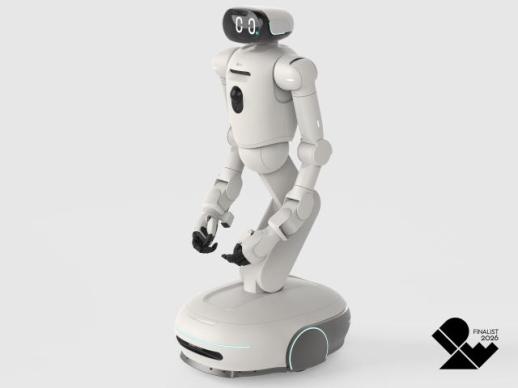 LG sweeps major global design awards across TVs, robots and home appliances SEOUL, August 21 (AJP) - LG Electronics has completed a sweep of the world's three major design awards this year, winning 17 prizes at the 2026 International Design Excellence Awards after earlier collecting honors from Red Dot and iF across products ranging from televisions and robots to heating systems and laptops. LG said Friday it received five bronze awards and 12 finalist honors at IDEA 2026, organized by the Industrial Designers Society of America. The company had previously won a combined 55 awards at this year's Red Dot and iF design competitions. Among the bronze winners were the 9-millimeter-thick LG Signature OLED W television, three Therma V air-to-water heat pump indoor units, the UltraFine evo professional monitor, the Smart Monitor Swing and the PuriCare AeroMini air purifier. Another 12 products were named finalists, including LG's CLOiD home robot, a ceiling-mounted PuriCare system air purifier and the Gram Pro laptop made with a lightweight aerospace-grade material. Several products, including CLOiD, the Signature OLED W, Therma V indoor units, PuriCare system air purifier and Gram Pro, received recognition from all three major design awards this year. LG also received IDEA recognition in packaging design for its xboom audio products and LG Sound Suite home audio system, extending the awards beyond product hardware into branding and packaging. "We see this recognition as a result of designs that balance convenience and aesthetics while fitting naturally into customers' living spaces," said Jung Wook-jun, head of LG Electronics' Design Management Center. "We will continue to deliver differentiated experiences through customer-centered design." AJP Takeaways: LG won 17 awards at IDEA 2026, completing a sweep of the Red Dot, iF and IDEA design competitions this year. Recognition spanned a broad product mix, including TVs, robots, HVAC equipment, monitors, air purifiers and laptops. Several products won across all three major awards, suggesting LG's design push is being applied across multiple business lines rather than concentrated in a single category. 2026-08-21 10:25:13
 -
Government Ends Central Disaster Response for Heavy Rains in Gyeongnam, Activates Recovery Support Headquarters The Ministry of the Interior and Safety has concluded its Central Disaster Response Headquarters (CDRH) operations, which were in place from August 15 to 18, and has transitioned to a recovery support system.As of 9 a.m. on August 21, the ministry announced the end of the CDRH response system and the activation of the Recovery Support Headquarters.Previously, the ministry had activated the first phase of the CDRH at 6 a.m. on August 17 due to heavy rainfall in the Gyeongnam regions of Geoje and Tongyeong, which resulted in flooding and isolation incidents.This move aims to facilitate rapid emergency recovery of damaged facilities in southern areas such as Tongyeong and Geoje, and to support the swift return to normalcy for affected residents.The Recovery Support Headquarters will be led by the Director of the Disaster Recovery Support Bureau and will include a comprehensive recovery support team, a disaster relief team, a psychological support team, a field support team, and an emergency recovery team involving relevant ministries. A Central Joint Damage Assessment Team will also be established based on the extent of the damage.The support headquarters will focus on quickly implementing emergency repairs for private and public facilities and minimizing inconveniences for residents staying in temporary housing.In particular, the ministry plans to actively collaborate with local governments to ensure that disaster relief funds for damages to lives and homes are distributed promptly.Minister Yoon Ho-jung urged, "We must work closely with relevant ministries and local governments to ensure that there are no shortcomings from damage assessment to recovery planning, so that affected residents can return to their daily lives safely and as soon as possible." 2026-08-21 10:24:10