


Latest by
-
 Kim Min-seok Elected as New Leader of the Democratic Party Kim Min-seok, the former Prime Minister, has been elected as the new leader of the Democratic Party of Korea, prompting a renewed interest in predictions made by fortune tellers regarding his political future.On August 17, during the Democratic Party's national convention held at the Daejeon Convention Center, Kim secured 54.08% of the votes, defeating candidate Jeong Cheong-rae, who received 45.92%. Kim's term will last for two years, during which he is expected to align closely with the administration of President Lee Jae-myung.In light of Kim's election, past statements from fortune tellers about his political trajectory are being revisited. On June 9, one fortune teller remarked, "As Prime Minister, he could be seen as the right-hand man to the President. Didn't Lee Jae-myung also become President after serving as the party leader? I believe Kim will follow a similar path." The fortune teller further suggested that the President might support Kim, describing him as a shrewd and capable individual. They speculated that Kim may have been preparing for this leadership role since his time as Prime Minister, indicating a potential increase in his political influence.Another prediction made public on June 12 stated that Kim had "made the right connections" and that someone had promised to support him. The fortune teller suggested that Kim might be thinking, "Isn't it my time now?" and predicted that his fortunes would improve over the next few years, leading to success.This fortune teller previously likened Kim to a "hidden gem," noting that while he may not have a large following, he possesses determination and courage. They interpreted his current position as one closer to commanding authority.However, following Kim's election as party leader, a different fortune teller offered a contrasting outlook. On August 19, they stated, "Even if he is elected, I don't see him lasting long. He may endure this year, but next year he will lack support." They suggested that Kim was better suited for the role of Prime Minister and that his departure from that position was influenced more by external circumstances than by his own will.This fortune teller also commented that Kim is not destined to be an owner or leader, stating, "He can be a second-in-command, but it will be difficult for him to be the top leader," suggesting he is more suited to a strategist role. They added that while this year may be relatively smooth for him, he could face controversies and scandals starting next year.In relation to the internal dynamics of the Democratic Party, separate predictions regarding Jeong Cheong-rae have also resurfaced. One fortune teller indicated that Jeong could be a key figure in undermining the Lee Jae-myung administration and potentially causing internal divisions within the party.While Kim Min-seok has emerged as the party leader, the recent party convention saw several individuals aligned with Jeong Cheong-rae being elected to the Supreme Council, resulting in a leadership that reflects a variety of factions within the party.It is important to note that the predictions made by fortune tellers are not scientifically validated political forecasts and should not be viewed as definitive evidence of future political developments or the fates of specific individuals.Following his election, Kim Min-seok has expressed his commitment to working for the success of the Lee Jae-myung administration, emphasizing cooperation between the party and the government, as well as unity within the party.Meanwhile, President Lee Jae-myung's approval rating has recently continued to decline. According to a survey conducted by the Korea Social Opinion Institute (KSOI) from August 18 to 19, Lee's approval rating for his administration stands at 42.8%, a drop of 5.0 percentage points from the previous survey. Conversely, his disapproval rating has risen to 52.5%, surpassing the approval rating by a margin outside the margin of error.Notably, Lee's approval rating has decreased consecutively from 54.7% in the second week of July to 48.8% in the fourth week of July, 47.8% in the first week of August, and now 42.8% in the third week of August. This latest figure represents the lowest level recorded by KSOI since it began regular surveys in June of last year.* This article has been translated by AI. 2026-08-21 08:28:10
 -
President Lee Meets with SK Group Chairman Choi to Discuss U.S. Investments President Lee Jae-myung reportedly held a private dinner meeting with Choi Tae-won, chairman of SK Group, on August 20.This meeting comes two months after their last private discussion ahead of the announcement of the 'three major mega projects,' including the Honam semiconductor cluster, and about three weeks after they met at the AI summit in San Francisco during President Lee's visit to the U.S.It is believed that the meeting included comprehensive discussions on the government's initiative to establish the Honam semiconductor cluster and other major projects.Amid recent reports suggesting that the U.S. is seeking investments in the semiconductor sector from South Korea, there is interest in whether this topic was addressed during their meeting.However, Kim Jung-kwan, Minister of Trade, Industry and Energy, who returned from the U.S. on the same day, told reporters at the airport, "There was no discussion about semiconductors during my conversations with Secretary Howard Lutnick." Political analysts speculate that President Lee may continue to meet with other business leaders, including Lee Jae-yong of Samsung Electronics and Koo Kwang-mo of LG Group.The Blue House stated in a notice that it is "difficult to confirm details regarding the private meeting between President Lee and Chairman Choi." * This article has been translated by AI. 2026-08-21 08:28:10
-
K-Independent Games Showcase Highlights Promising Titles at BIC 2026 The Ministry of Culture, Sports and Tourism and the Korea Creative Content Agency (KOCCA) announced on August 21 that they showcased domestic indie games and works developed by trainees from the Game Talent Academy at the 'Busan Indie Connect Festival 2026 (BIC 2026)', held from August 14 to 16 at BEXCO Exhibition Center 1 in Busan.Continuing its sponsorship from last year, KOCCA introduced five indie games selected through its game planning support program at the open joint booth '2026 Korea Indie Game Showcase in BIC.' The featured titles included 'The Newspaper of That Day' by Diving Studio, 'Light Odyssey' by Sun Games, 'Belaster' by Odysseyer, 'Net Raiders' by Oblikon, and 'Lone Chef' by Project Morum.Audience engagement increased compared to last year, with 772 feedback surveys collected for game improvements, a 72.7% rise from 447 surveys the previous year. Additionally, business consultations with domestic and international publishers and investors reached 24, up from 16, marking a 50% increase. KOCCA also supported one-on-one consultations for participating companies and opportunities for international expansion through its official business matching platform, 'Meet to Match.'Works from participants in the '2026 Korea Indie Game Dev Camp,' which supports the development of promising indie games, were also showcased, along with creations from trainees poised to lead the future of the gaming industry.Kim Sung-jun, head of KOCCA's Game New Technology Division, stated, 'We will continue to strengthen tailored support throughout the entire cycle, from the initial discovery of innovative indie games to building collaborative ecosystems and facilitating international expansion.'Meanwhile, BIC, which began in 2015, is the largest indie game festival in South Korea, showcasing both domestic and international indie games in one venue.* This article has been translated by AI. 2026-08-21 08:28:00
-
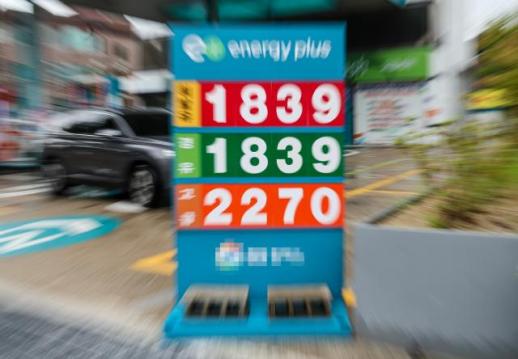 Producer prices fall for 1st time in 11 months SEOUL, August 21 (AJP) - South Korea's producer prices fell for the first time in 11 months in July as lower oil and import costs eased inflationary pressures that had built up earlier this year, while semiconductor prices continued to surge, according to data released by the Bank of Korea on Friday. An index gauging producer prices stood at 129.39, down 0.4 percent from June but up 7.7 percent from a year earlier, marking the first month-on-month decline since August last year. The annual increase also slowed for a second straight month from 8.6 percent in May and a revised 8.5 percent in June. The easing was even more pronounced in prices of goods entering the domestic supply chain, as the relevant index, which includes imported and domestically produced goods and services, fell 1.8 percent from June. Raw-material prices fell 7.7 percent, while intermediate and final goods declined 1.7 percent and 0.2 percent, respectively. Imported raw materials plunged 9.6 percent and imported intermediate goods dropped 6.1 percent. The BOK said customs-cleared import prices reflected a 23.0 percent month-on-month fall in dollar-denominated Dubai crude in June, along with the stronger won and lags between contracts and customs clearance. The decline in global oil prices also fed directly into domestic producer costs. Manufactured-goods prices fell 0.5 percent from June, led by a 5.1 percent decline in coal and petroleum products and a 1.3 percent fall in chemical products. Gasoline prices dropped 11.3 percent on month and diesel fell 9.8 percent, while polyethylene resin declined 10.2 percent and xylene lost 4.9 percent. The broader energy index fell 3.6 percent. Producer prices excluding food and energy, however, slipped just 0.2 percent from June and remained 8.0 percent above their level a year earlier, suggesting that the easing was concentrated in several of the components hit hardest by the earlier energy shock. Services provided another drag on the overall index. Services prices fell 0.4 percent from June as financial and insurance services dropped 7.1 percent following a decline in share prices. Brokerage commission prices plunged 16.8 percent on month. The BOK said prices for brokerage services can move with the value of underlying assets because the fees are calculated from transaction values and commission rates. Brokerage commission prices nevertheless remained 90.8 percent higher than a year earlier. The export side of the economy showed a markedly different picture. The total output price index, which includes exports alongside goods and services shipped domestically, fell 0.2 percent from June but remained 16.6 percent higher than a year earlier. The annual increase eased from 17.5 percent in June after rising 16.8 percent in May. Prices for exports included in the total-output measure were 49.0 percent higher than a year earlier, compared with a 7.7 percent increase for domestic shipments. Manufactured export prices rose 49.1 percent on year, far outpacing the 12.2 percent gain for manufactured goods sold domestically. Semiconductors remained at the center of that divergence. Semiconductor producer prices rose 3.7 percent from June and 144.9 percent from a year earlier. DRAM prices gained 8.4 percent on month and surged 474.4 percent on year, while computer memory device prices were 290.7 percent higher than a year earlier. The split leaves South Korea with an increasingly uneven producer-price picture: lower oil prices and a stronger currency are reducing imported and upstream costs, while the AI-driven semiconductor cycle continues to generate extraordinary price gains in export industries. Weather added another source of volatility. Agricultural, forestry and fishery prices rose 1.5 percent from June, with agricultural products gaining 2.4 percent. Spinach prices more than doubled, rising 115.8 percent on month after extreme heat and poor growing conditions, although they remained 29.3 percent lower than a year earlier. Electricity, gas, water and waste prices moved in the opposite direction, falling 0.6 percent as seasonal easing of South Korea's progressive summer electricity tariff pushed residential electricity prices down 11.8 percent. AJP Takeaways: • South Korea's producer prices fell 0.4 percent in July, their first monthly decline in 11 months. • Falling oil prices and a stronger won pushed domestic supply prices down 1.8 percent as imported raw-material costs plunged. • Chip prices remained an outlier, with semiconductor prices up 144.9 percent and DRAM prices surging 474.4 percent from a year earlier. 2026-08-21 08:26:49
 -
6.7 Magnitude Earthquake Strikes Southern Peru, No Damage Reported A 6.7 magnitude earthquake struck near the southern Andes Mountains in Peru.According to Yonhap News and the U.S. Geological Survey (USGS), the quake occurred around 1 p.m. local time on August 20, approximately 38 kilometers northwest of the city of Upa Uachoc in Ayacucho region. The earthquake's depth was recorded at 66.7 kilometers.The tremor was felt in several areas of southern Peru, including Ica and Arequipa, with weak vibrations reported in the capital, Lima, according to local news agency Andina.Immediately following the earthquake, landslides were observed on the hills surrounding the town of Coracora in Ayacucho, which has a population of about 10,000.Luis Vasquez, head of the Civil Defense Agency, stated in an interview with local radio station RPP, "As of now, no damage has been reported." Peru, which is prone to seismic activity, experienced a major earthquake in Ica in 2007 that resulted in approximately 600 fatalities.Recent earthquakes of magnitude 7.0 or higher in Venezuela and Colombia have raised concerns about seismic risks along the Pacific coast of South America, with some experts warning that accumulated energy along Peru's central coast could lead to a significant earthquake measuring between 8.5 and 8.8 in the future.* This article has been translated by AI. 2026-08-21 08:16:00
-
Bitcoin Surges Past $70,000 Amid U.S. Treasury Buyback and Regulatory Easing Expectations The cryptocurrency market experienced a significant rise as expectations of stability in the U.S. Treasury market coincided with hopes for regulatory easing in the digital asset sector. As of 8 a.m. on August 21, Bitcoin was trading at $72,633, reflecting a 5.03% increase from the previous day, according to global cryptocurrency data site CoinMarketCap. Ethereum also saw a price increase of 2.92%, reaching $2,313. Binance Coin (BNB) and Solana rose by 4.29% and 1.96%, respectively, trading at $654 and $87. Ripple (XRP) surged 14.17% to $1.25. This upward trend is attributed to the U.S. Treasury's decision to expand the scale of long-term Treasury buybacks, which led to a significant drop in long-term interest rates. This development has fostered expectations of improved liquidity conditions in the financial markets. The decline in Treasury yields has positively influenced investor sentiment towards risk assets like Bitcoin. Additionally, favorable policy expectations for digital assets contributed to the market's rise. U.S. President Donald Trump recently urged Congress to pass the 'Clarity Act,' which aims to clarify the regulatory framework for the cryptocurrency market. This has led to optimism that regulatory uncertainty surrounding digital assets in the U.S. may be alleviated. As of 8 a.m. on August 21, Bitcoin was trading at approximately 100,296,000 won ($72,688) on the domestic exchange Bithumb, marking a 1.59% increase from the previous day. The 'Kimchi Premium' stood at -0.989%, indicating that the price of Bitcoin traded domestically is lower than that in international markets.* This article has been translated by AI. 2026-08-21 08:12:10
-
Anthropic's IPO Expected to Exceed SpaceX's Record Size Artificial intelligence startup Anthropic, known for developing the AI model Claude, is reportedly planning an initial public offering (IPO) that could surpass the record set by SpaceX, according to a report by Bloomberg on August 21, citing sources.Sources indicate that Anthropic aims to submit its IPO application as early as the end of this month, driven by overwhelming investor demand capitalizing on the AI boom.As discussions about the IPO size continue, Chief Financial Officer Krishna Kaur has suggested a figure that raises questions about its valuation. If realized, this could exceed SpaceX's record IPO, which raised $75 billion in June (or $86.2 billion including over-allotment options) and achieved a valuation of $1.77 trillion. However, details regarding the size of Anthropic's IPO may change, according to sources.Founded in 2021 by Dario Amodei, a former OpenAI employee, Anthropic has positioned itself as a leading player in the global AI landscape, competing with OpenAI and Google. In May, the company raised $65 billion, valuing it at $965 billion, surpassing OpenAI, which raised $122 billion in March and was valued at $852 billion.Despite reporting a profit in the second quarter of this year, Anthropic faced a net loss of $42 billion over the past year due to financial pressures from expanding AI investments. The company plans to use the IPO to secure sufficient funds for further AI investments. Additionally, it is considering measures to enhance management control, including allowing CEO Amodei, who holds about 2% of the shares, to have multiple voting rights.If Anthropic's listing proceeds as planned, it is expected to go public before OpenAI, which is scheduled for an IPO in 2027. Bloomberg analysts predict that this would mark the largest IPO in U.S. stock market history, following SpaceX's IPO and SK Hynix's American Depositary Receipt (ADR) listing.* This article has been translated by AI. 2026-08-21 08:12:00
-
DB Securities Raises Target Price for KT Nasmedia by 17.8% Amid Digital Advertising Turnaround DB Securities announced on August 21 that it has raised its target price for KT Nasmedia from 14,000 won to 16,500 won, an increase of 17.8%, citing a turnaround in the digital advertising sector and cost efficiency in platform advertising. The firm maintained its 'buy' rating.Shin Eun-jung, a researcher at DB Securities, stated, "The clear performance improvement is a key investment point for KT Nasmedia," adding that the target price was adjusted to reflect upward revisions in earnings estimates for 2026 and 2027.In the second quarter, KT Nasmedia reported revenues of 32.3 billion won, a 22.8% increase compared to the same period last year, while operating profit surged by 199.2% to 7.8 billion won. The previously sluggish digital advertising revenue grew by 21.2%, driven by improved profitability in the platform commerce sector.The growth in digital advertising was attributed to a more than 100% increase in revenue from online video services (OTT) such as Netflix and Tving. Additionally, platform advertising saw growth in revenue and profit due to increased sales based on the Cost Per Sales (CPS) model and improved conversion rates, along with the expansion of digital out-of-home advertising (DOOH).Looking ahead, DB Securities expects the positive performance trend to continue in the second half of the year. The firm forecasts third-quarter revenues of 32.3 billion won and operating profit of 5.9 billion won, representing increases of 3.4% and 57.9%, respectively, compared to the same period last year. Although the operating profit margin is expected to decline from the second quarter due to the off-peak advertising season, it is projected to rise to 8.4 billion won in the fourth quarter, driven by the peak advertising season and increased CPS in commerce.Shin noted, "The recent decision to retire 2 billion won worth of treasury stock marks the beginning of expanded shareholder returns," emphasizing the need to positively assess efforts to enhance shareholder value alongside performance improvements.* This article has been translated by AI. 2026-08-21 08:12:00
-
U.S. Treasury to Announce Toughest Economic Sanctions on Iran U.S. Treasury Secretary Scott Bevin announced that on Monday, August 24, the United States will unveil its "harshest economic sanctions in history" against Iran, urging allied nations to join in the measures. Following this announcement, international oil prices surged by more than 2%, reaching their highest level in about a month.In an interview with CNBC on August 20, Bevin stated, "If we apply maximum economic pressure, it means the likelihood of a large-scale military conflict is low," emphasizing a focus on economic sanctions over military options.This statement follows remarks by President Donald Trump, who hinted at significant economic sanctions against Iran. On the previous day, Trump posted on social media platform Truth Social, warning that any U.S. financial institutions, companies, airports, or government agencies providing any form of lifeline to Iran would face severe economic consequences. He declared, "This will be economic D-Day, and all our allies must work with the U.S. to isolate and defeat the Iranian threat."Bevin further warned countries that do not align with the U.S. stance, stating, "Not joining us is opposing us," and added that if nations continue to engage in remittances, purchase Iranian oil, or conduct maritime transshipments, the U.S. Treasury and government would exert full efforts to impose sanctions on those countries. He emphasized, "Now is the time for our allies and the world to make a decision. We will crush the economy of this murderous regime."Bevin specifically called on China, noting, "China must remember that it imports 50% of its energy from the Gulf region. Therefore, joining our policy would be beneficial for China as well."He described the upcoming sanctions as a "one-two punch" following maritime blockades, asserting, "We will announce the most severe sanctions ever." He also issued a warning, stating, "We will bring down this Iranian regime."Bevin plans to hold a press conference on Monday to provide precise details on the sanctions. Amid rising tensions in the Middle East following his remarks, international oil prices increased by over 2%, marking their highest level since July 24.Brent crude for October delivery rose 2.36% to $93.78, while West Texas Intermediate (WTI) for September climbed 2.33% to $87.83.Meanwhile, Iranian Foreign Minister Abbas Araghchi criticized the U.S. threats, stating, "Repeating failed policies will only lead to further failure and more hatred from the Iranian people." 2026-08-21 07:28:00
-
U.S. Treasury Signals Expansion of Treasury Buyback Program U.S. Treasury Secretary Scott Vessenet indicated that the government's Treasury buyback program could exceed the previously announced $4 billion, aiming to stabilize the bond market. However, U.S. Treasury yields have resumed their upward trend amid ongoing market concerns.In an interview with CNBC on the 20th, Vessenet stated that the Treasury would "create a market" for long-term bonds, which have seen a sharp rise in interest rates, adding, "We will increase the buyback size." He noted that this amount could surpass $4 billion in a single instance.This statement came just a day after the Treasury announced plans to raise the buyback size from a minimum of $2 billion to at least $4 billion, suggesting that it could potentially exceed $4 billion again.Vessenet also mentioned that the buyback size could increase further, but specific figures would depend on market conditions. He explained, "What we want to do is ensure that people focus on fundamentals and do not trade based on news headlines in a thin and quiet market."Recently, U.S. Treasury yields have surged due to a combination of factors, including a rapid increase in government debt and deficits, a surge in corporate bond issuance related to artificial intelligence (AI), and rising yields on government bonds in other countries like Japan. Notably, the U.S. national debt has surpassed $40 trillion for the first time, raising concerns.On the previous day, the yield on 30-year Treasury bonds rose to 5.337%, marking the highest level in 19 years since 2007.Regarding the $40 trillion national debt, Vessenet stated, "There is no magical significance to the number $40 trillion; we can overcome this issue through economic growth." He emphasized that the message he wants to convey to allies and trading partners is that global growth is a way to address this enormous debt problem.Meanwhile, despite the announcement of the Treasury buyback program, which had previously led to a decline in Treasury yields, the yields returned to an upward trend following Vessenet's comments about expanding the buyback size. As a result, the yields on both 10-year and 30-year Treasury bonds rose by 0.05 percentage points, reaching 4.704% and 5.248%, respectively.* This article has been translated by AI. 2026-08-21 07:00:00