

SEOUL, July 31 (AJP) - South Korea and the United States have reached a comprehensive trade agreement that will lower mutual tariffs from 25 percent to 15 percent. The deal follows South Korea's pledge to invest $350 billion in the U.S. and purchase $100 billion worth of American energy products.
The announcement was made on Jul. 30 (local time) by U.S. President Donald Trump. He met with the South Korean trade delegation at the White House before posting the details on his social media platform, Truth Social.
"I am pleased to announce that the United States of America has agreed to a Full and Complete Trade Deal with the Republic of Korea," Trump wrote. "The Deal is that South Korea will give to the United States $350 Billion Dollars for Investments owned and controlled by the United States, and selected by myself, as President."
He added that South Korea had also agreed to buy 100 billion dollars’ worth of liquefied natural gas and other energy products, and to make additional investments "for their investment purposes."
Trump said South Korean President Lee Jae-myung would visit the U.S. within the next two weeks for a bilateral summit, during which both leaders plan to make a joint announcement on the agreement.
As part of the deal, Trump said South Korea had agreed to fully open its market to American products, including cars, trucks, and agricultural goods. "We have agreed to a Tariff for South Korea of 15%. America will not be charged a Tariff." he wrote.
Earlier, Trump had warned that without an agreement, the U.S. would begin imposing 25 percent reciprocal tariffs on South Korean goods starting August 1. Seoul has since been negotiating to protect key export sectors such as automobiles and steel, though no specific product-level changes were mentioned in Trump’s statement.
South Korea’s presidential office confirmed the deal on Thursday, describing it as a major step in stabilizing the country's trade environment.
"The tariff deal removes uncertainty around our export environment," President Lee said in a statement. "Tariffs on our products will now be equal to or lower than those faced by our key export competitors."
Lee also emphasized the significance of the investment agreement, saying, "The 350-billion-dollar fund will help solidify a long-term foundation for cooperation in strategic industries."
Park Sae-jin
Experienced journalist and editor at AJU PRESS specializing in multilingual news. I cover international diplomacy, geolpolitics, and policy, consistently delivering highly accurate, compelling reporting for a worldwide audience.
Copyright ⓒ Aju Press All rights reserved.
Related News
-
 Democrats to Prioritize Revising Trump Tariff Policies in January Congress
Rep. Marilyn Strickland, a Democrat from Washington, announced that the party will prioritize revising the tariff policies of the Trump administration in the new Congress starting in January. The aim is to alleviate the cost of living for Americans while ensuring that allied nations like South Korea are not adversely affected by trade policies.In a video interview with Aju Business Daily, conducted a week after her re-election, Strickland stated, "Now that the Democrats control both the Senate and the House, we will review whether the tariff policies are fair and whether they harm our allies."Strickland, who previously served as the mayor of Tacoma, Washington, defeated Republican candidate Chris Jung in the 10th Congressional District. Following the midterm elections on November 3, the Democrats secured majorities in both chambers of Congress, establishing a foundation to check the remaining two years of President Donald Trump's administration.Strickland argued that revising tariffs could improve domestic living conditions and prevent economic harm to other countries. She pointed out that the tariffs imposed by the Trump administration have increased costs for American consumers and businesses, while also burdening nations that economically cooperate with the U.S."I am very pleased to hear that Hakeem Jeffries, the incoming House Minority Leader, has identified tariff issues as one of the first matters to address in the next Congress," she said.Jeffries, who is vying to become the next House Speaker, outlined in a letter to colleagues on November 4 that he plans to prioritize the repeal of Trump-era tariffs and the restoration of funding for Medicaid, a healthcare program for low-income individuals, during the first 100 days of the new Congress. However, Jeffries must go through the official election process in January to assume the role of Speaker.The review of tariffs is also significant for South Korea. The U.S. and South Korea have lowered trade barriers through a free trade agreement (FTA) that took effect in 2012, but additional tariffs imposed by the Trump administration have altered the trade environment. In a trade and investment agreement last November, South Korea committed to a total investment of $350 billion in the U.S. in exchange for a reduction of tariffs on South Korean automobiles to 15%. The Trump administration has also been accused of misusing tariff policies as leverage against allied nations.However, the Democrats' control of Congress does not guarantee immediate tariff reductions. Changing tariff policies into law requires approval from both the House and Senate, as well as the President's signature. If the President exercises veto power, a two-thirds majority in both chambers is needed to override it. Negotiations with Republicans and the administration's response will ultimately determine the extent of any policy changes, but such dynamics could weaken the impact of tariff policies in the latter half of Trump's term.Strickland identified shipbuilding as a key area for expanding cooperation with South Korea. She emphasized the need to connect South Korea's technological capabilities and investments to enhance production and job creation in the U.S."South Korea is very strong in shipbuilding. During my recent visit to South Korea, I had the opportunity to visit Hyundai Heavy Industries and Samsung, and I want to congratulate South Korea for leading the global shipbuilding industry," Strickland said.Washington state has a robust maritime industry, supported by the ports of Seattle and Tacoma, as well as shipbuilding and repair sectors. The Puget Sound Naval Shipyard in Bremerton is responsible for the maintenance of naval vessels and underpins the region's defense industry.She noted that the scale, workforce, speed, and quality of shipbuilding in South Korean shipyards were impressive. Strickland explained that the challenge for the U.S. is to leverage these capabilities while training its own workforce and attracting investments to increase domestic ship production. She highlighted examples of collaboration in the Philadelphia area, emphasizing that South Korean investments and technology should align with the expansion of U.S. manufacturing and employment.Of the $350 billion investment pledged by South Korea last year, $150 billion is allocated for the shipbuilding sector. The joint explanatory materials from that time included modernization of shipyards, workforce training, maintenance, repair, and supply chain cooperation.Strickland also linked shipbuilding cooperation to security in the Indo-Pacific region. Her district is home to Joint Base Lewis-McChord, a key military facility supporting regional security."I want to emphasize that the U.S.-South Korea alliance remains strong. South Korea is one of our most important allies," she said. "It is crucial that we continue to cooperate not only in deterring North Korea but also in the Indo-Pacific. We want to keep this region free and open."Strickland's interest in South Korea is also personal. Born in Seoul in 1962 to a Korean mother and an African American father who served in the U.S. Army, she is one of the first Korean American women to serve in Congress."I was born in Seoul and raised by my Korean mother. I will always remain a daughter of Korea," she said.Her affection for Korea was evident from the moment she began her congressional career. Strickland attended her swearing-in ceremony on January 3, 2021, wearing a hanbok, marking the first time a U.S. congressperson has taken the oath of office in traditional Korean attire.Choosing to wear a hanbok was also a gesture for her mother, who could not attend the ceremony in person due to the COVID-19 pandemic and watched it on television. Strickland wanted her mother to easily spot her among hundreds of lawmakers.At the same time, the hanbok represented a message of her identity. Amid rising hostility and racist remarks toward Asian Americans, she aimed to show that her background as a Korean American and African American is part of American society."As a Korean American and Black woman, I take pride in my roots and want to show that I am just as American as anyone else," Strickland said.In the recent midterm elections, rising living costs and cuts to healthcare and food assistance were cited as reasons for the Republican Party's defeat. Analysts suggest that the consequences of policies supported by Republican lawmakers returned to affect their constituents."The cost of living crisis is the most important issue for Americans in every state and every district," Strickland said, highlighting healthcare costs, gasoline prices, food prices, and childcare expenses as major burdens.She expressed hope that this defeat would lead to a change in attitude among Republicans and foster bipartisan cooperation. To avoid similar outcomes in the 2028 elections, she emphasized the need to prioritize constituents' interests over loyalty to the President."The Republicans saw what happened in 2026 and will want to avoid that in 2028," she said. "I hope they will break free from Trump's dominance and prioritize the people they represent. That is how they will gain bipartisan support."Strickland asserted that the Democrats must connect their electoral victories to improvements in people's lives. While it is necessary to hold the Trump administration accountable, she stressed that this should not overshadow all the new Congress's agendas."The Democrats need to make strategic judgments," she said. "We promised to improve the quality of life for Americans. We must not let the accountability of the Trump administration turn into a political circus that distracts us from that promise."* This article has been translated by AI.
-
APEC Summit: Tariff Reductions and Oil Price Stability Present Opportunities Amid Semiconductor Regulations and LNG Supply Concerns
Discussions among leaders from the U.S., China, and Russia suggest that tariff reductions and international oil prices may lower uncertainties surrounding the South Korean economy. However, the tangible effects domestically may be limited due to ongoing U.S. semiconductor regulations and China's control over critical minerals. Additionally, the liquefied natural gas (LNG) supply chain, disrupted by the Middle East conflict, is unlikely to normalize quickly through diplomatic agreements alone.Semi-conductor Regulations and Rare Earth Controls Create Supply Chain UncertaintyAccording to foreign media reports on November 15, discussions in the U.S. Congress are expanding regarding legislation aimed at limiting China's access to advanced artificial intelligence (AI) semiconductors. Even if the U.S. and China reach compromises on tariffs, it remains uncertain whether export controls on advanced technologies tied to national security will be eased.Recent allegations involving Jensen Huang, former CEO of NVIDIA, and individuals linked to Chinese intelligence have bolstered calls for stricter regulations. Republican committee chairs in the U.S. House have demanded a private briefing from Huang, while Democratic lawmakers are urging the government to preserve records related to NVIDIA's semiconductor exports to China, increasing political pressure for export controls.Proposed legislation includes the 'AI Oversight Act,' which aims to enhance oversight of AI chip exports, the 'Chip Security Act,' designed to track semiconductor supply routes to prevent illegal exports, and the 'MATCH Act,' which seeks to strengthen controls on semiconductor manufacturing equipment for allies. If the scope of regulations expands to include AI chips from U.S. companies and equipment from allied nations, South Korean firms may face additional burdens.Samsung Electronics and SK Hynix operate major semiconductor production facilities in China. The U.S. government applies an annual approval system for the import of American-made manufacturing equipment necessary for local factories. This means that companies must verify U.S. approval each time they replace equipment or make new investments, potentially reducing predictability in business planning.In fact, SK Hynix recently stated that while existing approvals for its factory in Dalian, China, remain valid, discussions are ongoing regarding next year's equipment import approvals. This indicates that the expansion of production capacity in China is influenced by U.S. regulatory decisions. Even if tariffs are reduced, uncertainties remain for semiconductor companies.China's control over critical minerals also poses a challenge. Although China has extended the exemption from export controls on certain items, including rare earths, until January 10 of next year, it has not lifted these measures entirely. Concerns persist that if U.S.-China relations deteriorate, these controls could be reinstated.Rare earths are essential for electric vehicle motors, wind power equipment, and industrial robots. Disruptions in the procurement of critical minerals could lead to increased costs and production delays across manufacturing sectors, including automotive, parts, and machinery. The interplay between semiconductor export regulations and critical mineral controls is expected to complicate South Korean companies' responses to U.S. technology regulations and China's influence over raw material supply chains.Oil Price Stability Expected, but LNG Supply Issues PersistIn the energy sector, the potential for a diplomatic resolution to the Iran conflict has raised hopes for stability in international oil prices. Recent recoveries in oil exports from the Middle East and concerns about global oversupply have contributed to a decline in international oil prices. On November 13, Brent crude traded at $95.84 per barrel, while West Texas Intermediate (WTI) closed at $88.56, marking a weekly decline of approximately 2.5% for both benchmarks for two consecutive weeks.The International Energy Agency (IEA) recently reported that global oil supply in October reached 101.54 million barrels per day, an increase of 2.3 million barrels from the previous month. The recovery of oil exports from the Middle East suggests that the global oil market may enter a phase of oversupply in the fourth quarter of this year. Observers note that if a diplomatic solution to the Iran conflict is reached during the U.S.-China-Russia summit, it could further stabilize international oil prices.If international oil prices stabilize, South Korea, which heavily relies on oil imports, could reduce energy import costs and inflationary pressures. This would particularly benefit sectors with high energy consumption, such as petrochemicals and transportation, by alleviating cost burdens.However, even if international oil prices decline, LNG prices are unlikely to stabilize immediately due to damage to production facilities and transportation disruptions in the Middle East. The IEA estimates that production losses from the Middle East conflict could accumulate to 150 billion cubic meters of global LNG supply between 2026 and 2030. Notably, damage to Qatar's Ras Laffan, the world's largest LNG production facility, is expected to delay the anticipated expansion of new supplies.Industries that rely heavily on gas as fuel and raw materials, such as petrochemicals, steel, and glass, may find it challenging to escape cost burdens even if supply disruptions ease. Furthermore, heightened competition for LNG in Asia and Europe during the winter months could exacerbate price volatility.* This article has been translated by AI.
-
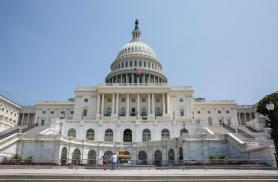 Midterm shock: Korea's markets swing on chip and tariff outlook
A view of the U.S. Capitol in Washington, D.C., on Aug. 12, 2026. AJP Yoo Na-hyun. SEOUL, November 4 (AJP) — South Korean financial markets swung sharply Wednesday as investors scrambled to assess a potential slowdown in datacenter expansion and the fate of President Donald Trump’s America First policies under a Democratic-controlled Congress. The benchmark KOSPI ended 0.6 percent higher at 5,683.8 after swinging between 5,421.72 and 5,828.13. The junior KOSDAQ gained 1.5 percent to close at 714.95. The won weakened by 0.5 won to close at 1,341.5 per dollar, little changed after surrendering earlier gains. The three-year government bond yield fell 3.3 basis points to 3.968 percent. The volatility came as Democrats secured control of both chambers of Congress, ending unified Republican control. Trump acknowledged the election results and said he was prepared to work with Democrats. Divided government could block additional tax cuts or spending measures without necessarily easing the structural pressures on U.S. borrowing costs. The absence of a clear plan to address federal deficits and debt could keep long-term Treasury yields elevated. Any decline in U.S. yields could offer some relief to the Bank of Korea (BOK), although domestic inflation would remain a separate constraint. The central bank held its base rate at 3.00 percent in October, with its next policy meeting scheduled for Nov. 26. For Korean equities, the more immediate concern is the outlook for American AI infrastructure investment. The rapid expansion of data centers has supported strong demand for high-bandwidth memory and server DRAM supplied by Samsung Electronics and SK hynix. Political resistance to the facilities’ electricity and water consumption, however, could slow future construction. Bloomberg Economics chief economist Tom Orlik told a Korea Financial Investment Association webinar Wednesday that state governors could influence the pace of development even if Democratic control of Congress did not produce new federal AI legislation. In Texas, Democrat Gina Hinojosa defeated Republican incumbent Gov. Greg Abbott after calling for a temporary moratorium on new data center development. Georgia’s incoming Democratic governor, Keisha Lance Bottoms, also campaigned for a construction pause, while Ohio communities voted on local measures affecting such projects. Restrictions would not necessarily disrupt chip orders already in the pipeline, but could weigh on expectations for future demand and profitability. Hyosung Kwon, an economist at Bloomberg Economics, said developers could move projects to states with less stringent rules, limiting the impact on overall semiconductor demand. Edited and compiled by AJP. Graphics AI assisted. The stakes extend beyond chip exports to Korea’s strategic investments in the United States. Texas hosts Project Star, a gas-fired power development in Encinal designed to supply electricity to nearby AI data centers. Its estimated total cost is $22.3 billion, with initial commercial operations targeted for 2029. Alaska presents a separate challenge through the proposed LNG development that Washington has promoted as a destination for Korean investment. Seoul has yet to make a final commitment, pending assessments of commercial viability and legal requirements. Both Republican incumbent Sen. Dan Sullivan and Democratic challenger Mary Peltola support the project. For Korea, its financing and implementation terms therefore remain a more immediate concern than the outcome of the race itself. Congressional scrutiny could introduce another complication for Korean companies operating under bilateral investment agreements. “A lot of those deals would be subject to some fairly significant scrutiny from Congress,” Orlik said, referring to substantial U.S. investment commitments made by Korean companies under the Trump administration. Edited and compiled by AJP. Graphics AI assisted. A broad new tariff offensive is considered less likely, although pressure on Korean and Taiwanese chipmakers to expand U.S. production could persist given bipartisan support for bringing manufacturing back to the United States. The longer-term AI outlook remains more balanced than the day’s market swings might suggest. A sharp U.S. equity correction coupled with a prolonged pause in data center spending could severely affect Korean chipmakers. Under Bloomberg Economics’ baseline scenario, however, AI capital investment is expected to continue. For Korean investors, the election adds political uncertainty to an outlook already shaped by AI spending and high U.S. borrowing costs. The next test will be how campaign promises translate into state regulations, congressional scrutiny and actual investment decisions.