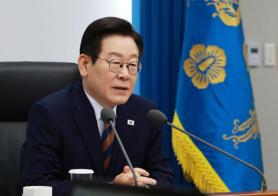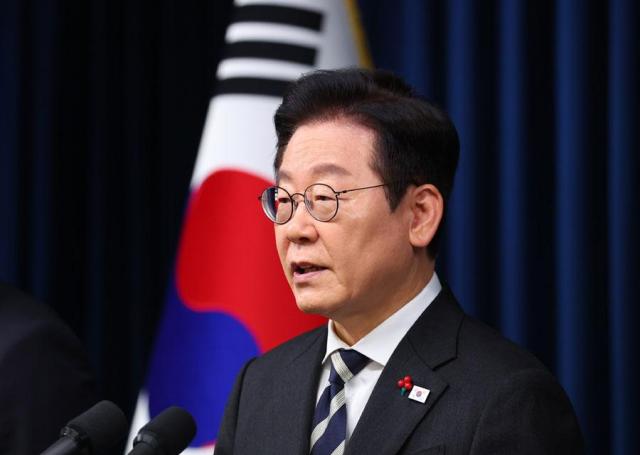
In his nationwide address at the presidential office in Seoul, he praised the people, saying, "I am convinced that South Koreans, who overcame an unprecedented democratic crisis in world history through peaceful means, are fully deserving of the Nobel Peace Prize."
"If they were to receive the Nobel Peace Prize for preserving democracy, restoring peace, and demonstrating the greatness of democracy to the world, it would serve as a major turning point for all nations shaken by conflict and division," he elaborated.
"In the 21st century, it was the first time such a [debacle] occurred in a democratic country like South Korea. But it was also the first time in world history that unarmed citizens bravely and peacefully stopped it," he said. It "demonstrated our citizens' profound sense of sovereignty and the remarkable resilience of South Korean democracy to the world."
Calling the people's protest the "revolution of light," as citizens took to the streets with lights to defend democracy against Yoon's Dec. 3 declaration of martial law, Lee also proposed designating the day as a national observance to honor the courage and actions of the people who fought to protect their sovereignty.
Lee then sternly said he will ensure those responsible for the debacle are held accountable to "ensure no one ever dares dream of a coup again." He also vowed "strict punishment for those involved whose audacity led them to destroy constitutional order for personal ambitions and even plot a war."
Yoon's botched martial law declaration, the first of its kind in modern South Korean history, was short-lived as lawmakers swiftly voted to lift it within hours. About 10 days later, they voted to impeach him, and Yoon was subsequently ousted from office in April this year. He has since been on trial on charges of insurrection and abuse of power.
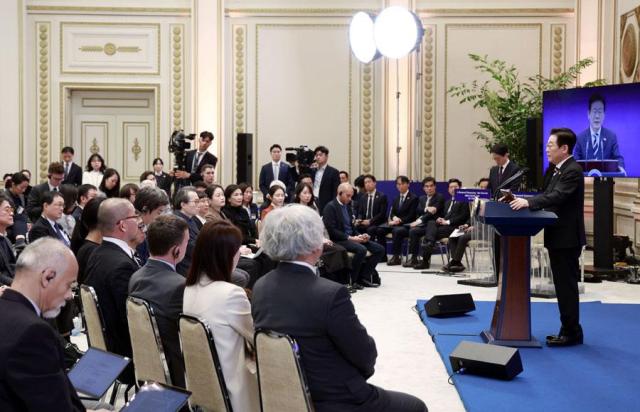
When asked whether South Korea would back Japan in its diplomatic row with China over Japanese Prime Minister Sanae Takaichi's recent comments that Tokyo could take military action if Beijing attacked Taiwan, Lee said South Korea would prefer to serve as a "mediator" rather than take sides. "Taking sides would only escalate the conflict," Lee said.
Later in the day, Lee is scheduled to join a civic rally commemorating the day and participate in a march around 7 p.m. In a rare move for a sitting president, this is seen as an effort to highlight that citizens were the driving force behind overcoming last year's debacle.
Copyright ⓒ Aju Press All rights reserved.