

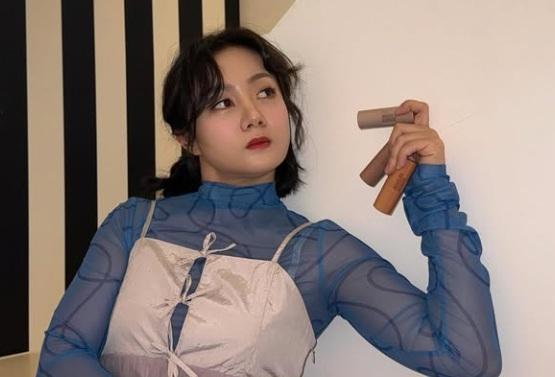
After a monthlong barrage of online criticism and allegations of workplace mistreatment from former managers, Park announced Monday she would “step away” from entertainment until the controversy is fully resolved. Her departure leaves a slate of major shows abruptly vacant — including MBC’s “I Live Alone” and “Where Is My Home,” tvN’s “Amazing Saturday,” and JTBC’s YouTube series “Narae-sik.” MBC also canceled production of its upcoming variety program “I’m Excited Too,” which had planned to feature Park as a lead.
Park’s fall comes amid a widening wave of celebrity reckonings.
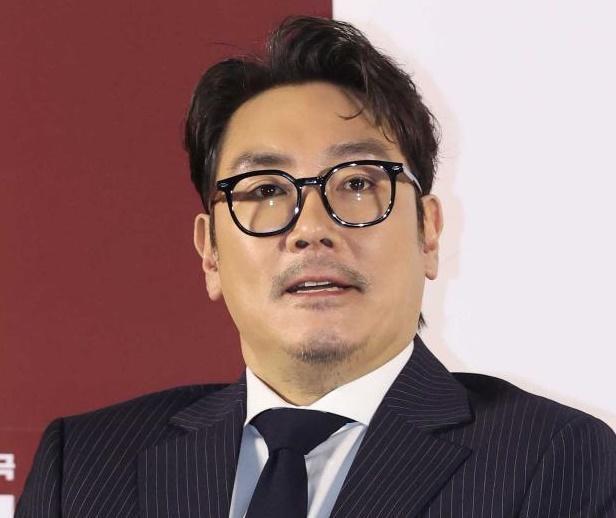
Just days earlier, actor Cho Jin-woong admitted he spent time in a juvenile detention center for crimes committed as a teenager — a revelation that immediately put the airing of tvN’s highly anticipated “Signal 2” in doubt despite the series already being completed. Comedian Cho Se-ho is also under intense scrutiny after online posts linked him to an organization behind illegal online gambling operations.
A Fame Economy Built on Morality
The swift collapses reflect something deeply embedded in South Korean popular culture: celebrities are expected to embody a standard of moral cleanliness that far exceeds that of ordinary citizens.
A 2024 Korea Research survey found: 71 percent of Koreans consider entertainers to be public figures, second only to politicians (90%). Nearly 9 in 10 expect celebrities to demonstrate modesty and good manners, 88 percent believe the public has a right to know about alleged drug use or involvement in illegal sex trade, 82 percent say infidelity or bullying should be exposed, and more than 75 percent say even “minor offenses” such as public drunkenness justify public disclosure.
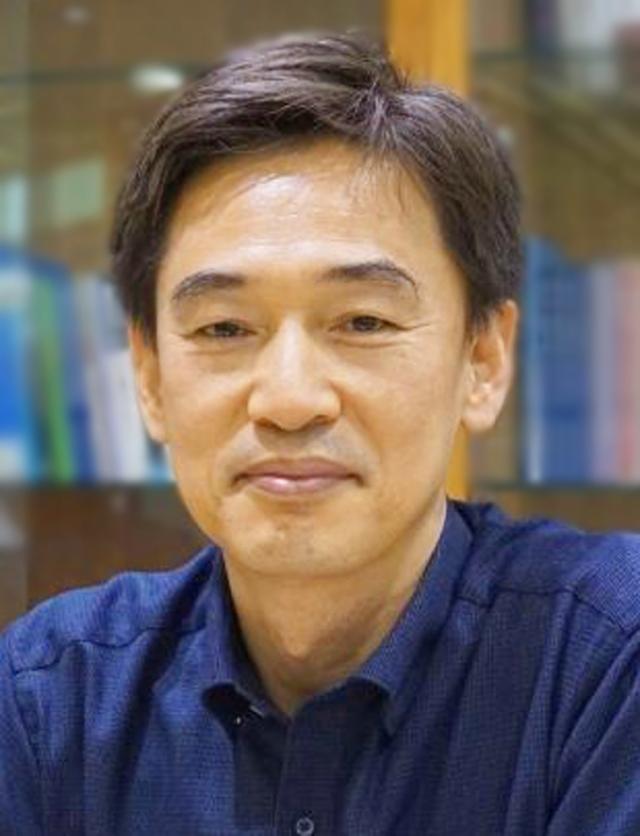
This moral rigor is part of what Professor Shim Seok-tae, chair of the Korean Society for Media Law and professor at Semyung Graduate School of Journalism, calls “a society that consumes morality.”
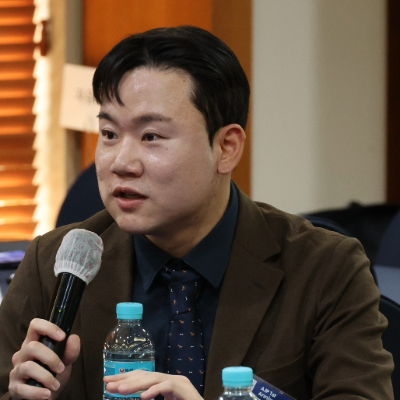
“Entertainers make a living off people’s curiosity. Popularity isn’t a right — it’s something they earn and must maintain,” Shim said. “The more they attract attention, the more people feel entitled to know about them. It’s a form of voluntary exposure.”
He notes that modern entertainment — reality TV, vlogs, Instagram — thrives on curated intimacy. Home tours, daily routines, and personal confessions become commodities, blurring the boundary between private and public selves.
“It’s hard to say public interest in their private lives is always wrong,” Shim added. “The problem is excess — when coverage becomes invasive rather than relevant to their public image or work.”
The Higher the Fame, the Heavier the Fall
The moral demand is not merely theoretical. It has produced devastating consequences.
Actor Lee Sun-kyun, celebrated globally for his role in Parasite, took his own life in 2023 amid a ferocious media storm over drug allegations — a sharp rupture from the “gentle, earnest” persona he embodied in “My Mister.”
“Cho wasn’t an ordinary actor — he is associated with works tied to Korea’s independence fighters,” Shim noted, implying that the moral expectations rise further when a star’s repertoire intertwines with national narrative.
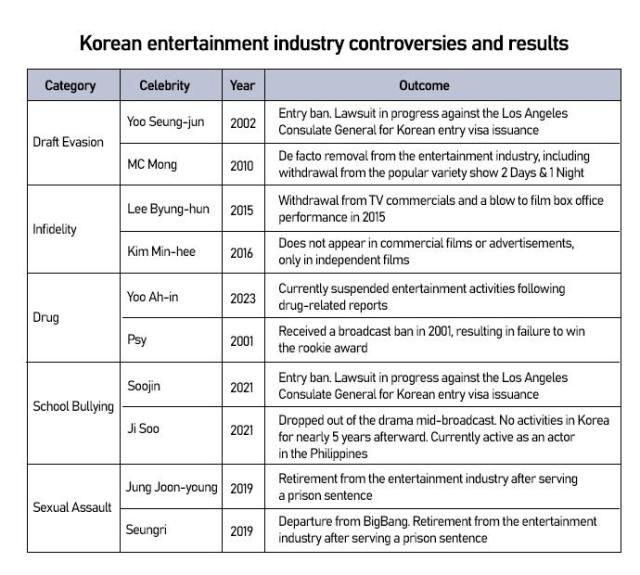
South Koreans also do not easily forgive or forget: Actress Kim Min-hee has not appeared in commercial films or advertisements since her affair with director Hong Sang-soo became public in 2016. Actor Yoo Ah-in has been unable to work domestically for nearly three years due to ongoing drug-related investigations.
In each case, an individual controversy transformed into a career-halting judgment rendered by the broader public.
Cultural Identity, Trust, and K-pop’s Global Legacy
At its core, Korea’s moral scrutiny reflects deeper questions about representation, aspiration, and trust. Celebrities here are not treated merely as entertainers; they are brand ambassadors, moral symbols, and often extensions of a collective national identity.
This perception has long underpinned K-pop’s universal appeal — discipline, civility, decency, and emotional intelligence — values that are marketed globally as quintessentially Korean.
But the double-edged sword is evident.
In an economy of fame where intimacy is currency and morality is a performance, the price of being famous in South Korea remains extraordinarily high — and increasingly, unsustainable.
Copyright ⓒ Aju Press All rights reserved.
