SEOUL, December 11 (AJP) -South Korea’s deputy chiefs of fiscal, monetary and financial policy convened an emergency macro-financial meeting Thursday, after the U.S. Federal Open Market Committee (FOMC) delivered its third consecutive interest rate cut and signaled only limited easing ahead.
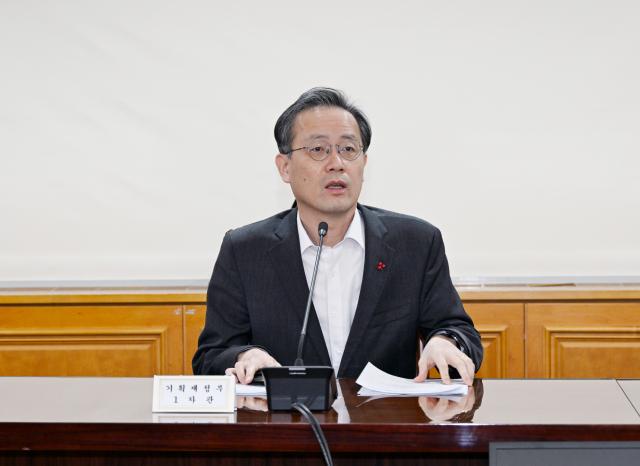
The meeting — held via conference call — brought together Lee Hyoung-il, vice minister of economy and finance; Yoo Sang-dae, deputy governor of the Bank of Korea; Kwon Dae-young, vice chairman of the Financial Services Commission; and Lee Se-hoon, senior deputy governor of the Financial Supervisory Service. The officials reviewed immediate market reactions and discussed potential spillovers to Korea’s financial system.
The usual post-Fed positive response was restrained. As of 10:00 a.m. Thursday, the KOSPI was up 0.6 percent to 4,161.14, while the KOSDAQ gained 0.5 percent to 939.33, extending a modest relief rally after the Fed’s decision. The won weakened 0.5 won to 1,467 per dollar, reversing earlier gains as foreign exchange volatility persisted.
Officials noted that domestic stock markets remain broadly stable, but pointed to concerns over rising government bond yields and heightened swings in the foreign exchange market — vulnerabilities that could intensify under diverging global monetary conditions.
The U.S. Federal Reserve on Wednesday reduced its benchmark federal funds rate by 25 basis points, bringing the upper bound to 3.75 percent, the lowest level in more than three years. The move completes three consecutive cuts since September, totaling 75 basis points of easing.
Despite the latest cut, the Fed signaled caution about the path ahead. In its quarterly projections, FOMC officials penciled in just one rate cut in 2026, suggesting the central bank wants clearer evidence of easing inflation and labor market slowdown before resuming substantial policy accommodation.
Fed Chair Jerome Powell said policymakers are “well positioned to wait and see how the economy evolves,” citing delayed employment and inflation data caused by the recent U.S. government shutdown. Private payroll data from ADP showed employers shed 32,000 jobs in November, underlining cooling momentum in the labor market.
Global markets broadly expected the cut, but took note of the Fed’s downward revision to inflation forecasts and upward revision to growth expectations. U.S. Treasury yields fell and the dollar weakened following the announcement.
Korean policymakers highlighted a growing policy divergence: while the U.S. appears set to continue gradual easing, Japan is approaching a rate hike, a rare tightening move for the Bank of Japan. This split among major central banks, they warned, could generate volatility across global asset classes, capital flows and exchange rates.
Participants agreed the Korean economy is entering a phase where external shocks can transmit more quickly, requiring a reinforced monitoring regime. Vice Minister Lee emphasized the need to maintain a 24-hour joint monitoring system across fiscal, monetary and supervisory authorities. He called for “swift, coordinated responses” to any instability in financial or foreign exchange markets, underscoring Korea’s commitment to pre-emptive risk management.
Copyright ⓒ Aju Press All rights reserved.