

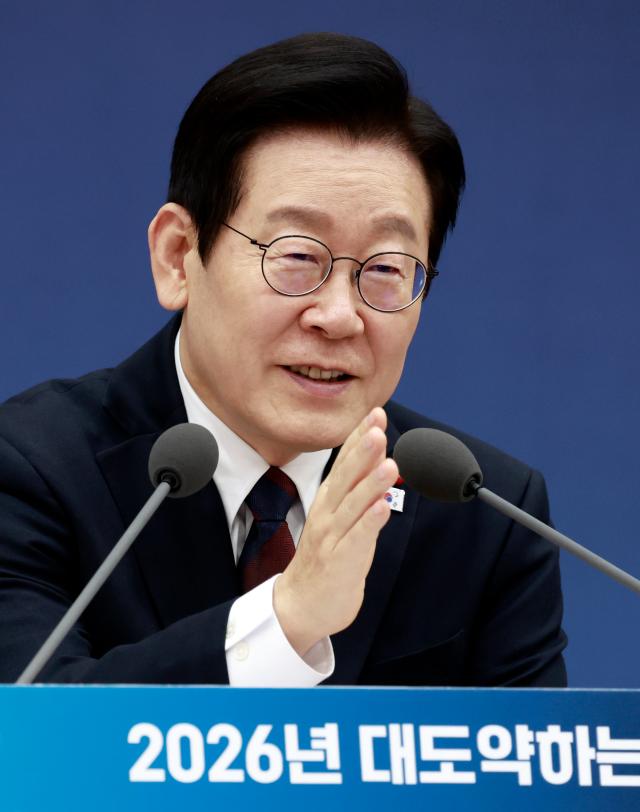
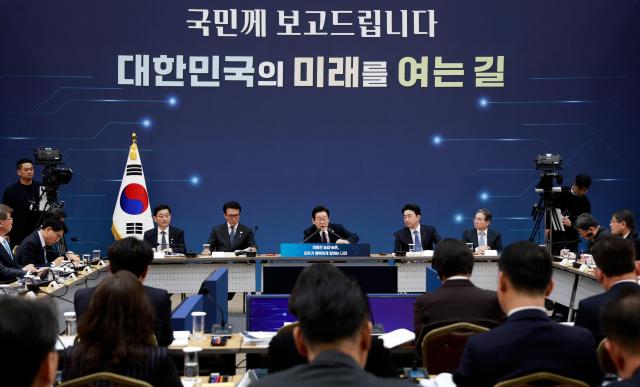
Again for the first time, each ministry and public office’s briefing to the president was broadcast live. “There is no need to be nervous. This will be fun,” Lee said, speaking casually to stone-faced senior officials appearing before the president and cameras.
Koo Yun-cheol, deputy prime minister for the economy, reported that the government aims to lift Korea’s potential growth rate above 1.8 percent next year, emphasizing policies designed to spur corporate investment.
“Somewhere called ‘pang’ has broken regulations this time,” he said, referring obliquely to Coupang, which is under investigation after a massive data breach affecting more than 30 million users. Lee said such irregularities persist because penalties remain weak.
Ahead of the session, ministries received internal guidelines stating that briefings would be “principally live-streamed, with Deputy Minister and Director General-level officials in attendance, and exceptions for non-disclosure made only when necessary—for example, on diplomatic or security grounds.” The televised format is part of the presidential office’s broader push toward what it describes as “discussion-based and participatory governance.”
The shift has changed work rhythms in both Seoul and Sejong. Weekend work has become routine, officials say, as ministries prepare for live policy briefings. Senior officials at the Director-General level and above, who may be questioned directly by the president, are memorizing data and rehearsing answers to anticipated questions. Many are making extra efforts to avoid misstatements or hesitation in front of both the president and the public.
This year’s briefing also breaks bureaucratic precedent. Such sessions are traditionally held at the start of the year, but the administration opted to convene the meeting at year’s end as part of its transparency initiative.
The live-briefing series spans 19 ministries, five departments, 18 agencies, seven commissions, and 228 public institutions, along with six related organizations, including the Financial Supervisory Service. Sessions will rotate between Seoul, Sejong, and Busan in the coming weeks.
Copyright ⓒ Aju Press All rights reserved.
