SEOUL, December 15 (AJP) -Former South Korean President Yoon Suk Yeol brooded over a scheme to invoke martial law to “eliminate political opponents and consolidate power” before October 2023, more than a year before the stunning decree was declared in December 2024, a special counsel investigation claimed Monday.
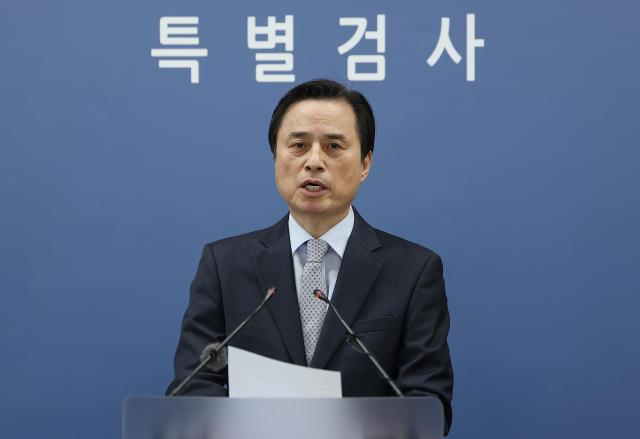
The finding was detailed by Special Counsel Cho Eun-suk, who led a 180-day probe into allegations of insurrection and foreign collusion surrounding the December 3, 2024, martial law episode. Cho’s team concluded that Yoon sought to use military force to remove political opponents and monopolize power, contradicting the former president’s reasoning that the move was aimed at defending the nation from so-called “anti-state forces.”
“Yoon Suk Yeol and others intended to suspend political activity and the National Assembly’s functions through military force, and to seize legislative and judicial authority via an emergency legislative body,” Cho said at a press briefing in southern Seoul. “They framed normal parliamentary activity as anti-state conduct to justify the declaration.”
According to the investigation, Yoon repeatedly referred to his “emergency powers” from the early days of his presidency, which began in May 2022 and ended in April 2025 after the Constitutional Court upheld his impeachment.
At a dinner with senior figures of the then-ruling People Power Party in November 2022, Yoon said he possessed emergency authority and would “wipe them all out,” even at the risk of being shot, investigators said, citing testimonies.
Former senior officials from investigative agencies also told the team they had heard as early as mid-2022 that Yoon was considering imposing martial law after the next general election.
Preparations accelerated ahead of a military leadership reshuffle in October 2023, when Yoon and his aides discussed whether to impose martial law before or after the personnel changes, the team said. Several officers later implicated in the case — including former Defense Security Commander Yeo In-hyung and former Army Chief of Staff Park An-su — were promoted to key posts at the time.
Notes recovered from a notebook belonging to Noh Sang-won, a former intelligence commander described by investigators as one of the “designers” of the plan, mirrored those personnel arrangements, according to the findings.
The investigation concluded that Yoon and his allies aimed to establish what prosecutors described as an unchecked authoritarian system, using the military to control the judiciary and an emergency legislative body to replace the National Assembly.
As evidence, the team cited written directives ordering the cutoff of National Assembly funding and budgeting for an emergency legislative body, power and water shutdowns at media outlets, the blockade of opposition party headquarters, lists of politicians to be arrested found in military commanders’ notes, and handwritten entries calling for the collapse of “all left-wing forces” ahead of the next presidential election.
The special counsel also concluded that Yoon sought to manufacture conditions justifying martial law by provoking a military response from North Korea through what investigators described as “abnormal military operations.”
Internal military notes referred to the need for a situation “beyond police control” and for “offensive measures to create enemy conditions,” the team said. South Korean forces subsequently deployed drones carrying leaflets over Pyongyang, but the plan failed when North Korea did not respond militarily.
The probe further found that Yoon attempted to portray the ruling party’s defeat in the April 2024 general election as the result of electoral fraud orchestrated by “anti-state forces,” using that narrative to justify suspending parliamentary functions.
Former intelligence officials assigned dozens of agents to detain election commission staff under martial law, investigators said. Equipment including cable ties, blindfolds, clubs and hammers was prepared, and military personnel briefly occupied the commission’s server room. No arrests were carried out after parliament swiftly voted to lift the decree.
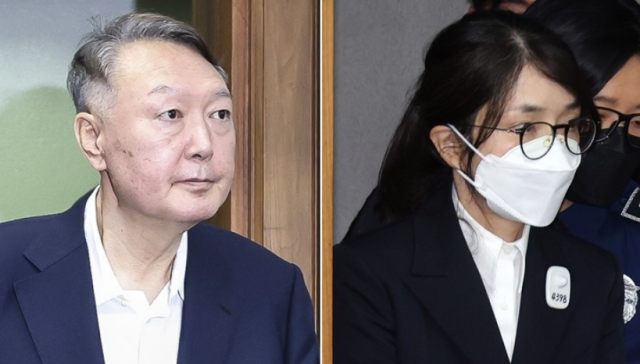
The special counsel team — comprising 238 prosecutors, investigators and support staff — indicted 27 people in total, including Yoon, former Prime Minister Han Duck-soo, former National Intelligence Service Director Cho Tae-yong, and former Defense Minister Kim Yong-hyun. At least 24 were indicted on insurrection-related charges, according to the team.Yoon was indicted three times by the special counsel on charges including obstruction of justice, aiding an enemy and perjury, in addition to earlier indictments for leading an insurrection and abuse of power. On conviction, insurrection carries a possible sentence of life imprisonment or death under South Korean law.
Several senior officials were re-arrested or had detention periods extended, while arrest warrants for others were denied by the courts.
A separate special counsel investigation into corruption allegations involving Yoon’s wife, Kim Keon Hee, is ongoing. Investigators said there was no evidence linking her to the martial law conspiracy.
* This article, published by Aju Business Daily, was translated by AI and edited by AJP.
Copyright ⓒ Aju Press All rights reserved.