

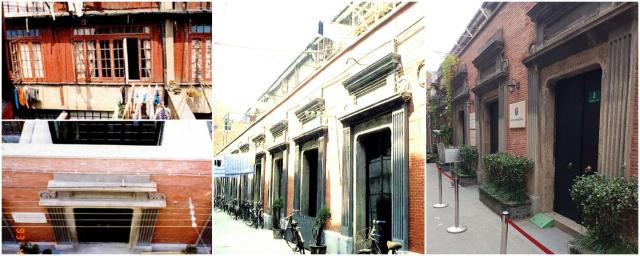
SEOUL, January 06 (AJP) - When South Korean President Lee Jae Myung steps into a modest brick building in Shanghai on Wednesday during his state visit to China, he will be entering a carefully restored fragment of Korean history — one preserved not by a government initiative, but by an idea that began decades ago inside a corporate office at Samsung C&T.
Restoration of the site — once home to Korea’s provisional government during Japan’s colonial rule — was completed more than 30 years ago, not with a government directive or diplomatic accord, but with an internal proposal submitted by an employee of Samsung C&T.
In the late 1980s, as Samsung C&T prepared to enter the Chinese market, the company invited employees to submit ideas for cultural and social contribution projects. One proposal stood out.
Lee Jae-cheong, then a sales manager in the firm’s distribution division, had recently returned from a business trip to Shanghai. While there, he visited a dilapidated building that had once housed Korea’s government-in-exile, which operated from July 1926 to April 1932 before relocating to Hangzhou.
Years of private use had taken their toll. The structure was severely damaged, its original form barely recognizable, its historical significance largely obscured.
Lee proposed that Samsung C&T take the lead in restoring the site. His idea was selected in the company’s internal contest and, after receiving management approval, became what Samsung later called the “Sungsan Project.”
The effort soon evolved into a complex undertaking that required careful diplomacy, historical research and logistical coordination at a time when formal channels between the two countries were limited. Samsung C&T conducted preliminary studies to determine whether restoration was feasible and worked with South Korea’s Ministry of Culture and the Independence Hall of Korea to authenticate historical details.
In 1991, the company signed a restoration agreement with the Shanghai municipal government — a notable step given the absence of full diplomatic relations at the time. To accelerate construction, Samsung C&T also covered relocation costs for residents living in the building.
Using archival records and historical research, the company reconstructed the interior to reflect the late 1920s, collecting period-appropriate tables, chairs and beds. Rooms were recreated to resemble the provisional government’s meeting hall, office spaces, reception room, kitchen and living quarters for key independence figures.
The restored building officially reopened on April 13, 1993, timed to coincide with the anniversary of the founding of Korea’s provisional government. About 100 people attended the ceremony, including descendants of independence activists whose lives had once been intertwined with the site.
Today, as South Korea’s president prepares to walk through its halls, the Shanghai site stands not only as a symbol of the nation’s independence movement, but also as a reminder that corporate initiatives — sometimes sparked by a single employee — can play an unexpected role in preserving national memory far beyond the balance sheet.
Copyright ⓒ Aju Press All rights reserved.
