

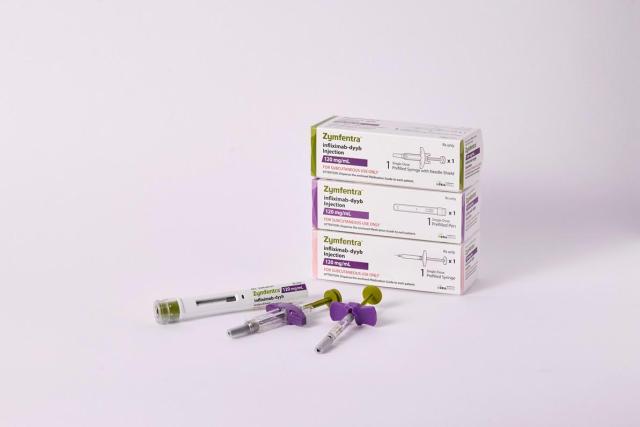
Celltrion said Wednesday that prescriptions for its subcutaneous infliximab treatment Zymfentra rose about 27% from the same period a month earlier and about 352% from a year earlier, based on the second week of January. The company said the figure was the highest weekly total prescriptions (TRx) recorded since the drug’s U.S. launch in March 2024, according to IQVIA.
Celltrion said its ongoing online and offline advertising in the United States helped drive the increase in prescriptions. It also cited the rapid buildout of a reimbursement base for patients as a key factor.
Celltrion said it expects Zymfentra’s growth to accelerate starting this year and plans to step up efforts to promote the product’s competitiveness.
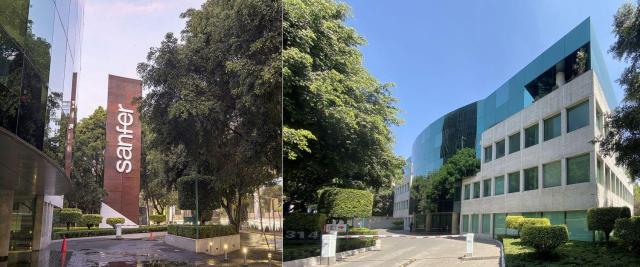
Hanmi Pharmaceutical said Wednesday it signed an exclusive distribution agreement with Mexican drugmaker Sanfer covering the GLP-1 obesity drug efpeglenatide and its diabetes combination products sold under the Daparone family brand.
Under the deal, Hanmi will supply finished products of efpeglenatide and the Daparone family — Daparone tablets and Daparone Duo extended-release tablets — while Sanfer will handle regulatory approval, marketing, distribution and sales in Mexico.
Hanmi said Mexico has an obesity prevalence of 36.86% and a diabetes prevalence of 16.4%. The companies said they plan to expand cooperation step by step, including on efpeglenatide and broader metabolic-disease treatments.
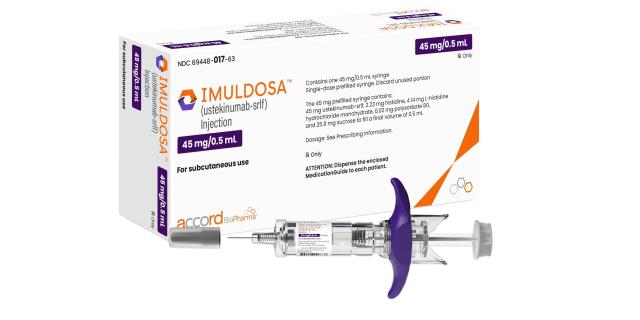
Dong-A ST said Wednesday it received approval from Health Canada for Imuldosa, a biosimilar to the autoimmune disease treatment Stelara (ustekinumab).
Stelara posted 2024 sales of US$21.552 billion (about 29.9357 trillion won), the company said. Imuldosa was co-developed by Dong-A Socio Holdings and Meiji Seika Pharma starting in 2013 and is used to treat inflammatory conditions including plaque psoriasis, psoriatic arthritis, Crohn’s disease and ulcerative colitis.
The product has been launched in 19 countries, including the United States, Germany and the United Kingdom, and has received approvals in Middle Eastern markets including Saudi Arabia, Qatar and the United Arab Emirates.
HLB said Wednesday that its U.S. subsidiary, Elevar Therapeutics, completed a new drug application to the Food and Drug Administration for lirafugratinib, an FGFR2 fusion/rearrangement-targeted cancer drug, as a second-line treatment for bile duct cancer.
HLB said Elevar completed the filing after submitting an application on Jan. 23 for a first-line liver cancer indication, starting the FDA review process aimed at both indications.
Lirafugratinib received FDA orphan-drug designation in 2022 and breakthrough therapy designation in 2023 for the bile duct cancer indication, HLB said. The company said it reached agreement with the FDA, after a formal meeting last year, to file for accelerated approval based on Phase 2 results without an additional confirmatory Phase 3 trial.
HLB said the drug is likely to be considered for priority review, with the FDA to decide whether to grant it when the agency begins its full review.

A research team led by Shin Ju Yeon, a Korean medicine doctor at Jaseng Korean Medicine Hospital’s Spine and Joint Research Institute, said Wednesday it published results in the SCI(E)-indexed international journal Medicine on the effectiveness of integrative Korean medicine treatment for older traffic-accident patients.
The team retrospectively analyzed electronic medical records of 1,788 patients ages 65 and older who were hospitalized from 2021 to 2023 at four facilities: Gangnam Jaseng Korean Medicine Hospital, Bucheon Jaseng Korean Medicine Hospital, Daejeon Jaseng Korean Medicine Hospital and Haeundae Jaseng Korean Medicine Hospital. The study assessed effectiveness and safety.
During hospitalization, patients received integrative treatment including acupuncture, pharmacopuncture, herbal medicine and Chuna manual therapy. Acupuncture was administered twice a day. Treatments included Shinbaro pharmacopuncture and herbal medicines such as Anshinjitongtang and Hwanghyeoljitongtang. Average length of stay was about 10 days.
The team reported significant improvements in pain and functional recovery at discharge, around 10 days after admission, across four areas: neck, lower back, shoulder and knee. The EQ-5D quality-of-life measure improved by an average of 0.12 points, with gains across all indicators.
* This article has been translated by AI.
Copyright ⓒ Aju Press All rights reserved.