

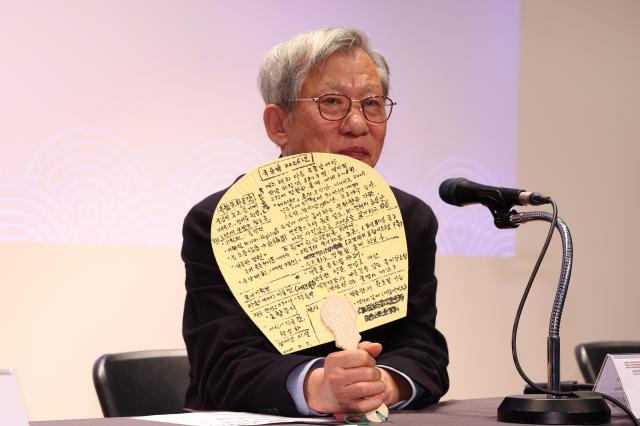
"To fully implement a K-museum that leads the world, we will innovate the future viewing environment and visitor experience."
Yu Hong-jun, director of the National Museum of Korea, said at a New Year news briefing on Feb. 3 that the museum has entered an era of 6.5 million visitors a year. He said the key was not treating it as a place that simply displays old artifacts, but as a complex cultural space where culture is shared.
Under this year’s vision of “a museum for everyone,” the museum said it will redesign how people visit and how it operates, aiming to become a participatory cultural complex open to all.
Starting March 16, it will move opening time up from 10 a.m. to 9:30 a.m. (9:30 a.m. to 5:30 p.m.). Yu said visitors line up by 8:30 a.m., adding that he felt it was unreasonable for people to stand for an hour and a half.
In August, the museum will expand outdoor amenities to reposition itself as a place where people want to stay. It plans to build “water-gazing steps,” a set of steps where visitors can rest while looking out over the pond, similar to rest areas found at major museums worldwide.
Yu said the museum is “absolutely short” on cafes and restaurants, and that a glasshouse-style cafe will be added above the restaurant by the Mirror Pond. He said the museum also aims to revive the visitor route from the main entrance to the Mirror Pond.
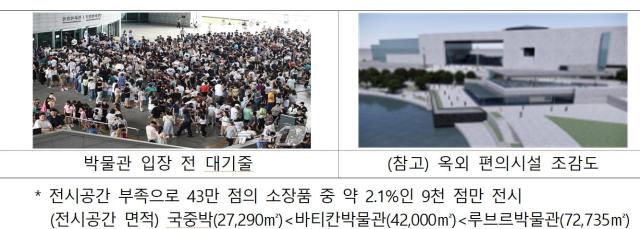
The museum said it will build a customer relationship management system by December to improve the visitor environment and operations and ease congestion. It also plans to develop online reservations and ticketing, on-site ticketing, contactless electronic ticket checks and mobile QR tickets, in preparation for paid admission. By 2029, it plans to expand and rebuild the children’s museum to about twice its current size.
Yu said one of the museum’s biggest points of pride is that many young people visit. “Directors of foreign museums ask me to tell them the secret to attracting young people,” he said. “I think it’s because it’s fun, you can learn, and you can enjoy the museum even without going into the galleries.”
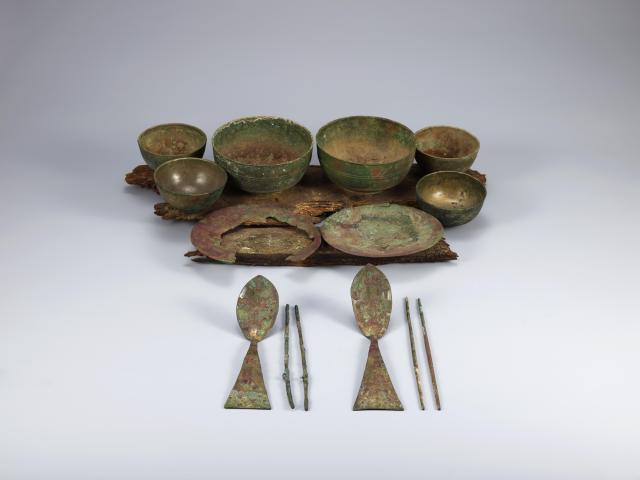
The museum also outlined major exhibitions planned for 2026, combining public appeal and academic value. They include “Our Table” (July 1-Oct. 25), which looks at the origins and evolution of Korean food culture amid global interest in K-food; “Thai Art” (June 16-Sept. 6), the first Thailand art exhibition of its kind in South Korea; “War, Art and Life” (Nov. 27-’27.3.21.); and “Marie Antoinette Style” (Dec. 18-’27.3.31.).
It also plans to upgrade how it runs permanent exhibitions. The “Daedongyeojido” display on the “Path of History” (2.12.) will be created as a symbolic space where the visitor route itself becomes a historical experience. Other plans include reopening the Korean Empire gallery in April and a special public showing of Dunhuang Buddhist sutras in October.
* This article has been translated by AI.
Copyright ⓒ Aju Press All rights reserved.