

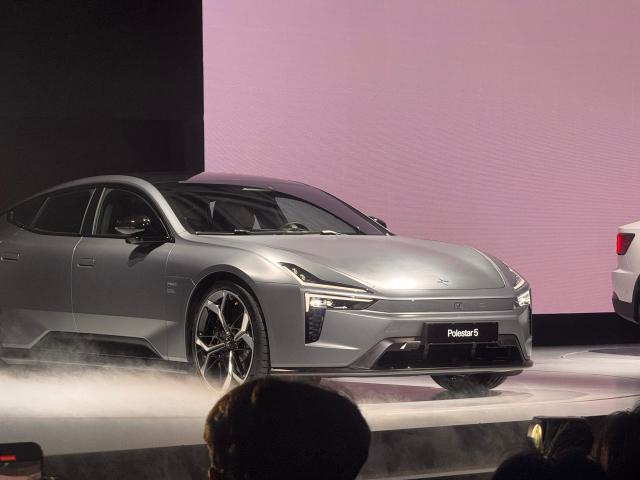
Ham Jong Seong, CEO of Polestar Korea, unveiled the Polestar 3 and Polestar 5 on Tuesday at the “2026 Polestar Media Day” at the Grand Hyatt Seoul, saying, “This year, we will make it the first year of a leap from premium to a luxury brand.”
The Polestar 3 is scheduled to launch in the second quarter and the Polestar 5 in the third quarter. On pricing, Ham said the vehicles will be introduced “at the most attractive prices among all global markets where Polestar operates.” In Europe, the Polestar 3 and Polestar 5 sell for about 120 million won and 200 million won, respectively. Polestar Korea also said it has no plans to resume sales of the Polestar 2 until a next-generation model is released.
Polestar entered South Korea with the Polestar 2, then shifted its main model to the Polestar 4 in 2024 as it moved upmarket. According to the Korea Automobile Importers & Distributors Association, the Polestar 4 recorded the highest sales last year among premium imported EVs priced at 60 million won or more, with 2,611 units.
With Polestar Korea signaling new premium EV launches every year, the influence of Chinese-made EVs in South Korea is expected to keep growing.
Tesla has driven the market since 2023 by importing China-built versions of the Model Y and Model 3 and sharply lowering prices, posting sales of about 60,000 vehicles last year. BYD also sold more than 6,000 units in its first year in South Korea. BYD aims to top 10,000 this year by expanding its lineup, including the compact hatchback Dolphin.
Polestar was founded in Sweden, but it has been viewed as a Chinese brand since it was absorbed in 2017 by Geely Holding Group along with Volvo. Polestar vehicles sold in South Korea are also produced in China. The Korea Automobile & Mobility Association classifies Polestar as a “Chinese-made EV,” along with Tesla and BYD.
Zeekr, another premium EV brand under Geely, has also signaled plans to enter South Korea. Zeekr said it formalized its entry late last year by holding a dealer contract signing ceremony with four partners: H Mobility ZK, IronEV, KCC Mobility and ZK Mobility.
As imported EVs gain ground, the market share of domestic brands such as Hyundai Motor and Kia is shrinking. According to KAMA, domestic EV share fell to 57.2% last year from 75% in 2022.
KAMA said the spread of Chinese-made EVs can broaden consumer choice and push prices down, but it also poses a threat by increasing competitive pressure on South Korea’s manufacturing base and supply chains, requiring a mid- to long-term response.
* This article has been translated by AI.
Copyright ⓒ Aju Press All rights reserved.