

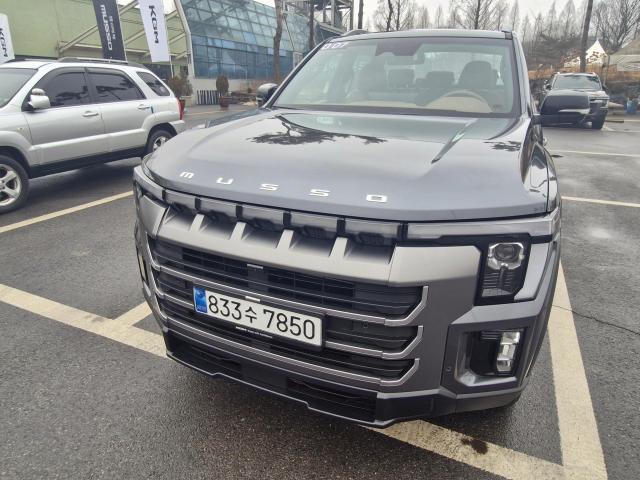
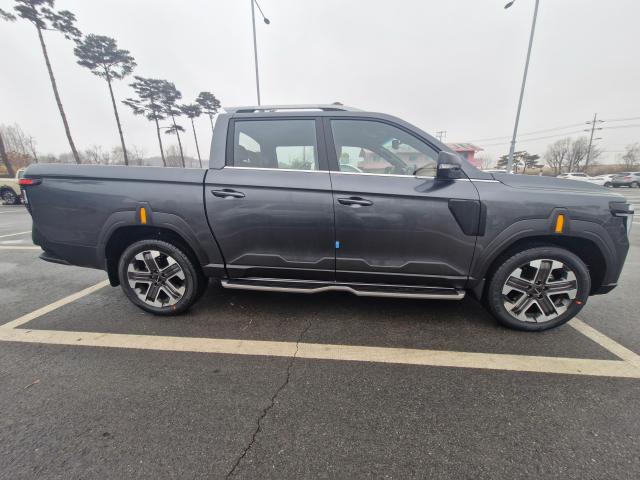
"An appealing vehicle with a solid, heavyweight feel."
South Korea’s Musso pickup is back. KG Mobility (KGM) is rolling out a new Musso this year, packaging what it calls 24 years of pickup heritage as it moves to expand its share of the market.
On Tuesday, the reporter drove about 120 kilometers (75 miles) round trip from Times Square in Seoul’s Yeongdeungpo district to Have Fun Cafe in Paju to test the new Musso. The diesel model felt large enough to fill a parking-space lane edge to edge.
From the moment it left a basement level and threaded through a narrow ramp, the Musso’s pickup character was clear. With its long body, simply exiting the garage felt like a test. After climbing wet pavement on a steep, winding section to street level, the relief was simple: it made it out without a scrape.
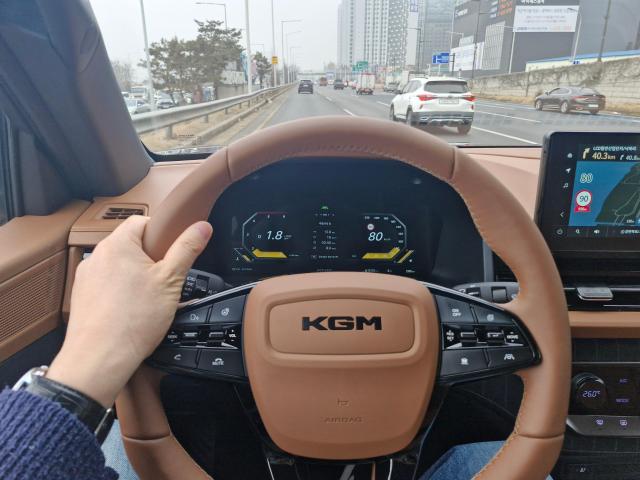
At a stoplight near Yeongdeungpo Market, the auto stop-start system kicked in. Pressing the brake shut off the engine, noticeably reducing noise, and it restarted smoothly as soon as the driver lifted off the pedal. The diesel model was quieter than the stereotype suggests.
On the Jayuro expressway near Ilsan, the diesel 2.2-liter engine delivered its rated 202 horsepower and 45.0 kg·m of torque. Over rough sections, the suspension absorbed bumps smoothly. The ride benefited from a “five-link dynamic suspension,” a setup the article said is used on premium vehicles such as the Mercedes-Benz G-Wagen and Jeep models, keeping body movement in check on uneven pavement.
For the return trip, the driver switched to the Musso’s 2.0-liter turbo gasoline model — the biggest change in the new lineup. It is rated at 217 horsepower and 38.7 kg·m of torque. While the diesel emphasizes torque and fuel economy, the gasoline version is positioned for quieter operation and quicker response, which was evident on the Jayuro.
The test drive suggested KGM is trying to broaden the pickup into a more everyday vehicle. The new Musso traces its roots to the 2002 Musso Sports, South Korea’s first sport utility truck (SUT), followed by the Actyon Sports (2006), Korando Sports (2012) and Rexton Sports & Khan (2018). KGM says it has sold close to 500,000 pickups in South Korea, a market long seen as unfriendly to the segment.
* This article has been translated by AI.
Copyright ⓒ Aju Press All rights reserved.