For South Korea, which has relied on the U.S. deterrence umbrella against North Korea for more than 70 years, the language feels unsettling. But beneath the rhetoric lies a deeper structural shift: Washington’s strategic focus is no longer centered primarily on Pyongyang. It is centered on Beijing.
That shift may ultimately determine the future shape — and relevance — of U.S. Forces Korea (USFK).
Speaking at a recent forum in Washington, Kelly Grieco of the Stimson Center said that under a second Trump administration, “we are likely to see some form of effort to reduce troop levels or scale back the U.S. military presence on the Korean Peninsula.”
The 2026 NDS describes South Korea and Europe as “model allies.” Yet they are also the regions where Washington has most openly explored troop reductions — a paradox reflecting President Donald Trump’s transactional view of alliances.
Trump has repeatedly argued that wealthy allies benefiting from U.S. security guarantees should bear greater financial burdens. During his first term, troop levels in South Korea became leverage in cost-sharing negotiations.
Despite strong words, a sweeping withdrawal remains unlikely.
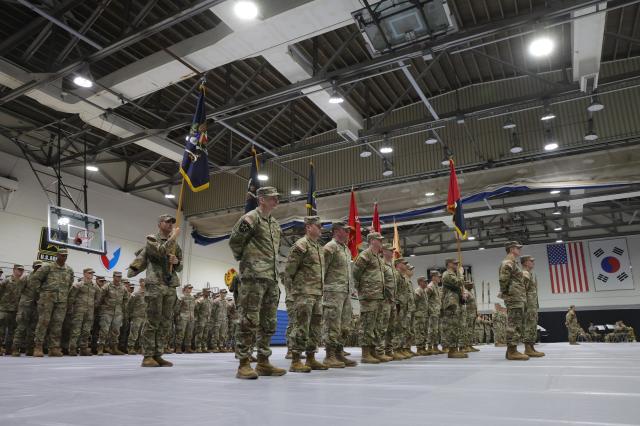
The fiscal 2026 National Defense Authorization Act prohibits reducing U.S. troop levels in South Korea below 28,500 without strict national security conditions and prior consultation with allies.
Strategically, the peninsula remains one of Washington’s most valuable forward positions in Northeast Asia.
“The U.S. currently lacks a better strategic location than the Korean Peninsula for deterring China and, to some extent, Russia,” said Koh Yu-hwan, professor at Dongguk University.
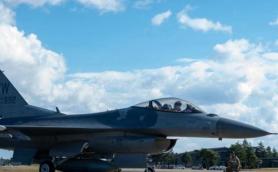
Even if heavy Army units were trimmed — as some analysts suggest — air and naval assets could be strengthened, aligning with a broader U.S. shift toward more flexible and mobile force structures.
In other words, the debate is not about departure. It is about mission.
For decades, Seoul’s defense narrative has been built almost entirely around deterring North Korea.
That framework was logical in an era when Pyongyang represented the primary threat and Washington’s Asia strategy was narrower in scope.
But today, U.S. military planning is dominated by competition with China. In Pentagon documents and congressional hearings, Beijing — not Pyongyang — is identified as the pacing challenge.
This creates a strategic question for Seoul: If USFK is viewed in Washington purely as a North Korea deterrent force, does it risk becoming less central to America’s long-term priorities?
That means acknowledging that the Korean Peninsula is not only a frontline against North Korea, but also a critical geographic anchor in managing regional stability vis-à-vis China.
The timing is significant.
Seoul and Washington are working toward 2028 as the target year for transferring wartime operational control (OPCON) to a South Korean commander. Under the envisioned structure, a South Korean four-star general would lead the future Combined Forces Command, with a U.S. general serving as deputy.
Although OPCON transfer is formally separate from troop reduction debates, it could create political and strategic space for recalibrating USFK’s role.
As Washington adjusts its global force posture — including modest recalibrations in Europe — the emphasis appears to be on efficiency and strategic alignment rather than large-scale retrenchment.
For South Korea, that suggests the future of USFK will depend less on fixed troop numbers and more on mission relevance.

Copyright ⓒ Aju Press All rights reserved.