

According to foreign media reports on Wednesday, Indian automaker Mahindra said it will invest US$1.65 billion (about 2.3 trillion won) over the next 10 years in Maharashtra state to expand manufacturing. A new plant set to begin production in 2028 will build internal-combustion vehicles as well as EVs and next-generation platforms.
Mahindra is a leading Indian brand competing with Hyundai and Tata Motors for the No. 2 spot in the market. It sold 625,603 vehicles last year, up 18.4% from a year earlier, ranking second. In EVs, its sales surged 481% to 61,172 vehicles, narrowing the gap with market leader Tata, which sold 78,672.
India’s total EV sales reached 198,881 last year, up 85.9% from the previous year. The Indian government aims to make EVs 30% of total vehicle sales by 2030 and is expanding charging infrastructure, with a plan to increase public chargers from 12,000 as of last year to more than 30,000 by 2027.
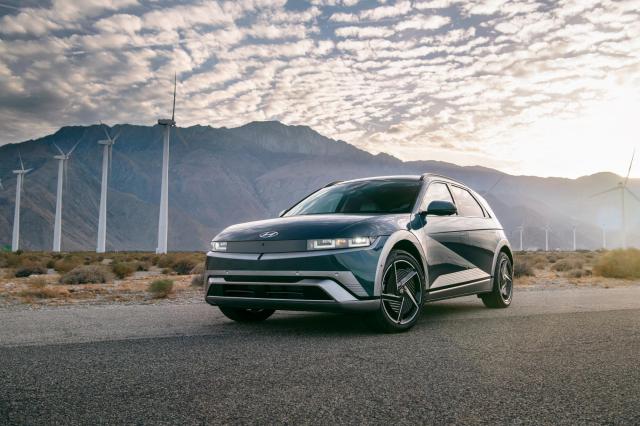
As the market grows around domestic brands, global companies including Tesla are also joining the competition. Hyundai and Kia are seeking to expand share with SUV- and small-car-based EVs. Their EV sales in India were 786 and 292 vehicles, respectively, in 2024, but rose sharply last year to 8,291 and 4,111.
Hyundai, which pursued a push to become an “Indian national brand” through a 2024 initial public offering, has said it will further strengthen transparency at its Indian unit and invest in new products, future advanced technologies and research and development, while developing India as a strategic export hub.
Hyundai plans to invest 450 billion rupees (about 7.3 trillion won) in India by 2030 and is expected to launch six EV models by 2028. Hyundai CEO Jose Munoz has said, “India is a strategic priority in Hyundai’s global growth vision,” adding it will become Hyundai’s second-largest market by 2030.
Hyundai Motor Group Executive Chair Euisun Chung visited Hyundai and Kia plants last month and reaffirmed a strategy to strengthen the group’s position through a 1.5 million-vehicle production system, a flexible product lineup tailored to the market and building an electrification ecosystem.
India’s overall vehicle sales totaled 4,565,098 last year, up 5.7% from the previous year. Over that period, Hyundai’s sales fell 5.5% to 571,878, dropping to fourth place. Kia sold 280,286 vehicles, up 14.4%, for a market share in the 6% range.
* This article has been translated by AI.
Copyright ⓒ Aju Press All rights reserved.