

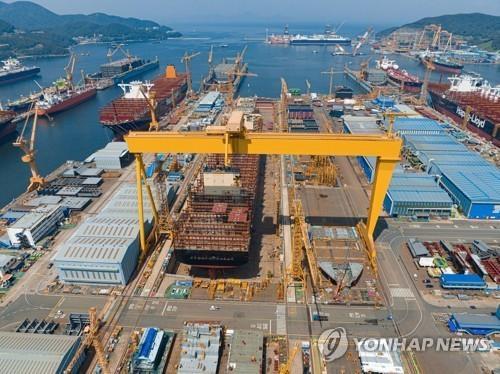
According to reporting by Aju Business Daily on Wednesday, Hanwha Ocean decided to pay a performance bonus equal to 400% of monthly base pay for last year. It is the highest level since the company’s launch. The bonuses are to be paid in full just before the Lunar New Year holiday.
The decision closely tracks the government’s labor policy direction. President Lee has repeatedly stressed the need to reduce wage gaps in industrial workplaces based on the principle of “equal pay for work of equal value.”
After Hanwha Ocean set the policy to pay the same bonus to prime and subcontracted workers, Lee disclosed the plan during a Ministry of Employment and Labor briefing, saying, “It seems important to create a desirable corporate culture.” Prime Minister Kim Min Seok later visited Hanwha Ocean’s Seoul office last month and signed a labor-management cooperation agreement.
In 2024, Hanwha Ocean’s regular employees received performance bonuses equal to 150% of base pay, while workers at partner firms received 75%, a wide gap. Last year, the company posted more than 1 trillion won in operating profit, helping lay the groundwork for equal bonus payments.
In shipbuilding, subcontracted workers account for more than 60% of the total production workforce. Partner firms handle 70% to 80% of ship construction processes, but the compensation gap between prime contractors and subcontractors has continued to widen, critics say.
Many in the industry view Hanwha Ocean’s decision as a potential step toward easing the two-tier labor structure common in shipbuilding and other manufacturing sites. With a shortage of skilled workers persisting despite a boom in orders, broader profit-sharing could help reduce worker outflows and attract new hires, analysts say.
Still, concerns are growing that the move will increase costs for manufacturers. If equal compensation between prime contractors and subcontractors becomes a precedent, similar demands could spread to other industries.
Another concern is the full implementation next month of the so-called Yellow Envelope Act, revisions to Articles 2 and 3 of the Trade Union and Labor Relations Adjustment Act. The law requires prime contractors to bargain directly with subcontractor unions when the prime contractor exercises substantial control over subcontracted workers’ working conditions.
“Performance bonuses inevitably vary depending on each company’s results and financial conditions,” an industry official said. “If the Hanwha Ocean case is accepted like a new standard, it could lead to higher labor costs across manufacturing.”
* This article has been translated by AI.
Copyright ⓒ Aju Press All rights reserved.