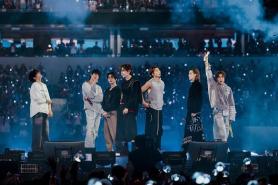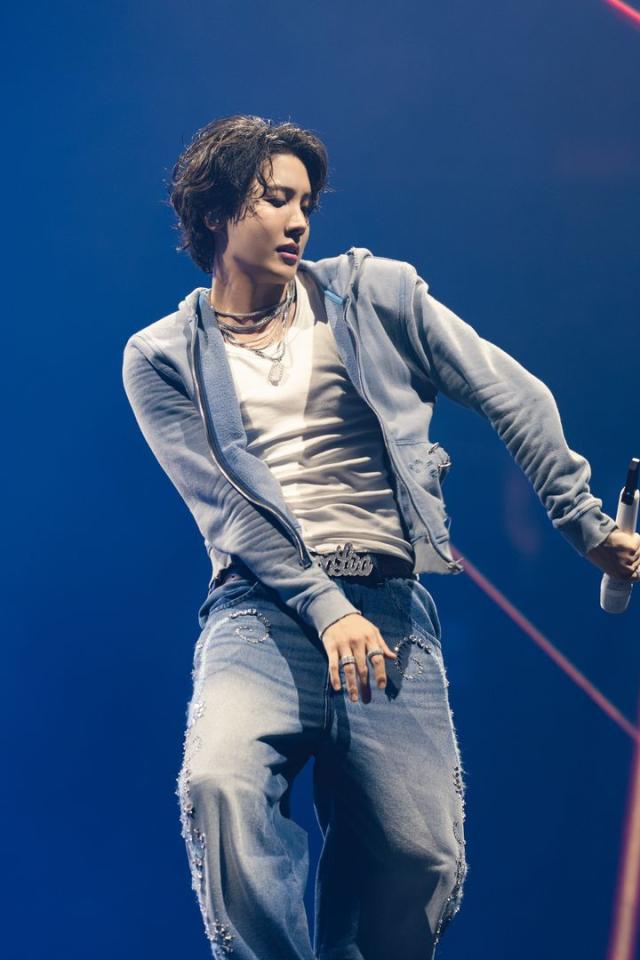
*Editor’s Note — As BTS prepares to return as a full seven-member act with a new album set for March 20 and an open-stage performance at Gwanghwamun on March 21, following a near four-year hiatus for rotational military service, AJP revisits the group’s 13-year trajectory. This series reexamines BTS’s history, music, performance identity and enduring appeal. The fourth installment traces the roots and growth of J-Hope.
SEOUL, February 19 (AJP) - By the time BTS gathers again on stage this spring, the distance between where J-Hope began and where he now stands will be measured not only in chart rankings and stadium crowds, but also in quiet acts of continuity.
J-Hope celebrated his 32nd birthday on Feb. 18 not with spectacle, but with another donation. Child welfare agency Green Umbrella announced that he had contributed 100 million won to support students at his alma mater. From 2019 to 2023, he provided scholarships to students at Gwangju International High School and Jeonnam Girls’ Commercial High School facing financial hardship — a pattern of giving that reflects his enduring ties to his hometown.
With the latest contribution, he became the 14th member of the Green Noble Trinity Club, reserved for donors whose cumulative giving exceeds 1 billion won.
His philanthropy extends beyond education. Proceeds from the “Human Hope: A Joopiter Special” auction, linked to his Human Made collaboration, were donated to animal welfare groups.
The birthday boy separately contributed 200 million won to Asan Medical Center to support pediatric treatment, home medical care and psychological services for critically ill children.
Such gestures have become a steady undercurrent in his public life. But they are, in many ways, an extension of the discipline and responsibility that have defined his career.

From street dancer to center of gravity
“I’m your HOPE, you’re my HOPE, I’m J-Hope.”
Since BTS’s debut in 2013, the greeting has served as both signature and promise.
Born Jeong Hoseok on Feb. 18, 1994, he joined Big Hit Entertainment in 2010 and debuted as the group’s main dancer and lead rapper. Before entering the idol system, he trained in popping at Joy Dance Academy in Gwangju and performed with the street crew Neuron under the nickname “Smile Hoya.”
The street dancer never disappeared.
His foundation in popping, wave techniques and freestyle remains visible in his stage work, lending BTS performances a sense of elasticity and rhythm that is difficult to replicate. Choreographer Son Sung-deuk and fellow members have repeatedly cited him as the group’s technical anchor — the performer who stabilizes timing, spacing and transitions when live stages become unpredictable.
In a group built on precision, J-Hope has long functioned as its internal metronome.
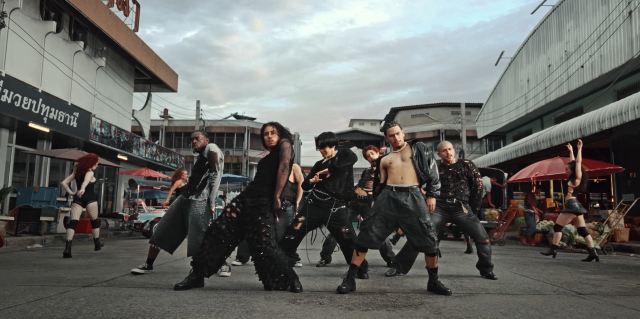
Building a solo identity
His solo career unfolded alongside his group role, not in competition with it, but in dialogue.
In 2018, his mixtape Hope World entered the Billboard 200, signaling that his appeal could stand independently. The following year, “Chicken Noodle Soup” revived a classic dance track for a new generation.
With Jack In The Box in 2022, he pivoted sharply. The album replaced brightness with tension, playfulness with self-examination. Tracks such as “MORE” and “Arson” presented an artist willing to interrogate ambition, exhaustion and identity.
In March 2023, “On the Street” returned to quieter ground, blending lo-fi hip-hop with reflections on his beginnings.
His most commercially successful single to date, “Killin’ It Girl” featuring GloRilla, arrived in 2025, marking his strongest solo chart showing and reinforcing his growing international footprint.
Projects such as HOPE ON THE STREET VOL.1 in 2024 and “Sweet Dreams” in 2025 further expanded his stylistic range, reconnecting him with street dance while exploring R&B and melodic hip-hop.
The pattern is consistent: experimentation anchored by craft.

Service, return and continuity
J-Hope completed his mandatory military service in June 2025 and formally resumed public activities soon afterward, rejoining a group preparing for its first full reunion in years.
On stage, his defining elements remain intact — wave sequences, popping accents, controlled improvisation, and signature openings such as those in “MIC DROP.” Yet the performances now carry added weight: the assurance of an artist who has tested himself outside the group and returned with clearer intent.
Within BTS, he continues to drive energy and cohesion. As a solo artist, he has built a catalog marked by steady growth rather than abrupt reinvention.
And beyond music, his philanthropy has reinforced an image of responsibility that resonates quietly but persistently.
In K-pop, optimism is often packaged as concept. For J-Hope, it has functioned more as practice.
It appears in the discipline of rehearsal rooms, in the consistency of donations, in the willingness to take creative risks without abandoning fundamentals. It is visible in how he balances spectacle with substance, popularity with accountability.
As BTS approaches its long-awaited return, J-Hope stands not as a symbol of nostalgia, but as evidence of maturation — an artist who has learned how to sustain momentum across changing eras.
The greeting still opens performances.
But after thirteen years, it sounds less like a slogan and more like a record of work done.
The next installment will focus on RM.

Copyright ⓒ Aju Press All rights reserved.