SEOUL, February 21 (AJP) - Prime Minister Kim Min-seok said Saturday that South Korea will "wisely" monitor the situation following a US Supreme Court decision that invalidated a key tariff program, suggesting possible adjustments to a previous bilateral trade agreement.
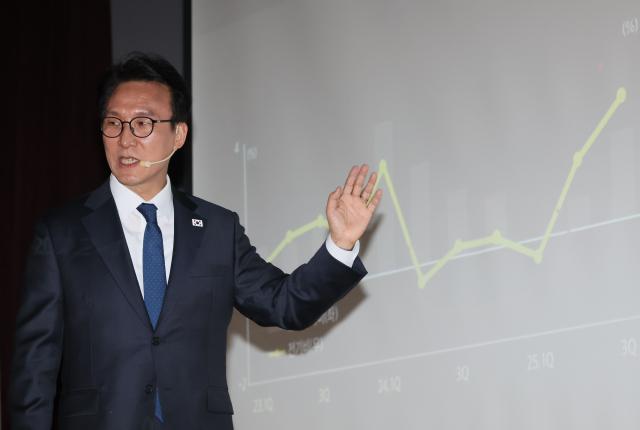
The remarks, made during a public briefing in the city of Pohang on Saturday afternoon, address the potential fallout from a 6-3 ruling by the US Supreme Court on Friday. The court found that President Donald Trump exceeded his authority by using an emergency law to impose broad "reciprocal" tariffs. Under that system, South Korea had negotiated a 15 percent duty rate in exchange for a pledge to invest 350 billion dollars in the United States.
Kim raised the possibility that the shift in the US legal landscape could change the terms of the existing deal. He questioned whether the previous negotiations could be reset or if certain conditions could be changed, given that the legal foundation for the tariffs has been shaken.
"We will monitor the situation very wisely as we move forward," Kim said. He noted that while the government intends to honor the agreements reached between the two nations, the invalidation of the US legal basis for the tariffs represents a significant change in circumstances.
The prime minister characterized the trade deal as a political and economic negotiation based on the trade interests of both sides, rather than a purely legal matter. He added that while formal government-level discussions on a specific policy pivot have not yet begun, the administration will look at the situation comprehensively.
The ruling in Washington has created a complex situation for major US trading partners. Immediately after the court decision, Trump signed a new proclamation to impose a 10 percent global surcharge under a different law, Section 122 of the Trade Act of 1974. His administration also announced new investigations under Section 301, which could lead to additional duties on countries like South Korea that maintain a large trade surplus with the United States.
South Korean officials have expressed concern that the new US strategy aims to maintain the same level of tariff revenue through different legal means. Trump stated in a press conference that he expects the new measures to ultimately collect more money than the previous system.
The South Korean presidential office held a joint meeting of relevant ministries at 2 p.m. Saturday to analyze the court ruling. Policy Chief Kim Yong-beom and National Security Adviser Wi Sung-lac led the session to discuss how to protect national interests while managing the alliance with the United States.
Copyright ⓒ Aju Press All rights reserved.