

The push comes at a pivotal moment, with the European Union this week unveiling its Industrial Acceleration Act (IAA) — a policy framework that effectively erects a double-layered protective barrier around Europe's clean-technology industries.
The Middle East conflict, now entering its second week, has also introduced an unexpected variable. Brent crude has surged more than 36 percent this year, a shock that could accelerate the global shift toward electrification and sharpen demand for the high-density batteries in which Korean manufacturers specialize.
The technology gap
At the center of Korea's strategy is ultra high-nickel cathode technology — batteries in which nickel content exceeds 94 percent. These cells deliver 30 to 40 percent higher energy density than the widely used NCM 811 standard, translating into longer driving ranges for electric vehicles and extended operational hours for robots.
South Korean cathode maker L&F became the first company in the world to mass-produce cathode materials with 95 percent nickel content late last year, and is now pushing toward 97 percent.
Tesla and the humanoid robot catalyst
Tesla's decision to adopt ultra high-nickel cells for its premium lineup has handed Korean suppliers a powerful tailwind.
The U.S. automaker has been scaling back its in-house battery production efforts and increasingly sourcing finished cells from partners. The shift effectively ended Tesla's direct cathode procurement from L&F but redirected demand through LG Energy Solution.
LG Energy Solution began shipping batteries made with L&F's ultra high-nickel cathode materials to Tesla in the second half of last year, with the cells powering the Model Y Long Range and other premium variants.
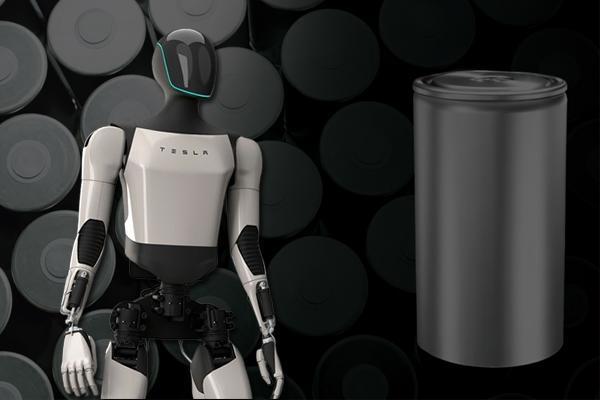
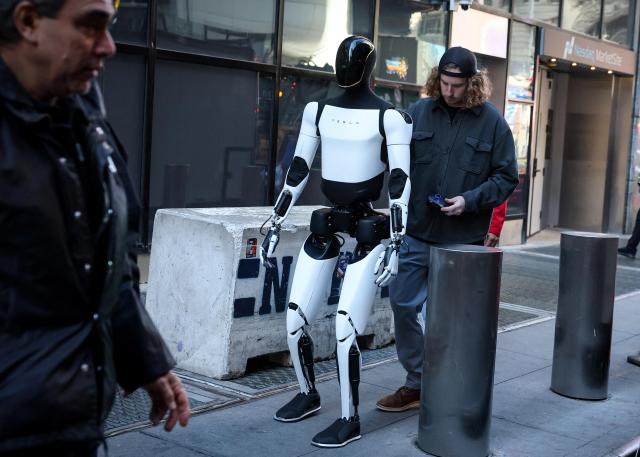
Tesla also plans to equip its Optimus humanoid robot with high-nickel cells, adding a new layer of demand.
The arrangement has reshaped traditional supply hierarchies.
LG Energy Solution selected L&F over its own parent company LG Chem as a cathode supplier, because L&F was the only producer capable of delivering ultra high-nickel materials at commercial scale.
The humanoid robot market could amplify that advantage.
TrendForce forecasts global shipments of humanoid robots will exceed 50,000 units this year, representing more than 700 percent year-on-year growth, with high-nickel ternary lithium batteries expected to dominate the segment.
By contrast, LFP batteries, which dominate the low-cost EV market, lack the energy density required for bipedal machines that must fit batteries into compact torso or backpack compartments. That limitation gives Korean NCM battery makers a natural advantage — even in China's fast-growing robotics market.
The EU's Industrial Acceleration Act adds another strategic dimension.
Under the legislation, industries in which a single non-EU country holds more than 40 percent of global manufacturing capacity face strict investment conditions — a provision widely interpreted as targeting China.
Korea's big three battery makers — LG Energy Solution, Samsung SDI and SK On — all operate production facilities in Europe, putting them in a stronger position than Chinese competitors facing dual regulatory scrutiny.
Korean manufacturers once held roughly 80 percent of Europe's EV battery market in 2022, but that share has since dropped to about 35 percent.
Industry observers say the IAA could trigger a supply-chain reorganization that allows Korean players to reclaim part of the lost ground.
"Hyundai, Kia and Korean battery makers with European plants are expected to expand their market share, and exports from Korean factories are also likely to increase," said Chang Jung-hoon, analyst at Samsung Securities.
"Unlike the U.S. Inflation Reduction Act, the IAA treats FTA partner countries on equal footing with EU members. Companies simply need to keep sourcing from any single country — namely China — below 40 percent," Chang said.
"The legislation also requires EU-origin battery cells, which will pressure Chinese firms seeking to expand capacity in Europe but benefits Korean companies that have already established meaningful local production."
Middle East war and the bigger picture
The escalating Middle East conflict adds another layer of uncertainty.
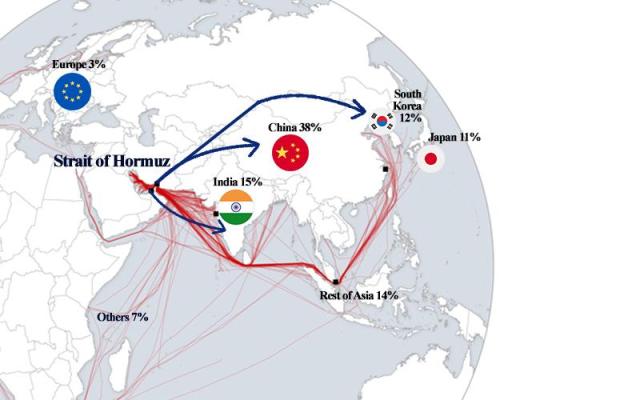
Historically, rising oil prices strengthen the economic case for electrification. But the conflict may also dampen China's EV export momentum.
Lithium prices in China have fallen sharply amid weakening demand expectations, even as Morgan Stanley forecasts a global lithium supply deficit of about 80,000 metric tons this year.
Still, the near-term picture remains challenging for South Korea.
Data released by SNE Research showed global EV battery usage reached 71.9 gigawatt-hours in January, up 10.7 percent year-on-year, but Korea's three major battery makers all recorded negative growth.
Their combined global market share fell 4.3 percentage points to 12.0 percent, dragged down in part by a 30.2 percent slump in U.S. EV sales after purchase subsidies under the Inflation Reduction Act expired in late September.
Supply volumes from SK On and Samsung SDI fell 21.3 percent and 24.4 percent respectively.
By contrast, CATL expanded installed capacity by 25.7 percent, lifting its market share to 45.2 percent for the month.
Despite China's dominance in volume, some analysts say the longer-term trajectory could look different.
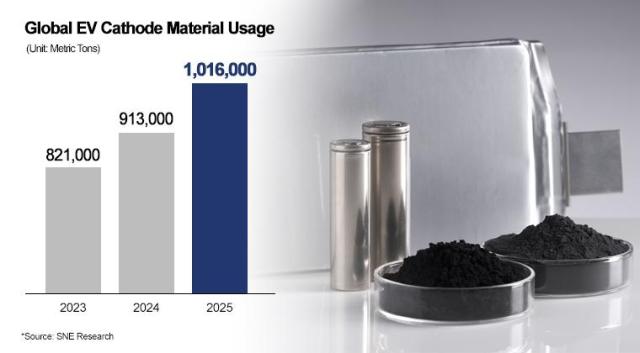
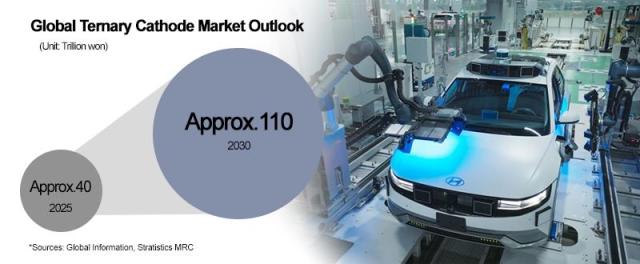
Market projections point in the same direction.
The global high-nickel cathode materials market is expected to expand from $7.27 billion in 2025 to $22.26 billion by 2034, according to Precedence Research.
"The high-nickel market is in a bit of a lull right now. LFP still dominates segments such as energy storage, where cost and stability matter most," said Kim Ki-jae, professor of battery science and engineering at Sungkyunkwan University.
"High-nickel cells could come into their own once the humanoid robot market opens up in earnest — but the real game has not started yet."
Copyright ⓒ Aju Press All rights reserved.
