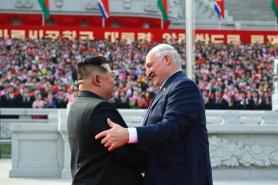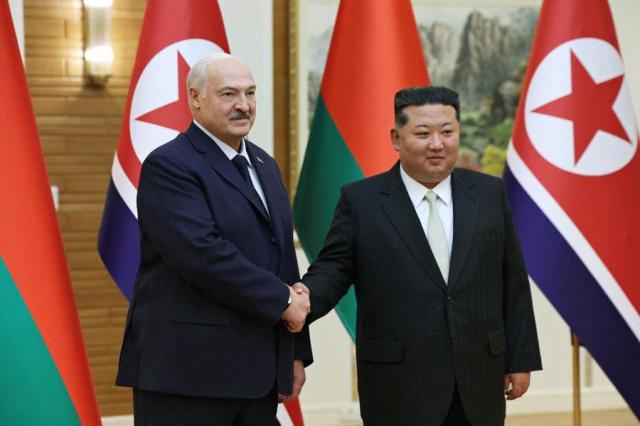
With the conflict in the Middle East dragging on with no signs of an end, attention has turned to why North Korea invited a leader from an Eastern European country more than 6,500 kilometers away to Pyongyang.
Russia's war in Ukraine, now in its fourth year, has become more than a regional conflict and is shaking the U.S.-led international order built after World War II. In that upheaval, North Korea appears to be moving quickly to widen its room to maneuver, and it also seems to view the Middle East conflict as another opportunity.
U.S. allies in Europe are already weary of a prolonged war. Many are also engaged in tariff disputes with the U.S. and appear reluctant to be pulled into a Middle East conflict that, many feel, lacks a clear rationale for intervention.
Time is not on Washington's side. Charbel Antoun, a Washington-based journalist, warned in an op-ed for The Hill that Russia and China could quietly back Iran, turning the situation into a prolonged war the U.S. cannot win.
To stabilize soaring global oil prices, the U.S. has eased sanctions on Russian and Iranian crude, a move that replenishes revenue for both countries and, with it, their capacity to fund war materiel. The lesson is not new: prolonged wars erode domestic support, as Presidents Harry S. Truman, Lyndon B. Johnson and George W. Bush learned from the wars in Korea, Vietnam and Iraq.
North Korea appears to read today's contradictions and fractured coordination among like-minded states as an opportunity to rally anti-Western forces, believing that the dispersal of U.S. strategic assets could hasten what North Korea calls a "multipolar order."
North Korea has recently described the Middle East conflict as an "illegal act of aggression” and “the most despicable form of violation of sovereignty," while singling out the United States for criticism.
Its state media called the U.S. the “mastermind" behind the Israel-Hamas war and Israel's airstrikes on Iran, accusing both Washington and Tel Aviv of fueling the conflict. The U.S. arrest of Venezuelan President Nicolás Maduro in January this year, along with the deaths of Iranian Supreme Leader Ali Khamenei in February and senior security official Ali Larijani in U.S.-Israeli strikes the following month, likely reminded Pyongyang of Donald Trump's infamous "fire and fury" threat in 2017.
Few countries now believe that North Korea will give up its nuclear weapons.
Belarus, under Lukashenko, has closely aligned with Moscow, supporting Russia's war in Ukraine and sharing military bases.
Belarus and North Korea established diplomatic relations in 1992, but meaningful ties remained limited for decades. Minsk largely complied with U.N. sanctions on Pyongyang - freezing accounts linked to violations in 2016 and expelling a North Korean intelligence agent in 2017. North Korea did not send an ambassador to Minsk until 2019.
Ties deepened after Russia's invasion of Ukraine. At the 2024 Non-Aligned Movement summit in Uganda, their top diplomats, Choe Son-hui and Maxim Ryzhenkov, met to discuss closer cooperation, followed by reciprocal visits in July and October 2025. A key moment came when Kim and Lukashenko met on the sidelines of China's Victory Day celebrations in September 2025. By February this year, the two countries were exchanging goods banned under sanctions. Both sides agreed to commit to establishing a multipolar world order, maintaining an anti-Western stance, and pursuing broader cooperation in politics, economics, and science and technology.
Lukashenko's visit to Pyongyang's Liberation Tower, a symbol of the historic North Korea-Soviet alliance, and his laying of flowers there was no coincidence. It signals that North Korea sees itself as a key pillar of an anti-Western bloc stretching from Eastern Europe to the Middle East.
The visit should also be seen alongside North Korea's rare Workers' Party congress, which wrapped up last month. Through the mass party gathering, Pyongyang declared an assertive foreign policy aimed at dismantling the U.S.-led world order and replacing it with its own multipolar vision.
Kim described the past five years - including engagement with shifts in global politics such as the Russia-Ukraine war - as a "successful period" that "irreversibly" strengthened the country's status. On South Korea, he hardened his tone, labeling it "the most hostile country" and "a target to be thoroughly rejected," and warned that military response standards would be entirely different. He also abandoned talk of "the nation" and "unification," recasting the Korean Peninsula as an international dispute between two separate states and framing it within his broader multipolar vision.
Kim described the past five years including responses to shifts in global politics such as Russia's war in Ukraine as a "successful" period that "irreversibly" strengthened North Korea's status.
On South Korea, he struck an even harsher tone, calling it the "most hostile country." He also refused to refer to the South as a country to be "reunited," reframing the division of the Korean Peninsula not as a matter between the two Koreas, but as part of a broader vision of a multipolar world.
Iran and Belarus, both under international sanctions, are the ninth and 10th members of the Shanghai Cooperation Organization, a China- and Russia-led security and economic bloc, making them potential partners for North Korea as it looks to expand its ties with the outside world.
Lukashenko met with U.S. special envoy John Coale in Minsk in mid-March, and Belarus reportedly freed 250 political prisoners after Washington promised to ease sanctions on Belarusian financial institutions. Like North Korea, Belarus ultimately needs better relations with the West. Some observers have floated the idea of Belarus acting as a mediator between North Korea and the U.S, though this prospect remains premature.
As North Korea seeks to build alliances from Eastern Europe to the Middle East under the banner of a multipolar world, South Korea requires a more strategic approach. Many countries that maintain friendly ties with North Korea also have relationships with Seoul, giving South Korea some leverage. Seoul could broaden its diplomatic efforts, for example, by strengthening relations with countries like Cuba and Syria and explore both official and behind-the-scenes channels to counter North Korea's efforts to build a like-minded bloc.
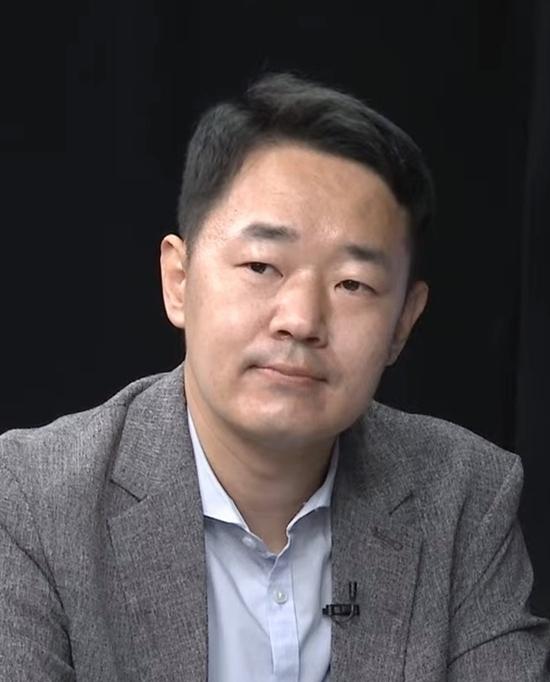
Han Ki-ho, a professor at Ajou University's Institute for Unification Studies
Copyright ⓒ Aju Press All rights reserved.