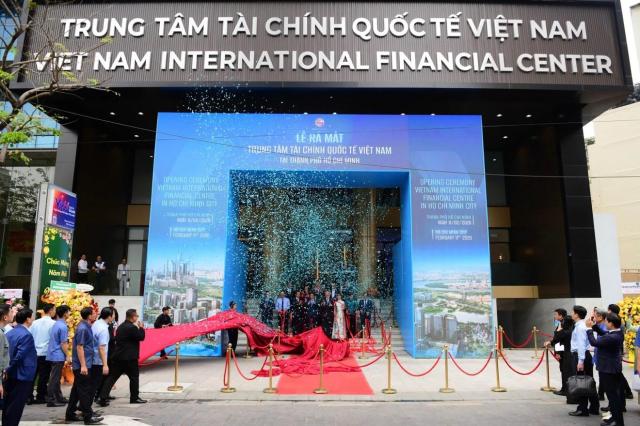
SEOUL, April 08 (AJP) - Viet Nam has secured 10 billion dollars in initial investment commitments as it formally launched a dual-hub international finance center, marking a decisive shift from its decades-long reliance on low-cost manufacturing. The project, which anchors operations in Ho Chi Minh City and Da Nang, signals the most significant economic restructuring since the Doi Moi reforms of the 1980s.
This pivot toward the Viet Nam International Finance Center (VIFC) represents a strategic gambit to escape the middle-income trap that has historically stifled developing economies. By establishing specialized zones, Hanoi aims to modernize its economic architecture and position itself as a sophisticated, technology-driven alternative to established regional nodes.
The strategy operates on a one-center, two-hub model designed to leverage the distinct geographic and economic strengths of the nation. Ho Chi Minh City, the commercial engine of the south, is designated as the primary gateway for international capital. Development is concentrated in the Thu Thiem district, which will house investment banks, private equity firms, and venture capital outfits to facilitate cross-border transactions and initial public offerings.
In contrast, Da Nang is positioned as a center for green finance and technological innovation. The coastal city will host regulatory sandboxes for fintech, blockchain, and financial artificial intelligence. This division of labor allows Hanoi to target emerging sectors such as renewable energy projects and environmental, social, and governance funds, carving out a niche in the global market.
Rather than attempting to replicate the traditional models of Singapore or Hong Kong, officials are pursuing a leapfrog strategy centered on digital assets and the data economy. To attract global institutional players, the government has introduced Decree 323 and Decree 324, which grant the VIFC unprecedented levels of autonomy. These frameworks mandate the adoption of International Financial Reporting Standards and Basel-compliant risk supervision to ensure institutional stability and transparency.
Fiscal incentives for the project are among the most aggressive in Southeast Asia. Priority ventures in fintech, semiconductor technology, and green finance are eligible for a 10 percent corporate income tax rate for 30 years. Other qualifying projects will receive a 15 percent rate for 15 years. To address the need for specialized labor, the state has introduced a golden visa program providing up to 10 years of residency and personal income tax exemptions for international experts.
The initiative arrives as global investors seek to diversify portfolios amid shifting supply chains in Asia. South Korean conglomerates and financial institutions in Seoul, which have historically treated the country as a manufacturing base, are now evaluating expanded roles in the burgeoning services sector. The 10 billion dollars in early investment pledges are primarily directed toward aviation finance and digital data infrastructure.
The Ministry of Planning and Investment continues to finalize the technical implementation of the regulatory sandbox for digital asset trading.
For global investors, participating in the VIFC represents more than just simple market expansion; it signifies entering the early stages of a mid-to-long-term growth cycle. At this current juncture, as the institutional framework, infrastructure, and financial ecosystem are taking shape in earnest, institutions that establish a preemptive presence will secure a strategic advantage. This early entry will allow them not only to secure prime locations and forge key partnerships but also to lead in establishing market standards.
The core message from Viet Nam's senior leadership is clear. Rather than relying on the outdated approach of competing directly with established, traditional financial hubs, the goal is to build a "smart, digital, and green" financial center rooted in Vietnam's unique strengths.
This mindset demonstrates both confidence and a pragmatic perspective. Instead of simply replicating the models of Singapore or Hong Kong, Viet Nam has chosen a strategy that integrates digital technology, green finance, fintech, artificial intelligence (AI), and the data economy right from the initial stages. This is a highly differentiated approach, characteristic of a "next-generation financial hub" that responds flexibly, openly, and swiftly to global shifts.

Copyright ⓒ Aju Press All rights reserved.