SEOUL, April 21 (AJP) - South Korea has coupled state diplomacy with corporate investment in a Global South strategy anchored on India and Vietnam, aiming to secure new growth engines while hedging against rising protectionism in Western markets and energy shocks from the Gulf, underscored by the two-month conflict in the Middle East.
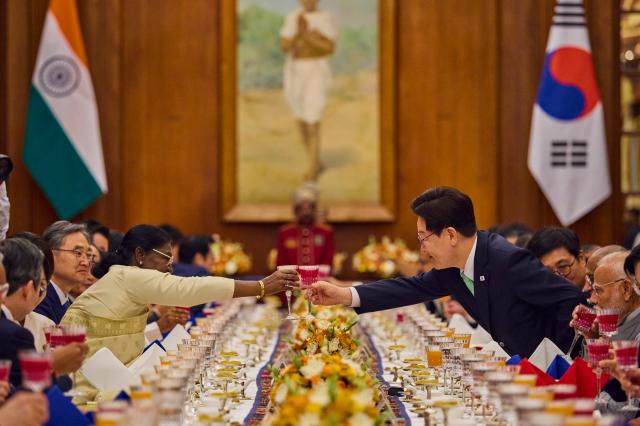
The six-day trip by President Lee Jae Myung from April 19 to 24 was accompanied by a 200-strong business delegation including the owner-chairmen of Samsung, Hyundai Motor Group, SK and LG, marking a coordinated push to deepen ties with key emerging partners while reducing exposure to Middle Eastern energy disruptions.
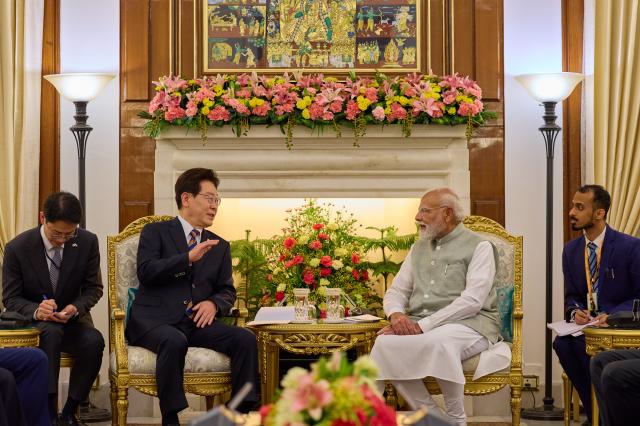
In New Delhi, Lee met Prime Minister Narendra Modi and attended a bilateral business forum attended by about 600 executives, where the two sides signed around 20 memorandums of understanding spanning steel, shipbuilding, energy and digital infrastructure.
Steelmakers POSCO and JSW Group on Monday signed a final agreement to advance a long-delayed joint venture steel mill project in Odisha, targeting completion by 2031 with an annual crude steel capacity of 6 million tons, as India — the world’s most populous country — posts steel demand growth of around 10 percent.
Seoul’s pivot comes as Asia’s heavy reliance on Middle Eastern oil and gas has been laid bare by disruptions to shipments through the Strait of Hormuz, a critical chokepoint that has been effectively crippled for nearly two months.
“Seeking diversification of energy supply chains is also a shared task that our two countries must solve together,” Lee said in an interview with Indian media, framing energy security as a central pillar of the trip.
Industry officials say the dual stop reflects a deliberate division of roles, with India positioned as a large-scale consumer market and potential energy partner, and Vietnam as a key manufacturing base as companies accelerate supply-chain diversification away from China.
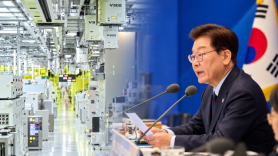
India, with a population of about 1.5 billion and annual growth near 7 percent, is increasingly viewed not only as a demand engine but also as a platform for industrial and energy cooperation, including refining capacity and next-generation energy technologies. Vietnam, meanwhile, has already emerged as a core production hub for Korean firms, with Samsung producing more than half of its global smartphone output there while expanding into higher-value areas such as semiconductor packaging.
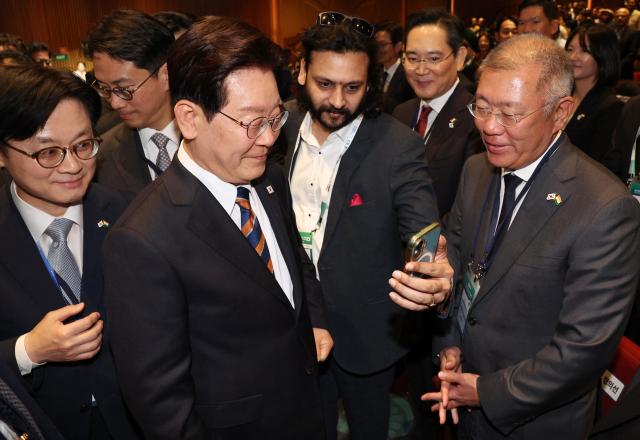
Major conglomerates are aligning closely with the government’s strategy. Samsung Electronics is exploring expanded cooperation with Reliance Group beyond telecommunications into semiconductors, artificial intelligence and potentially energy-linked projects.
Hyundai Motor Group is seeking to make India its second-largest market after the United States by 2030, while stepping up investment in electric vehicle production and infrastructure. SK Group is reviewing partnerships in hydrogen and carbon capture, and LG Group is expanding manufacturing and consumer electronics operations across both countries.
Companies are also pursuing projects tied to renewable energy, smart grids and next-generation technologies such as small modular reactors, reflecting a broader shift in which energy security is increasingly embedded in industrial strategy.
Korean firms, however, face stiff competition from Japan, which has built a stronger and longer-standing investment presence in both India and Vietnam.
While India and Vietnam cannot fully replace South Korea’s dependence on Middle Eastern energy in the near term, officials and industry executives see them as critical to building more resilient supply chains and securing future growth.
The visit signals a broader shift in Korea’s economic approach, as the government and corporations move beyond cost-driven globalization toward a model that prioritizes diversification, resilience and strategic partnerships in an increasingly fragmented global economy.
Copyright ⓒ Aju Press All rights reserved.