

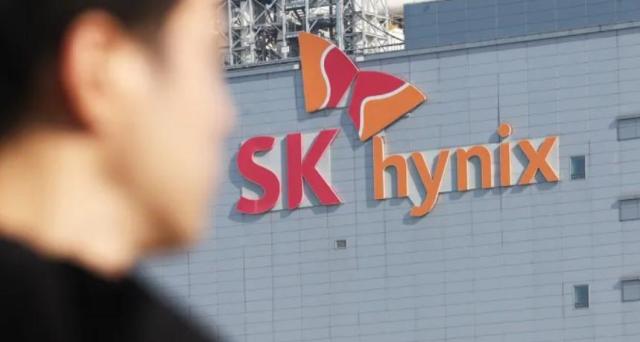
SK hynix has posted a record first-quarter operating profit of more than 37 trillion won, prompting talk that it could climb into the world’s No. 4 spot on an annual basis. But as earnings surge, management faces rising pressure from the labor union over performance bonuses, adding to the company’s burden.
According to securities-industry consensus estimates released on April 23, SK hynix is projected to post 358.037 trillion won in revenue this year, with operating profit as high as 277.7 trillion won. If those forecasts are realized, SK hynix would rank around fourth globally, ahead of Microsoft (245 trillion won) and Alphabet (240 trillion won).
Even with record results, executives are increasingly concerned as bonuses of “hundreds of millions of won per employee” come into view, potentially squeezing management flexibility.
Under a labor-management agreement to allocate 10% of operating profit to profit-sharing bonuses, the company would already need to set aside about 3.76 trillion won based on first-quarter operating profit of 37.6103 trillion won. Divided among about 35,000 employees, that works out to an average bonus of about 100 million won per person based on first-quarter results alone. If annual operating profit exceeds 270 trillion won, the average payout would be about 650 million won per employee.
That level would surpass the cost of building a single advanced production base. SK hynix on the previous day officially broke ground on its advanced packaging plant, P&T7, in Cheongju, North Chungcheong Province, with a total budget of 19 trillion won. The projected annual bonus pool would exceed the cost of constructing a next-generation flagship production site.
The gap is also large compared with spending meant to secure the company’s future. SK hynix’s R&D investment last year totaled 6.7325 trillion won. The projected bonus pool would also exceed by more than 10 times the company’s total dividends of 2.1 trillion won for more than 1.19 million shareholders.
SK hynix has major projects awaiting funding, including its new M15X fab in Cheongju and the Yongin semiconductor cluster, both requiring investments in the trillions of won. The company also needs sustained funding to develop and mass-produce next-generation high-bandwidth memory, or HBM, to meet demands from global customers including Nvidia.
Industry experts say the semiconductor sector’s volatility means the company should focus on capital allocation for long-term survival rather than becoming complacent amid record earnings, prioritizing preparation for future downturns and investment in next-generation processes.
Ahn Ki-hyeon, executive director of the Korea Semiconductor Industry Association, said, “Since semiconductors are a national security asset, the union also needs cooperation at a broader level for the company’s sustainable growth, rather than focusing on short-term gains in performance bonuses.”
* This article has been translated by AI.
Copyright ⓒ Aju Press All rights reserved.