

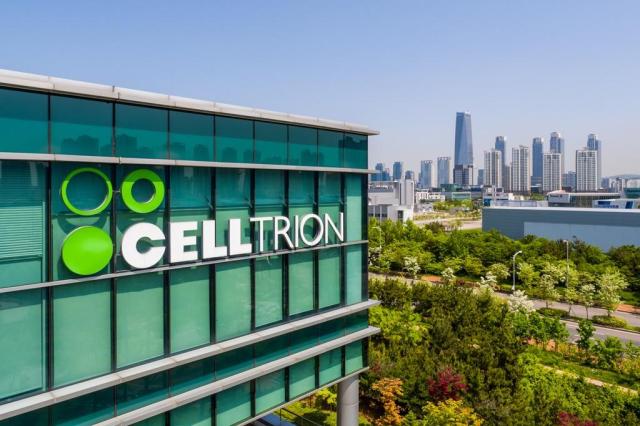
Celltrion said April 23 that all three of its antibody-drug conjugate (ADC)-based cancer drug candidates have entered the patient-dosing stage.
The candidates now being dosed are CT‑P70, CT‑P71 and CT‑P73. All three received U.S. Food and Drug Administration approval last year for investigational new drug (IND) applications for Phase 1 trials, the company said. Patient dosing for CT‑P70 and CT‑P71 began in the second half of last year, and CT‑P73 dosing began in the first quarter of this year.
Celltrion said preclinical studies confirmed the candidates’ mechanisms of action and safety. In Phase 1, it plans to evaluate dose-by-dose safety and pharmacokinetic characteristics.
The company is also developing a multispecific antibody candidate, CT‑P72. It is currently recruiting patients and could begin dosing the first patient as early as next month.
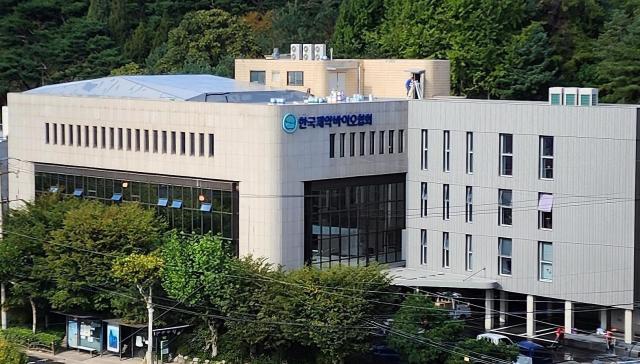
The Korea Pharmaceutical and Bio-Pharma Association said April 23 it will launch a practical training course on responding to U.S. life sciences patent issues on June 12 at the association’s fourth-floor auditorium.
The association said the program is designed to strengthen companies’ ability to manage U.S. patent risks that can arise during global expansion, including technology licensing, partnering and overseas clinical trials.
It cited cases in which negotiations collapsed after businesses moved forward without freedom-to-operate (FTO) analysis, or deals were delayed during due diligence because of intellectual property issues.
The course will have three sessions: the reality of U.S. life sciences patent disputes and core FTO concepts and practical considerations; U.S. patent avoidance strategies and global dispute trends; and global IP strategy and commercialization preparation at the research and development stage.
The lecture will be led by attorney Nam In-young, a New York and California-licensed lawyer and U.S. patent litigation specialist, the association said.
The program is aimed at R&D and IP staff, business development and corporate planning personnel, and executives and decision-makers at life sciences companies considering or pursuing entry into the U.S. market. Enrollment will be capped at 50 participants.
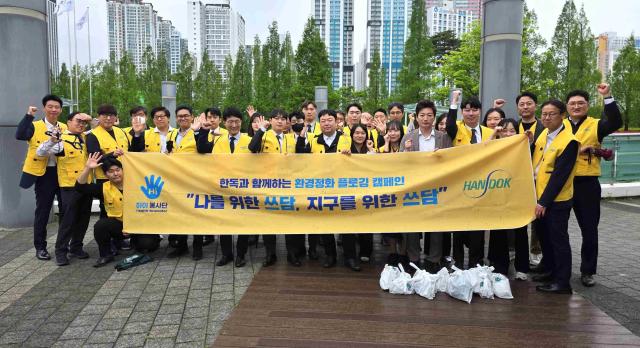
Handok said April 23 that it held an environmental cleanup “plogging” volunteer event with employees on April 22 around Busan Citizens Park.
The company said the campaign, titled “Pick up for me, pick up for Earth,” was organized with the Busan Volunteer Center to mark Earth Day on April 22. It also aimed to spruce up the area ahead of the 20th National Para Student Sports Games and the 55th National Youth Sports Games.
About 30 Handok employees, including sales staff working in Busan, took part, the company said. It plans to continue individual plogging through May 24 using the Busan Volunteer Bank application.
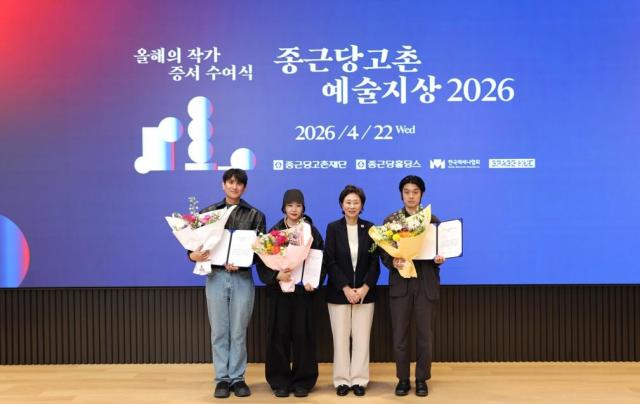
The Chong Kun Dang Gochon Foundation said April 23 it selected three artists — Kim Myeong-chan, Park Geurim and Yeom Ji-hee — as this year’s artists and held a certificate presentation ceremony April 22 at Chong Kun Dang’s headquarters in Chungjeong-ro, Seoul.
The foundation said the artists were recognized for experimentation and growth potential within contemporary painting. The selections were made through a closed review by a panel of art experts.
Each artist will receive 10 million won a year in creation grants for three years, and in the final year will be given an opportunity to present results through a curated exhibition, the foundation said.
The “Chong Kun Dang Gochon Art Award” is a cultural and arts social contribution program launched at the suggestion of Chairman Lee Jang-han to support emerging artists with growth potential. Since 2012, it has been run with Chong Kun Dang Holdings, the Korea Mecenat Association and Art Space Huga, and has discovered and supported a total of 45 artists, the foundation said.
* This article has been translated by AI.
Copyright ⓒ Aju Press All rights reserved.