

South Korea’s industrial sector is again facing intensifying labor-management conflict, with concerns growing over production disruptions and weaker investment as some unions press ahead with strikes despite court action questioning the legality of the dispute. Labor disputes are an inevitable part of a democratic society, but confrontations that disregard legal judgments risk undermining industrial competitiveness.
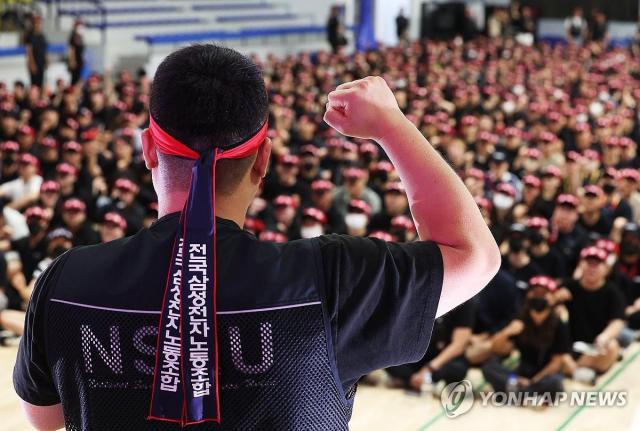
The Samsung Electronics union recently held a large rally at the company’s Pyeongtaek complex and reaffirmed plans to launch a general strike next month. The union is seeking changes to the performance-bonus system and a broader sharing of excess profits, and it has raised the possibility of halting semiconductor production lines. The company said that under Supreme Court precedent, demands to share excess profits are not a lawful basis for a strike, adding that it will continue efforts to reach an agreement through talks.
Workers’ demands for fair compensation and the right to collective action are protected by the Constitution. But not every demand automatically justifies a strike. Legal standards apply, including whether the issue directly concerns wages and working conditions, whether collective bargaining procedures were properly followed, and whether social harm was minimized. If a court has ruled and imposed limits, respecting that decision is a starting point for the rule of law.
The stakes are heightened by the industry involved. The expected clash centers on semiconductors and other advanced manufacturing, a core pillar of the South Korean economy. With global supply chains being reshaped and technology competition intensifying among the United States and China, and with Taiwan and Japan investing aggressively, South Korean companies face mounting pressure. Repeatedly using the prospect of production stoppages as leverage effectively gives competitors time to catch up.
Semiconductor operations also differ from typical manufacturing. Restarting after a shutdown can require significant time and cost, and delivery delays can lead customers to switch suppliers. Restoring trust after disruptions can take far longer. The more both sides focus on short-term wins, the greater the long-term losses can become.
Companies, however, are not free of responsibility. If performance compensation is opaque or communication is rigid, the roots of conflict lie inside the organization. If employees do not feel they share in results even during record performance, dissatisfaction is likely to build. Claims of excessive union demands do not excuse management’s lack of responsiveness.
The path forward is structured negotiation, not escalation. Issues addressed by court rulings should be respected, while detailed compensation systems can be revisited at the bargaining table. Companies should disclose bonus calculation standards and future investment plans more transparently to rebuild trust. Unions should move away from tactics that hold production disruptions as leverage and instead engage as responsible partners on expertise and sustainability. The government should strengthen mediation in disputes affecting key industries and provide predictable guidelines.
Protecting labor rights and maintaining industrial competitiveness are not mutually exclusive. Stable jobs ultimately depend on competitive companies, and companies that do not respect workers are not sustainable. Strikes pushed ahead despite court limits are unlikely to win broad public support, and companies should not hide behind legal arguments while allowing conflicts to fester. Global competition is driven by technology and speed, and South Korea cannot afford to be slowed by internal confrontation.
* This article has been translated by AI.
Copyright ⓒ Aju Press All rights reserved.