

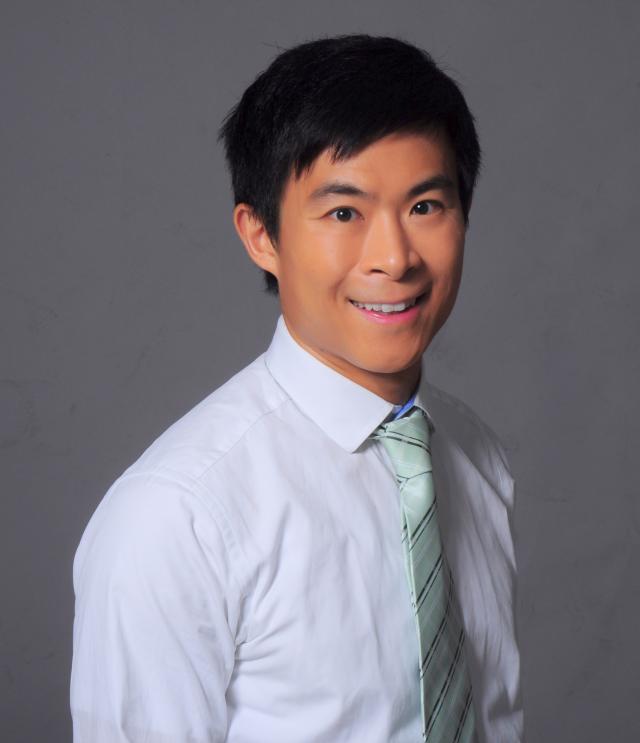
"We need a culture where saying, 'I was wrong — I see it differently now,' is accepted and even encouraged."
Alex Edmans, a professor of finance at London Business School, says resisting misinformation starts with curiosity and the habit of asking questions rather than leaning on conventional wisdom or authority.
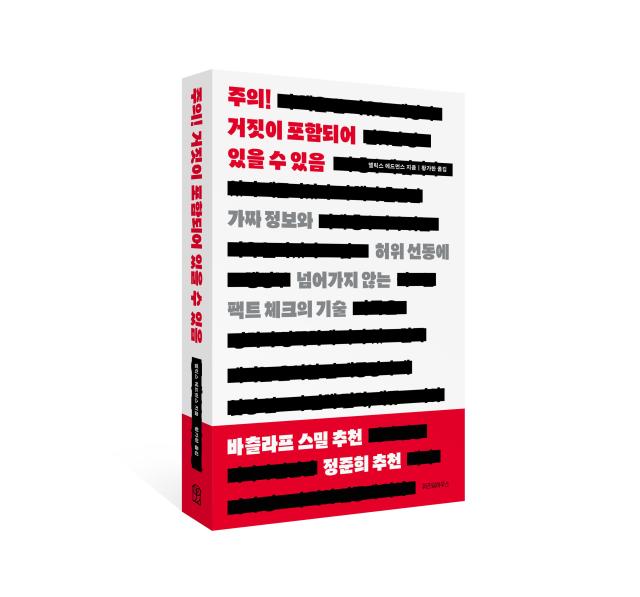
In his book <May Contain Lies> (Wisdom House), Edmans puts a wide range of sources under scrutiny — government-approved reports, papers published in scientific journals and even books endorsed by Nobel laureates. He also points to what he calls errors and exaggerations in global bestsellers, including <Outliers>.
In an interview with this news organization, Edmans said Korea’s polarization and a confirmation-bias environment — where people seek out only what supports what they already believe — can be addressed by encouraging curiosity and questioning. He also said a harsh attitude toward failure can make people cling to a view once they adopt it, instead of changing their minds.
"If people become more discerning, things can improve," he said. "Just being curious and asking questions can do it. In an environment that is strict about failure, once you hold a particular view, you become focused on defending it and you don’t want to change your mind."
Edmans said books should not be treated as automatically trustworthy and that popularity is not proof of accuracy.
"People say something is 'textbook' when they mean it’s correct, or they defer to authority by saying, 'He wrote the book on it,'" he said. "But a book isn’t that different from a long blog post. What matters is who wrote it and whether that person has expertise. Popularity is not evidence that the content is accurate — just as viral videos can be misleading."
He said people should avoid settling for the most obvious explanation and instead look for alternatives by asking questions. He described confirmation bias as a tendency to accept what feels comfortable and said people should practice tolerating discomfort and challenging what they want to be true.
He wrote in the Korean edition’s preface that “democracy dies when citizens stop asking questions.”
"As an economist, I believe both supply and demand matter," he said. "If the public wants fake news — if citizens don’t ask questions and accept as fact only what they want to believe — then politicians, influencers and journalists will keep supplying it. The key point is that this isn’t because they are bad people. They are human, and they may lack the time or expertise to think critically and fact-check. Even busy citizens can understand the world better and make better decisions just by asking simple questions."
Edmans also answered questions in writing about fact-checking and how people can avoid being misled by false information and incitement.
▷ People can be influenced more by values and ideology than by facts. How can people balance the pursuit of objective facts with value judgments?
"It starts with recognizing the difference," he wrote. "Some issues have an objective truth — whether smoking causes cancer, or whether investing in a net-zero portfolio lowers financial returns. But what decision to make in a given situation is often a value judgment. Even if a net-zero portfolio doesn’t maximize returns, you might invest because you worry about climate change. Separating the two is important. If someone says, 'Net-zero investing sacrifices financial returns,' social media may try to brand that person a climate-change denier or immoral. But it’s simply a fact, without a value judgment. Acknowledging that net-zero investing has costs, while deciding you are willing to pay them because of concern about climate change, is not logically inconsistent."
▷ Your book emphasizes diversity and inclusion. Is dialogue that reaches mutual agreement really possible?
"If people are open-minded, and if culture supports changing one’s view rather than saving face by refusing to admit mistakes, then agreement through dialogue is certainly possible," he wrote.
▷ Korea’s education system tends to focus on finding the right answer. As a parent, what matters most in building a child’s critical thinking?
"Encourage children to ask questions," he wrote. "There are two ways. First, explicitly praise the act of asking. I often tell my son, 'That’s a good question.' Second, answer carefully even if the question is simple. Sometimes you may need paper and a pen to draw a picture, or show a real object, to answer properly."
▷ The word “common sense” is often used in politics and can change by era and context. Is it a reliable standard?
"Appealing to common sense is dangerous," he wrote. "It often means personal intuition or a hunch, which can lead people to reject evidence that contradicts their instincts. For example, it may seem like giving water to a child with diarrhea will just pass through, so you shouldn’t. But experts say you must give water to prevent dehydration. Also, the 'common' in common sense can mean what everyone else thinks — a shared belief. But the wisdom of crowds is often wrong."
▷ Will advances in technology, including AI, worsen information distortion or improve it?
"The internet has made it very easy for people to search for information that supports their views, regardless of whether it is true," he wrote. "Social media bears some responsibility for misleading people with posts or short videos, but the problem is that this has expanded into blogs and newspaper articles. AI is a double-edged sword. Like other tools, it depends on how it is used. Some will use AI to check or verify the other side of an argument, while others will use it to find information that reinforces existing biases."
▷ A message for Korean readers?
"Fake news is a serious problem, but it is not unsolvable," he wrote. "If you keep an open mind, don’t lose curiosity, and keep asking questions, you can get a little better every day."
* This article has been translated by AI.
Copyright ⓒ Aju Press All rights reserved.