

SEOUL, April 27 (AJP) - Researchers from South Korea and the United States have developed a diagnostic technology that simultaneously identifies various viruses and variants by measuring the reaction speed of gene scissors, the Korea Advanced Institute of Science and Technology said Sunday. The method allows for the identification of different pathogens in a single test without the need for complex laboratory procedures or multiple chemical markers.
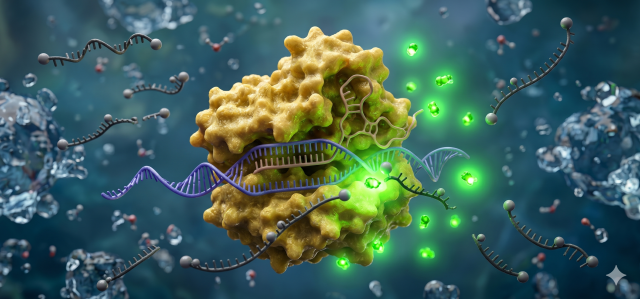
The study was led by Professor Son Sung-min from the KAIST Department of Bio and Brain Engineering in collaboration with teams from the University of California, Berkeley (UC Berkeley) and the Gladstone Institutes. The researchers utilized a protein called Cas13, a type of gene scissors that targets ribonucleic acid (RNA). When Cas13 identifies a specific viral target, it activates and produces a fluorescent signal by cutting surrounding molecules.
While conventional diagnostic methods often require different enzymes or multiple fluorescent colors to detect several viruses at once, this team focused on the speed of the reaction. By observing the process at a single-molecule level within microscopic droplets, they found that the gene scissors operate at distinct speeds depending on the specific virus or mutation they encounter.
The team established a technique called kinetic barcoding, which treats these varying reaction speeds as unique signal patterns. By adjusting the design of the guide RNA, which directs the scissors to their target, the researchers can program the speed of the enzyme. This allows a single type of gene scissors to distinguish between a wide range of respiratory viruses and variants.
The new approach also simplifies the testing process by detecting RNA directly. Most current tests for RNA viruses require a step called reverse transcription to convert the genetic material into DNA, which adds time and technical complexity. This platform eliminates that requirement, potentially allowing for faster results in clinical or field settings.
In clinical trials, the system accurately identified various respiratory viruses and variants of SARS-CoV-2 in a single reaction. "This study is the first instance of using the reaction speed of gene scissors as a new type of information for diagnostics, moving beyond simply checking for the presence of a virus," Professor Son Sung-min said. "It will serve as a next-generation platform capable of diagnosing various infectious diseases simultaneously in the field."
[Reference Information]
Journal/Source: Nature Biomedical Engineering
Title: Programmable kinetic barcoding for multiplexed RNA detection with Cas13a
Link/DOI: https://bit.ly/4sTo8on

Copyright ⓒ Aju Press All rights reserved.
