

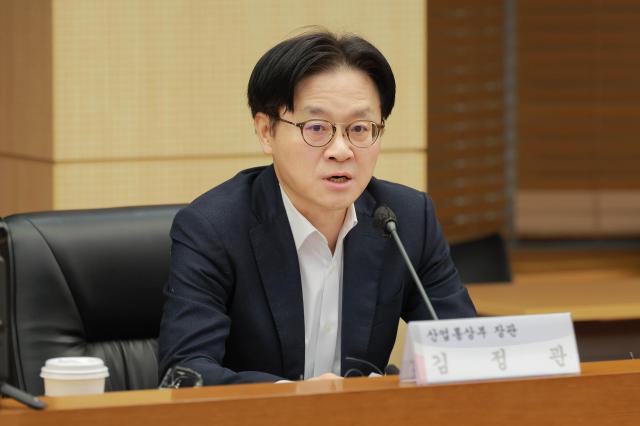
He said the government will “overhaul” the policy so reshoring investment can energize regional economies and help build up core capabilities at home.
Kim made the remarks during a visit to cosmetics manufacturer Kolmar Korea, selected as this year’s first reshoring company, where he held a meeting with returning firms. Kolmar Korea plans to close its overseas sites and invest 187 billion won in Sejong City after returning to South Korea.
Since the enactment of the Act on Assistance to Returning Companies, reshoring policy from 2014 to 2025 generated 7 trillion won in investment and created 8,000 jobs. But new reshoring has stagnated as rapidly changing investment conditions — including stronger global protectionism and supply-chain restructuring — have not been sufficiently reflected in the policy.
The ministry noted that major countries are competing to attract investment to keep advanced industries and key supply chains within their borders. It said policy needs to be redesigned not only to support relocating overseas operations back home, but also to secure core industrial capabilities.
Companies at the meeting asked for stronger government support for investment amid uncertain global supply chains and accelerating artificial intelligence-driven transformation. They said eligibility for reshoring support is too narrow, citing a requirement that products and services made at overseas sites and at the returning domestic site must be the same or similar — making it difficult to qualify when switching production to different items or investing in research facilities in South Korea.
They also said an obligation to maintain existing sites for the three-year implementation period, rather than the returning site, limits flexible operations. They urged more flexible employment standards as automation expands.
The ministry said it will prepare improvements focused on expanding eligibility and refining detailed requirements, diversifying subsidy support based on the type of reshoring, and strengthening strategic attraction and close support for investment implementation.
Kim thanked reshoring companies and said Kolmar Korea’s investment would be a leading example of productivity innovation through process automation. He said the government will strengthen the strategic approach to reshoring support, back investment implementation through completion, and assign a dedicated project manager to provide close, end-to-end assistance.
“Corporate and national competitiveness has become an era determined by ‘how stable a supply chain you can secure,’” Kim said, adding that the government will actively support companies so returning home and investing in regional areas can be the most reasonable and attractive choice.
* This article has been translated by AI.
Copyright ⓒ Aju Press All rights reserved.