

Bloomberg News reported on the 27th that markets expect the BOJ to maintain the policy rate at 0.75%. Until a few weeks ago, many investors had expected another increase as part of the bank’s policy normalization.
That view has faded after international oil prices jumped following a military clash between the Trump administration and Iran. Markets now price only a 7% chance of a rate hike this month, and economists have increasingly pushed their expectations to June.
As rate-hike expectations ease, pressure has grown on the BOJ to address yen weakness. The yen traded around 159.50 per dollar in Tokyo on Monday morning, near levels that prompted Japanese authorities to intervene in 2024 to support the currency. Japan’s finance minister, Satsuki Katayama, said at a recent Bloomberg event, “Japanese authorities are in close contact with the U.S. side 24 hours a day,” while warning against speculative moves.
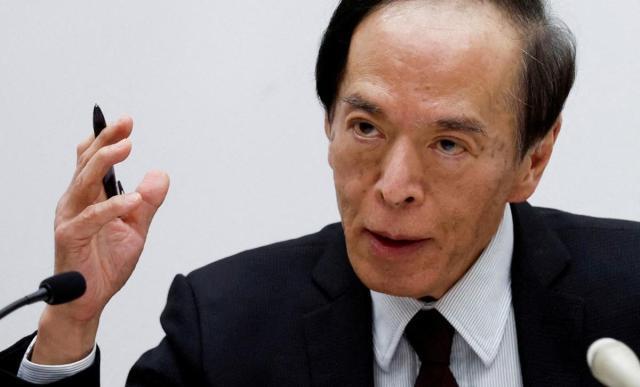
Ueda’s remarks are under scrutiny in part because of last April. After the BOJ held policy steady then, his comments on the yen were taken as a cautious stance on rate hikes, and the currency fell sharply. Investors worry the yen could weaken again if his message after another hold is seen as too soft.
At the same time, the BOJ faces risks in signaling a strong commitment to further tightening. Since the Iran war, uncertainty over oil prices and supply chains has increased. Higher rates could help support the yen, but they could also add to slowdown pressure from higher energy costs. Bloomberg, citing sources, reported the BOJ’s final decision could be delayed until the last moment.
Inflation data underscore the dilemma. Japan’s March consumer inflation accelerated for the first time in five months. Services producer prices rose 1.25% from the previous month, the biggest increase in about 36 years excluding periods tied to consumption tax hikes.
A weaker yen is pushing up import costs, and companies have continued raising prices. The BOJ may find it difficult to hike immediately because of growth concerns, but it also cannot fully rule out further increases given currency weakness and inflation pressure. The meeting is expected to test how the BOJ balances a hold decision with language that keeps the door open to additional hikes.
That balancing act is also expected to show up in the quarterly outlook to be released with the meeting. Bloomberg reported policymakers may consider raising their inflation forecast for the fiscal year that began this month from 1.9% by a significant margin, while trimming growth projections. The median market estimate is that the BOJ will cut its growth forecast for the current fiscal year to 0.8% from 1.0%.
Markets are watching whether Ueda leaves room for further hikes even if the BOJ holds rates. Bloomberg said the key issue is how strongly the BOJ communicates its willingness to raise rates to curb yen weakness.
* This article has been translated by AI.
Copyright ⓒ Aju Press All rights reserved.