

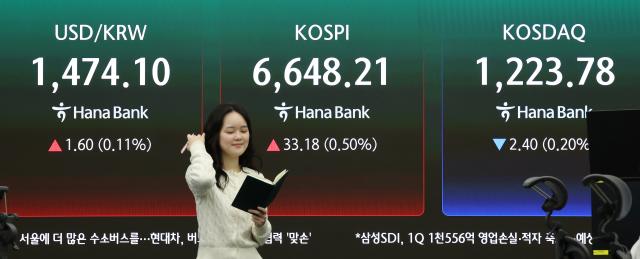
The won opened slightly weaker against the U.S. dollar as ceasefire negotiations between the United States and Iran remained stalled.
As of 9:28 a.m. in Seoul on April 28, the won was trading at 1,473.5 per dollar. It opened at 1,474.1, up 1.6 won from the previous session.
U.S. President Donald Trump is reviewing a new Iranian proposal, putting the deadlocked talks into a new phase.
The Wall Street Journal reported on April 27 (local time) that Trump and his national security team were skeptical of Iran’s offer, which included keeping the Strait of Hormuz open and postponing discussions on its nuclear program.
The dollar, which had been pressured early in the previous session on expectations of progress in U.S.-Iran war talks, rebounded in New York trading as risk appetite cooled.
Oil prices also rose as uncertainty over the negotiations resurfaced. On April 27, June WTI crude on the New York Mercantile Exchange settled up 2.08% at $96.37 a barrel. July Brent crude on the London futures market ended up 2.58% at $101.69 a barrel.
Min Kyung-won, an economist at Woori Bank, said steady dollar buying has continued in the local market, including demand for dividend repatriation and payments by importers. “The exchange rate is expected to face stronger upward pressure in the mid-1,470s today,” Min said.
* This article has been translated by AI.
Copyright ⓒ Aju Press All rights reserved.