

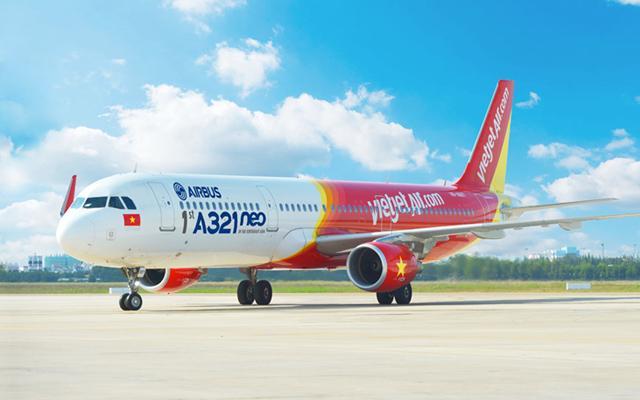
Vietnamese low-cost carrier VietJet is stepping up plans to enter European routes and says it aims to grow into a “multinational aviation group,” moving beyond its short-haul budget roots.
Vietnamese media including Cheongnyeon Sinmun reported on April 28 (local time) that South Koreans were the second-largest group of foreign visitors to Vietnam in the first quarter, totaling 1,326,425. VietJet, well known to Korean travelers for low fares, has now outlined a shift in strategy: paying shareholders stock dividends instead of cash and raising large sums externally to open long-haul routes to Europe and the Americas.
At its annual shareholders meeting in Ho Chi Minh City on April 24, VietJet approved a 30% stock dividend, corporate bond issuance and a plan to issue new shares worth up to $300 million (about 440 billion won). The package signaled a preference to reinvest rather than distribute cash, and shareholders backed the move.
The company pointed to strong results last year. Revenue rose about 13% and pretax profit climbed 41%. VietJet carried 28.2 million passengers, added 22 aircraft and expanded its fleet to 101 planes. It logged more than 150,000 flights for the year, averaging more than 400 a day.
VietJet said the funds will go to additional wide-body aircraft, new international routes, expanded maintenance facilities and workforce training. It has already drawn attention at the Paris Air Show by ordering 100 Airbus A321neo jets and 20 long-haul A330neo wide-body aircraft. Its Thailand unit plans to expand routes to 53 next year, and its Kazakhstan unit, long in the red, has turned profitable. VietJet said transaction volume on its in-house payment service, Galaxy Pay, has topped 15 trillion dong (about 840 billion won), and membership has surpassed 2 million.
Europe is the centerpiece of the expansion plan. Vice President Jay Lingeswara said at an aviation conference this month that “the market we are watching most is Europe,” and that VietJet will launch one-stop service linking Vietnam to Europe via Kazakhstan. “We have always entered markets others avoid first and grown them — that is our formula,” he said.
Chairwoman Nguyen Thi Phuong Thao, VietJet’s founder and widely known as Vietnam’s first female billionaire, told the shareholders meeting that VietJet is “not simply a company that carries passengers,” but one that connects “the economy, dreams and the future.” Independent director Philipp Roessler, described in the report as a former German vice chancellor, said VietJet has been preparing for European expansion for a long time.
The airline also flagged risks. It said intensified conflict in the Middle East in March pushed jet fuel prices to around $200 a barrel, a major concern for airlines. VietJet said it slightly lowered its targets for this year and will spend only where necessary.
For Korean travelers, VietJet Thailand said last year it would gradually expand medium-haul routes toward South Korea, Japan, China and India. That could add options beyond direct flights to Vietnamese resort destinations such as Da Nang and Phu Quoc, including connections via Bangkok. The report noted, however, that frequent delays remain a challenge for VietJet as it expands.
* This article has been translated by AI.
Copyright ⓒ Aju Press All rights reserved.