
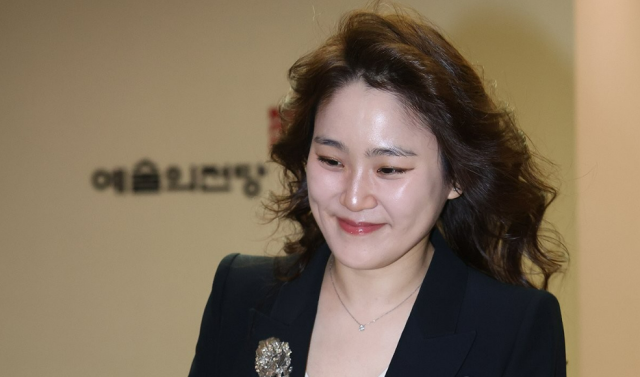
Against that backdrop, the appointment of world-renowned violinist Jang Han-na (Sarah Chang) as president and CEO of the Seoul Arts Center is being framed as more than a routine personnel change.
In her inaugural remarks, she argued that the center’s competition is no longer defined by other landmark venues abroad.
“The Seoul Arts Center’s competitors are not Japan’s arts centers, not America’s Lincoln Center, and not China’s National Centre for the Performing Arts. Our real competitors are Netflix and YouTube,” she said.
The article links the center’s chronic deficits to shifting audience habits: fewer in-person visitors, rising costs and slow innovation under a public-institution model. It describes accumulated losses of hundreds of billions of won as a warning that cultural organizations need a survival strategy.
By naming digital platforms as the benchmark, the article says, Chang is signaling an intent to treat the Seoul Arts Center less as a building and more as a content-driven platform that reaches audiences where they already are.
Chang began playing violin at age 4, entered the Juilliard pre-college program at 6 and performed with the New York Philharmonic and the Philadelphia Orchestra at 8, the article says. It also recounts auditions in front of Zubin Mehta and Riccardo Muti, saying both conductors quickly approved her for the stage.
The article says she recorded her first album, “Debut,” around age 10. Released by EMI Classics, it rose quickly on Billboard’s classical best-seller chart, it says.
It also cites praise attributed to Yehudi Menuhin, who is widely quoted as calling her “the most perfect violinist I have ever heard.” The article adds that her recordings of the Brahms and Bruch concertos were named by Gramophone as among the best recordings in history.
The piece describes Chang’s success as the product of intense training, saying she practiced more than 10 hours a day and repeated passages thousands of times to achieve precision onstage.
It also argues that her reputation rests on performance rather than identity, referencing a scene from the film “Tár” to illustrate contemporary debates over how art is consumed. The article says the stage ultimately rewards execution, not symbolism.
As background, it says Chang has performed with major orchestras including the Berlin Philharmonic, Vienna Philharmonic, Chicago Symphony Orchestra and Boston Symphony Orchestra. It credits her family with making major sacrifices to support her career, saying her father chose to move to the United States and worked, including at a KOTRA office, in a path the article describes as centered on his daughter’s development. It says her father was a violinist and music teacher and her mother a composer, and that her father was her first teacher.
The article says Chang has also worked to broaden access to classical music. It cites her involvement in 2011 performances at Seongnam Arts Center that helped introduce classical music to teenagers, during a period when Lee Jae-myung was serving as Seongnam mayor, the article says.
Looking ahead, the article argues the Seoul Arts Center should not serve only traditional classical audiences. It calls for a wider platform that includes classical music, opera and ballet as well as film, AI art, game music, digital performance and global collaborations. It says the goal should be to expand beyond venue operations into digital platforms, global streaming and educational content.
The article concludes that Chang’s appointment raises a broader question about the next phase of Korean culture, arguing that the remaining frontier after K-pop, K-dramas and Korean film is what it calls “K-classical.”
* This article has been translated by AI.

Copyright ⓒ Aju Press All rights reserved.