

The Bank of Japan on April 28 kept its benchmark interest rate unchanged at 0.75%, as rising inflation pressure collides with growing concern about an economic slowdown. Analysts said the BOJ is maintaining its tightening bias while weighing the timing of its next move.
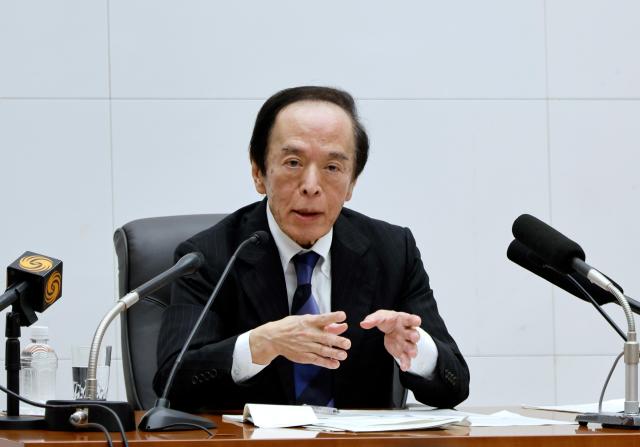
At an afternoon news conference, Gov. Kazuo Ueda said upside risks to inflation are larger, leaving room for a rate hike depending on conditions, while signaling caution about moving immediately.
According to the Nikkei, the BOJ decided to maintain its target for the uncollateralized overnight call rate at 0.75%, marking a third straight hold since a rate increase last December. The decision reflected uncertainty as instability in the Middle East pushes up oil prices, potentially hitting both inflation and growth, the report said.
The focus, Nikkei said, is not the direction of policy but the pace. Quoting a former BOJ policy board member, it described the decision as a “hawkish hold,” citing an upgraded inflation outlook and adjusted policy wording that more clearly points to future hikes. In its statement, the BOJ removed language referring to improvements in “economic and price conditions” and changed it to “depending on economic, price and financial conditions,” a shift that can be read as keeping the door open to hikes even during a slowdown.
In its quarterly “Outlook for Economic Activity and Prices,” the BOJ raised its forecast for fiscal 2026 consumer price inflation to 2.8%, a sharp increase. It cut its real growth forecast to 0.5% from 1.0% projected in January, underscoring what the article called a dual squeeze of higher prices and weaker growth.
Yomiuri Shimbun highlighted Ueda’s remarks that upside inflation risks are growing, saying the BOJ is placing greater weight on fighting inflation. Ueda also said he would avoid falling “behind the curve,” leaving open the possibility of an earlier hike if needed.
Another notable development was a clearer split inside the BOJ. Three of the nine policy board members opposed holding rates and argued for a hike to 1.0%, a sign of shifting sentiment rather than a routine minority view, the article said.
Asahi Shimbun called the internal divide a central issue, saying opposition driven by concern about inflation risks is expanding and altering the balance of views. It said calls for higher rates now include board member Nakagawa, described as a centrist, adding to pressure for a policy shift.
Asahi also pointed to a structural dilemma: higher oil prices lift inflation but also weigh on growth, complicating the choice between raising rates and maintaining accommodation. It added that inflation may be becoming easier to sustain as price hikes by companies feed into wage gains.
While the BOJ chose to hold, it sought to keep expectations of tightening intact. Nikkei said one reason for the hawkish signal was to prevent renewed yen weakness over the holiday period, recalling that after the April 2024 hold, Ueda’s news conference was interpreted as tolerating a weaker yen, followed by a sharp holiday slide and market intervention by currency authorities. Nikkei also said the BOJ is wary of market talk that a June hike would be difficult; if investors conclude that missing June means no July hike either, it could further weaken the yen.
Overall, the article said, the decision was less a passive pause than a strategic wait for a coming hiking phase. With a higher inflation forecast, more internal dissent and Ueda’s hawkish comments, attention has shifted from whether the BOJ will hold to when it will raise rates. Middle East developments and oil prices remain the biggest variables, with the next meeting in June seen as the first key test.
* This article has been translated by AI.
Copyright ⓒ Aju Press All rights reserved.