

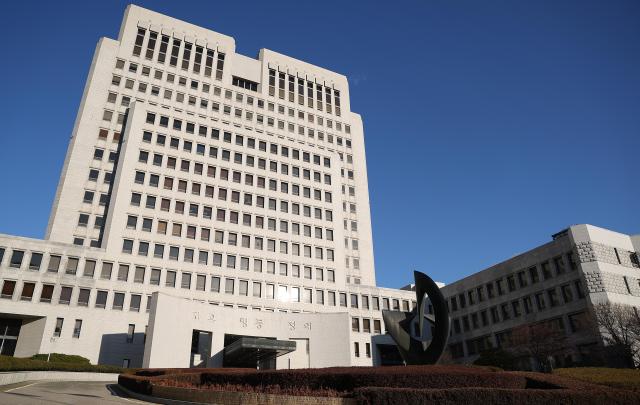
According to the legal community on Wednesday, the court’s Third Division, with Justice Lee Sook-yeon as the presiding justice, partially overturned an appellate ruling and sent the case back to the Seoul High Court. The top court left most of the lower court’s decision intact, overturning only part of the portion in which workers had lost.
As a result, Dong-A Transport must pay overtime and night-work allowances based on “deemed working hours” — guaranteed hours set by labor and management — even when they exceed actual hours worked. Deemed working hours refer to a system that treats a set number of hours as overtime or night work regardless of actual overtime or holiday work, reflecting the nature of the work schedule and conditions.
In its decision, the Supreme Court upheld the lower court’s finding that regular bonuses should be included in ordinary wages. It also found no problem with the conclusion that allowances must be recalculated using ordinary wages that reflect those bonuses, and that the company must pay the difference if it previously paid less.
However, the court said the lower court misunderstood the law when it ordered overtime and night-work allowances to be paid only for actual hours worked rather than deemed working hours, and it reversed and remanded that part.
The lawsuit was filed by bus driver A and other Dong-A Transport employees in 2015. They argued that a regular bonus paid every other month, calculated at 100% of base pay, should be treated as ordinary wages, and that the company should pay unpaid allowances that were underpaid after excluding the bonus.
They also said the company undervalued their actual working time by relying on driving hours entered into the Seoul Bus Management System, excluding time for pre- and post-trip tasks, refueling, waiting, and training. They sought retroactive payment of unpaid overtime, night-work and holiday-work allowances.
A trial court ruled for the company, citing earlier Supreme Court precedent that required “fixedness” for pay to qualify as ordinary wages. The decision was overturned on appeal.
While the appeal was pending in 2024, the Supreme Court issued a new precedent abolishing the fixedness requirement. Applying that precedent, the appellate court ruled in October last year for the workers by recognizing the regular bonus as ordinary wages. But it ordered allowances to be paid only for actual hours worked, which were shorter than deemed working hours. The workers appealed.
The ruling is significant as the first case in which the shift in ordinary-wage doctrine has been applied in practice to the city bus industry. If regular bonuses are included in ordinary wages, overtime, night-work and holiday-work allowances calculated on that basis rise accordingly.
If the judgment becomes final after the remand proceedings, cost burdens are expected to increase sharply for Dong-A Transport and other city bus operators. In areas such as Seoul that use a quasi-public system, local governments cover bus companies’ deficits with tax revenue, raising the prospect of substantial public spending.
* This article has been translated by AI.
Copyright ⓒ Aju Press All rights reserved.