Over 33,000 Illegal River and Valley Facilities Found, Far Above Initial Count
by HAN Joon ho Posted : May 7, 2026, 09:39Updated : May 7, 2026, 09:39
Share
facebook
twitter
URL
Text size
More than 33,000 illegal facilities have been found along rivers and valleys nationwide, far beyond the 835 cases the government initially reported. The gap is not just statistical. It underscores how loosely authorities have managed sites on the ground and how long the problem was effectively left unattended.
President Lee Jae-myung recently told a Cabinet meeting that the issue must not be ignored, ordering intensive inspections and investigations into possible dereliction of duty. He also criticized officials for acting only after the media or opposition lawmakers requested data. Illegal occupation of rivers and valleys is not new. It has recurred each summer, and local governments and related agencies have for years spoken of crackdowns and cleanup. Yet the scale now revealed is dozens of times larger than what the government itself had identified.
At the core is a breakdown in public trust. People pay taxes expecting the state to maintain basic fairness and order. In some areas, illegal structures continued operating openly, while authorities failed even to fully identify them. As the president noted, if two inspection opportunities existed and cases were still missed, it goes beyond a simple mistake and approaches a failure to perform official duties.
The problem appears structural and repeated. Illegal facilities do not appear overnight. Bringing in electricity and water and continuing to operate inevitably creates points of contact with local administration. It is difficult to rule out the possibility that tolerance, neglect and lax enforcement persisted in that process. In some cases, businesses resumed operations after demolition, and sites were restored once enforcement eased, reinforcing a system in which those who follow the law are disadvantaged.
That is why the president’s description of the matter as a “trust in state affairs” issue carries weight. When people do not trust the state, law enforcement loses authority. Once cynicism spreads that violations will be overlooked again, administration leaves fatigue rather than governance. Public anger, the article argues, centers less on the facilities themselves than on why no one acted for so long.
The article cautions, however, that strong reprimands and sweeping inspections should not become performative punishment. What is needed is structural reform: standardizing how rivers and valleys are managed nationwide, clarifying responsibilities between local and central governments, and building a follow-up system after illegal occupation is detected.
It links the issue to the so-called “wildfire cartel” allegations raised during wildfire recovery projects. The president pointed to “swarm” bidding by paper companies and problems with substandard contractors, and mentioned strengthening bid bonds and the need for criminal penalties. The message, the article says, is that structural corruption repeatedly seen in public works, subsidies and local development projects should no longer be treated as routine.
Administrative incompetence and neglect ultimately fall on the public, the article says. Illegal facilities increase the risk of safety accidents and leave environmental damage. Poor recovery projects waste tax money and worsen disaster losses. When responsibility for enforcement and oversight is blurred, the harm is borne by ordinary citizens.
Public authority should not be applied selectively. When enforcement wavers due to local interests, political calculations or “custom,” the state loses credibility. The 33,000 illegal facilities are not merely an administrative tally, the article says, but a measure of long-accumulated irresponsibility and complacency.
The government should not let the matter end as a one-time crackdown, it adds. It should determine who allowed the situation to persist and what structural gaps enabled it, and institutionalize a nationwide, постоян monitoring system and accountable administration so the public can again trust law enforcement.
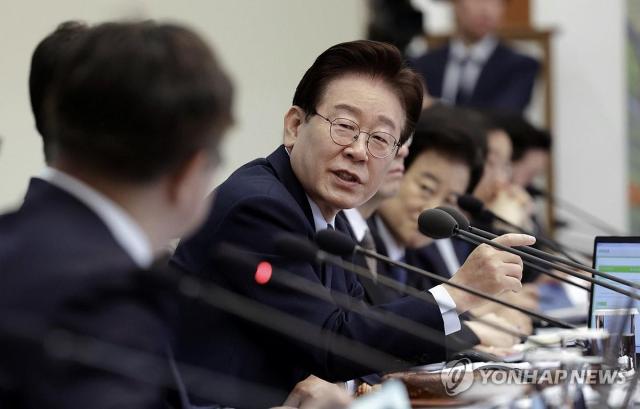
President Lee Jae-myung questions Interior and Safety Minister Yoon Ho-jung during a Cabinet meeting and emergency economic review session at Cheong Wa Dae on May 6. [Yonhap]