

During the COVID-19 pandemic, Dyson experienced significant growth due to increased demand for home appliances. This year, the company is expanding its product lineup significantly, aiming for a rebound. By diversifying its offerings from robot vacuums to travel hair dryers and portable fans, Dyson seeks to enhance its public appeal beyond its premium image and accelerate its recovery.
According to industry sources, Dyson Korea will officially launch its first portable fan, the Dyson Hushjet Mini Cool, in South Korea on May 13, with online sales starting that day.
The Dyson Hushjet Mini Cool incorporates 17 years of airflow technology, generating winds of up to 25 meters per second for a powerful and refreshing experience. Weighing just 212 grams and featuring a slim 38mm design, it is highly portable. The fan also boasts a battery life of up to six hours, making it convenient for outdoor activities or travel.
This year, Dyson is accelerating the release of new products across its home appliance and beauty categories. The strategy aims to broaden consumer engagement through various product categories, moving beyond its high-end brand image.
One of the standout products is the Spot and Scrub AI robot vacuum, launched in January. This marks the first new product release in two years. Although Dyson introduced its first robot vacuum in 2016, slow market growth led to the discontinuation of sales in some countries. The introduction of its first hybrid (vacuum and wet cleaning) robot vacuum has garnered significant industry attention.
The new model features extensive AI capabilities, utilizing an HD camera and AI technology to identify wet liquids and dry debris, repeating cleaning up to 15 times for stain removal. It also recognizes obstacles using 24 sensors and dual laser LiDAR technology.
As a latecomer to the market, Dyson has enhanced its price competitiveness. The suggested retail price in South Korea is 1.79 million won, lower than the main products of Chinese competitor Roborock, which are priced at 1.89 million won. Dyson is aggressively penetrating the market with various promotional discounts during the initial launch phase, indicating a shift from its traditional high-price premium strategy to a balanced approach between price and technology for market share acquisition.
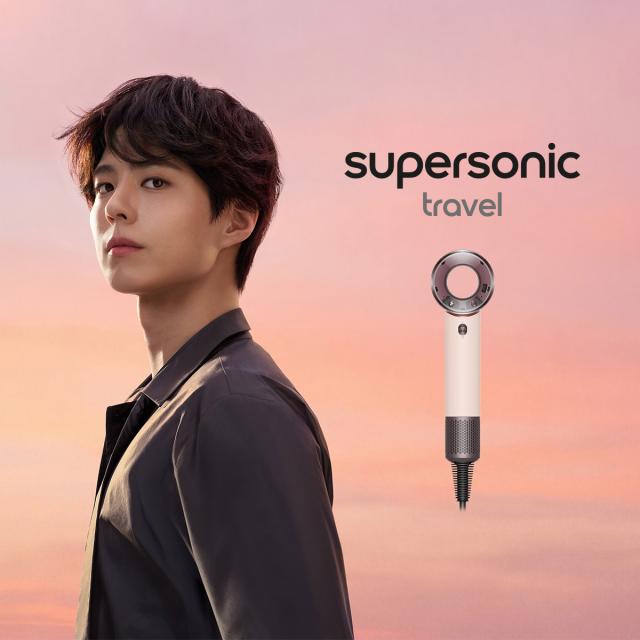
Additionally, Dyson is targeting diverse consumer needs by launching portable products. A notable example is the recently released Supersonic Travel hair dryer, which is 32% smaller and 25% lighter than previous models. Its universal voltage design allows for use anywhere in the world, catering to travelers and business professionals. Furthermore, the company has enlisted popular actor Park Bo-gum as its Asia-Pacific ambassador and is actively promoting the Supersonic Travel through a marketing campaign.
James Dyson, the founder and chief engineer, stated, "We didn't just make a smaller hair dryer; we completely redesigned it for travel environments. The Supersonic Travel offers excellent styling capabilities while protecting hair from excessive heat. It is designed with performance, portability, and hair health in mind."
This strategy is seen as a response to recent performance challenges. Dyson Korea experienced rapid growth during the pandemic due to increased demand for premium appliances, but has faced two consecutive years of declining performance.
According to Dyson Korea's 2025 audit report, the company's revenue last year was 527.6 billion won, a 3.9% decrease from the previous year’s 549.2 billion won. Operating profit also fell from 16.9 billion won to 16 billion won, a 5.3% decline.
Since establishing its South Korean branch in 2017, Dyson Korea has recorded its first revenue drop since its inception in 2024, with both revenue and operating profit declining for two consecutive years. This downturn is attributed to intensified competition in the premium appliance market and a slowdown in consumer spending.
The rise of Chinese brands, such as Roborock and Dreame, has also been a contributing factor, as they rapidly expand their market share in the robot vacuum segment.
However, there is optimism for Dyson's recovery this year. The company is broadening its product range from traditional vacuum cleaners and beauty products to include robot vacuums and small appliances. Additionally, by enhancing its innovative premium image with AI features, Dyson is implementing a strategy focused on technological differentiation.
Industry insiders believe that with various new product launches planned for both the first and second halves of the year, Dyson's performance improvement is anticipated.
* This article has been translated by AI.
Copyright ⓒ Aju Press All rights reserved.