

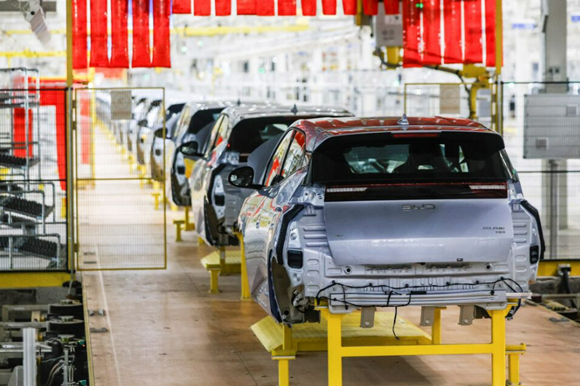
Chinese automaker Geely is reportedly in talks to acquire the third body assembly line at Ford's Valencia plant in Spain, according to local media. This line previously produced models such as the Ford Mondeo and S-Max but has been inactive since those models were discontinued. Geely plans to renovate the line for the production of small electric vehicles (EVs) and hybrids specifically for the European market.
Recent reports from Chinese economic media outlet, The Economic Observer, indicate that Chinese automakers are expanding their global production bases by acquiring aging overseas factories at low prices. As traditional automakers streamline production in response to the shift toward electric vehicles, they are selling off internal combustion engine production facilities, creating opportunities for Chinese companies to accelerate their localization strategies.
Chinese Capital Acquires Ford, Mercedes-Benz, and Nissan Factories
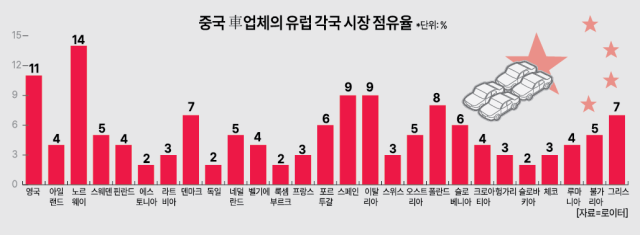
Chinese investments are rapidly filling the void left by Western and Japanese automakers in regions such as South America, Africa, and Southeast Asia.
A notable example is Chery Automobile's push to acquire Nissan's factory in South Africa. The company has reportedly agreed to purchase the Nissan plant located in the Rosslyn area, which has been a key production site in South Africa for over 60 years, producing 45,000 pickup trucks annually.
In Brazil, the largest automotive market in South America, Chinese companies continue to make inroads. Great Wall Motors (GWM) acquired a former Mercedes-Benz factory and began production of 30,000 vehicles annually in August of last year. BYD also acquired a closed Ford factory in Bahia, Brazil, in March 2024 and started electric vehicle assembly in October.
These moves come as intense price competition and oversupply in the Chinese automotive market have led to declining profitability, prompting companies to look abroad.
BYD, a leader in the electric vehicle sector, reported a 50% drop in net profit for the first quarter compared to the same period last year, indicating a prolonged slowdown. In response, BYD is aggressively targeting international markets, with overseas sales accounting for 46% of its total sales. The company has set an ambitious overseas sales target of 1.5 million units this year, a 40% increase from the previous year.
Chinese Automakers Shift Focus from Exports to Local Production
Chinese automakers are increasingly recognizing the necessity of establishing local production systems abroad rather than relying solely on exports. With the European Union, the United States, Canada, and Brazil imposing higher tariffs to limit the influx of Chinese electric vehicles, companies are moving to circumvent these barriers through local production.
According to the Rhodium Group, a U.S. market research firm, the scale of overseas investments by Chinese electric vehicle manufacturers surpassed domestic investments for the first time last year. Acquiring existing idle factories is viewed as a more efficient approach in terms of time and cost compared to building new plants. While new factory construction typically takes 3 to 5 years, existing factories can be renovated and operational within about a year after acquisition.
Chui Dongxu, secretary-general of the China Passenger Car Association (CPCA), noted, "The global strategies of Chinese automakers show a similar trend to the globalization process of the Japanese automotive industry in the past." Initially focused on exporting vehicles for the domestic market, the strategy has evolved to include sending parts for local assembly (KD production) and ultimately establishing local production systems.
Aiming for a 'Yaris Moment' in the European Hatchback Market
To penetrate global markets, Chinese automakers are accelerating the development of models tailored to regional consumer preferences. This strategy recalls Toyota's successful approach in Europe with its small hatchback, the Yaris, which capitalized on local tastes. Pedro Pacheco, an analyst at Gartner, stated through Reuters, "Chinese automakers are striving to replicate the 'Yaris Moment.'"
Hongqi, a brand under the state-owned automaker FAW Group and known for its ceremonial vehicles for President Xi Jinping, unveiled a small global SUV aimed at the European market at the recent Beijing Motor Show. Additionally, companies like BYD, Chery, Great Wall, SAIC, and Hongqi are developing models ranging from small hatchbacks for Europe to pickup trucks for markets in Australia and Mexico.
While hatchbacks are in low demand in China, they are highly sought after in Europe, where practicality and narrow road conditions drive their popularity. In some regions of Southern Europe, hatchbacks account for over 40% of new car sales, showing robust growth. BYD plans to launch its specially designed 'Dolphin G' hatchback model for the European market in June. Chery's new global brand, Rephas, is also developing a hatchback model aimed at Europe, while SAIC's brand MG is expected to release the MG2 hatchback model in Europe.
* This article has been translated by AI.
Copyright ⓒ Aju Press All rights reserved.