

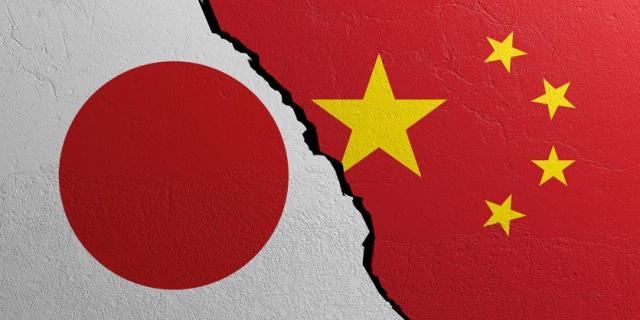
On May 3, during China's Labor Day holiday, state-run Xinhua News Agency broadcast a statement from the Chinese Foreign Ministry marking the 80th anniversary of the Tokyo Trials. While China commemorates this day as the start of the Allied prosecution of Japanese war criminals after World War II, it is unusual for the Foreign Ministry to issue a statement on the occasion. The key theme of the statement was 'new militarism,' accusing Japan's right-wing factions of using the guise of a 'peaceful nation' to bolster military capabilities and reform systems, thereby posing a regional security threat. This statement encapsulates China's gradual shift in its approach to Japan over the past six months.
The situation traces back to November of last year when Japan's Prime Minister Sanae Takaichi responded to a question in the House of Representatives Budget Committee regarding Taiwan, stating that it could lead to a "crisis for Japan's existence." This implied the potential for Japan's Self-Defense Forces to exercise collective self-defense. China reacted vehemently, with Japan clarifying that it was merely a reinterpretation of existing laws and not a specific scenario. However, China remained unyielding, viewing any mention of military intervention by the Japanese Prime Minister as an infringement on what the Xi Jinping administration considers a 'core interest.' In response, China summoned the Japanese ambassador for a reprimand.
The most significant impact was felt not in diplomatic circles but in the daily lives of ordinary citizens. A 23-year-old graduate student from Jiangsu Province, whose dream is to become a judge, expressed her dismay last month. She had planned to attend law classes at a university in Tokyo this spring, but the school canceled her enrollment citing "safety concerns" just a month after her acceptance. Despite her willingness to sign a waiver accepting full responsibility, the school remained firm in its decision.
In China, major universities have suspended study abroad programs to Japan. A company that has facilitated Japanese study for 25 years reported sending nearly 60 students last year but only five this year. This situation is unprecedented, even more so than during the 2012 Senkaku incident when study abroad programs continued despite intense anti-Japanese protests.
The landscape for tourism has also changed. While the number of foreign tourists visiting Japan reached an all-time high in March, visitors from China dropped by 55.9% compared to the previous year. One official lamented that the current situation is worse than during the politically tense Koizumi administration, stating, "Back then, while politics were frozen, the economy was thriving. Now, both politics and the economy are cooling off together."
China has targeted Japan's manufacturing sector as well. In January, it tightened export regulations on dual-use items to Japan, and in February, it added 20 Japanese companies to a regulatory list. Although Chinese authorities claimed there would be no impact on civilian life, the reality was different. In March, China's exports of rare earth magnets to Japan fell to 184 tons, a decrease of 27.2% year-on-year and 17.3% from the previous month. A representative from a Japanese company in Beijing reported that customs clearance has been inexplicably delayed recently. Some major corporations are exploring alternative sourcing, but it is challenging to eliminate inexpensive Chinese products quickly.
The conflict has even extended to maritime issues. On April 17, Japan's Maritime Self-Defense Force destroyer Ikazuchi passed through the Taiwan Strait for the first time in about ten months. This operation had been on hold since Takaichi's remarks about Taiwan. According to the Yomiuri Shimbun, the Japanese government decided that continuing to postpone operations out of concern for China would only encourage China's maritime expansion.
China's response was immediate and intense. The military newspaper PLA Daily criticized the passage, stating it coincided with the day Taiwan was ceded to Japan under the Treaty of Shimonoseki, which "greatly hurt the feelings of the Chinese people." Two days later, on April 19, China's missile destroyer Baotou and frigate Huanggang appeared 60 kilometers southwest of Yokota Island in Kagoshima Prefecture, approaching as close as 300 kilometers to the southern tip of Kyushu. Around the same time, new structures for gas field development were detected on the Chinese side of the median line in the East China Sea.
China's pressure has expanded across multiple fronts. However, the sentiment among Chinese civilians towards Japan appears largely unaffected. On May 1, Labor Day, a park in downtown Shanghai hosted an event related to the Japanese anime "Pokémon." Families were seen taking photos in front of a Pikachu model. A 35-year-old company employee participating in the event remarked, "I don't care about the deterioration of China-Japan relations. My favorite Pokémon is irreplaceable." This situation reflects a disconnect between government-imposed pressure and the remaining demand for Japanese culture among the public.
This contrast illustrates the current state of affairs. Unlike the explosive anger seen during the 2012 Senkaku incident, the pressure now is a meticulously designed strategy from above. What began with a single line in the Prime Minister's parliamentary response has, six months later, shaken Japan's daily life, industry, and maritime activities simultaneously.
* This article has been translated by AI.
Copyright ⓒ Aju Press All rights reserved.