

The National Assembly passed the "Special Act on the Promotion of the AI Data Center Industry" (AIDC Law) on May 7, but industry experts are calling it a "toothless special law."
As of May 14, the IT sector reported that from August 2024 to June 2025, approximately 290 applications for power usage at data centers were submitted nationwide, with 195 applications (67%) concentrated in the metropolitan area.
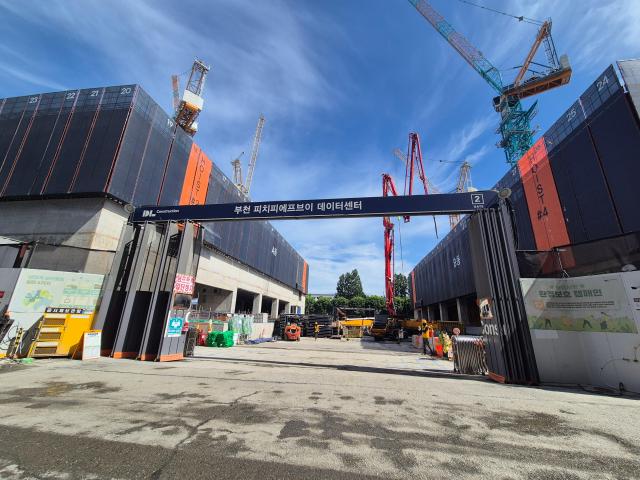
While there is a high volume of power usage applications for AIDC in the metropolitan area, all hyper-scale AIDCs under construction nearby have yet to receive permits for power line and tower installations. The Ministry of Climate and Energy and local governments are responsible for granting these permits, and industry insiders express skepticism that the passage of the AIDC Law will resolve the transmission and distribution issues.
The most significant barrier to AIDC development is the power infrastructure. Hyper-scale AIDCs, which require continuous operation for large-scale computations, need a stable power supply ranging from tens to hundreds of megawatts (MW). This necessitates the installation of power lines and substations.
According to the IT industry, several AIDC construction companies and operators have indicated that the current stance of relevant authorities is clear: "Permits will not be granted unless the project is outside the metropolitan area." The consensus in the industry is that the only regions where hyper-scale power permits are effectively granted are non-metropolitan areas, including underprivileged regions. The metropolitan area is nearing saturation in terms of system capacity, and available power is also concentrated in non-metropolitan areas.
The situation for AIDCs in the metropolitan area is even more dire. Article 19 of the AIDC Law grants exemptions from power system impact assessments under the "Special Act on the Activation of Distributed Energy" only for non-metropolitan areas. This exemption does not apply in the metropolitan area, where operators must still undergo power system impact assessments that take over 150 days. Even after completing the assessment, unless the authorities change their permitting stance, there will be no practical benefits.
Article 24, which designates special zones for AI data centers, is also limited to non-metropolitan areas. Being designated as a special zone provides various benefits, including reductions in alternative forest resource creation fees, agricultural land preservation fees, and traffic impact fees, as well as priority guarantees from the credit guarantee fund. However, metropolitan area operators are excluded from these benefits, creating a direct conflict with the reality that 67% of nationwide data center power usage applications are concentrated in the metropolitan area.
Although Article 4 of the law states that it takes precedence over other laws and Article 20 allows for direct transactions of renewable energy, this does not replace the permitting process for installing power lines and towers.
The actual authority regarding power delivery remains within the frameworks of the Electricity Business Act and the Act on the Promotion of Power Development. Even if the AIDC Law legalizes direct transaction routes for electricity, without permits for laying down the lines, such contracts become meaningless.
The direct transaction of renewable energy is also expected to lead to operating losses due to supply prices exceeding 200 won per kWh.
Another significant flaw in the legislation is that most of its core provisions are delegated to presidential decrees. The minimum size criteria for supported AIDCs, the upper limit for power capacity exempt from non-metropolitan power system assessments, and the criteria for special zone designation are all left to the implementation decree. This means that the actual scope of benefits will depend on how the decree is formulated. The law will take effect nine months after its promulgation, meaning its actual impact will not be felt until after the end of this year. Concerns have also been raised that if the criteria for supported sizes are set too high during the decree consultation process, small and medium-sized AIDCs may again fall into a gap.
Industry experts agree that resolving the power issues for AIDCs in the metropolitan area requires solutions outside the AIDC Law. Proposed measures include simplifying the installation procedures for AIDC power facilities through amendments to the Act on the Promotion of Power Development, mandating KEPCO's system connections, and allowing direct transactions for nuclear power. Analysts suggest that the current legal framework, which distributes jurisdiction over the AIDC Law, the Act on the Promotion of Power Development, and the Electricity Business Act among the Ministry of Science and ICT, the Ministry of Climate and Energy, and the Ministry of Trade, Industry and Energy, creates structural bottlenecks for investments in AIDCs in the metropolitan area.
A representative from a company involved in AIDC construction near the metropolitan area pointed out, "While we can obtain building and transmission permits, we cannot lay down the lines, rendering the AIDC Law effectively meaningless."
* This article has been translated by AI.
Copyright ⓒ Aju Press All rights reserved.