

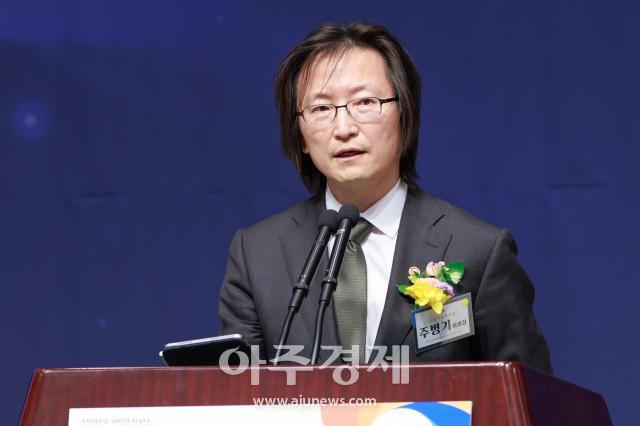
Joo made these remarks during a signing ceremony for a cooperation and fair trade agreement held at the Specialized Construction Hall, attended by representatives from the comprehensive and specialized construction sectors. The agreement aims to eliminate unfair trading practices in the construction industry and establish a system linking subcontractor payments.
Previously, the Fair Trade Commission announced comprehensive measures to enhance payment security for small subcontractors, which include expanding payment guarantee obligations, introducing the right to request information related to primary contracts, and mandating the use of electronic payment systems to ensure timely payments.
In February of last year, the commission also announced a revision to the subcontracting law, significantly reducing exceptions to payment guarantees to ensure payment stability. Additionally, the scope of the payment linkage system was expanded to include not only the prices of raw materials but also key energy costs.
However, concerns remain that unfair practices continue in the field ahead of the law's implementation in August. In response, the Fair Trade Commission, along with 19 major construction companies and the Korea Association of Specialized Contractors, agreed to the cooperation pact, which includes measures for prompt payment and the abolition of retention, correction of unfair clauses, establishment of the payment linkage system, rapid adjustment of delivery prices during emergencies, and the creation of a subcontracting dispute resolution body.
Specifically, to prevent the practice of paying only a portion of the progress payment to subcontractors while delaying the remainder until project completion, the agreement calls for the abolition of retention and a commitment to cash payments within the legal deadline. Furthermore, standards and procedures for quickly adjusting delivery prices during emergencies will be established through discussions between primary and subcontractors. The 19 major construction companies also agreed to raise delivery prices by 134.3 billion won as part of their commitment to the cooperation agreement.
Additionally, comprehensive construction contractors will establish an internal dispute resolution body to address subcontracting-related issues such as payment disputes and price adjustments. To ensure the effectiveness of the cooperation agreement, a public-private consultative body will be formed to share information on the implementation status of the agreement and trends in the enforcement of the subcontracting law.
Joo emphasized that while the construction industry is a key sector underpinning the economy, it is not easy to change deeply rooted unfair practices and structures overnight. He noted that the signing of the cooperation agreement aims to eradicate these unfair practices and promote a culture of mutual growth.
He also acknowledged the heightened difficulties faced by the industry due to recent international tensions and a slowdown in construction activity, stressing the importance of close cooperation to navigate these challenges. Joo expressed gratitude to the participants from the comprehensive construction sector for adjusting delivery prices as part of their commitment to mutual cooperation.
Joo urged that in times of emergencies, such as wars, efforts should be made to ensure that urgent payment adjustments and the payment linkage system operate smoothly. He invited stakeholders to share various tasks that the Fair Trade Commission should address, promising to actively consider them for institutional improvements.
* This article has been translated by AI.
Copyright ⓒ Aju Press All rights reserved.