

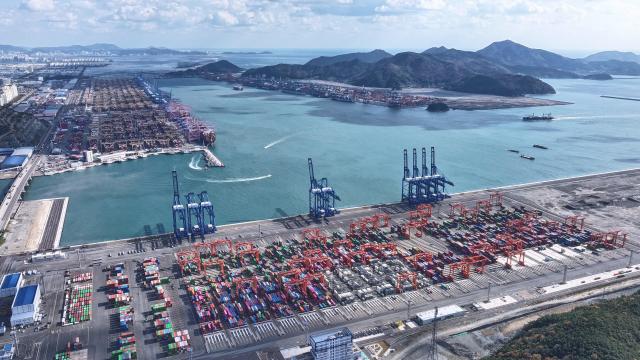
The Ministry of Oceans and Fisheries announced on May 28 that it will conduct a legislative notice for amendments to the "Port Safety Special Act Enforcement Decree" and the "Port Safety Special Act Enforcement Regulations" from May 29 to July 8.
This legislative notice is a follow-up to the amendment of the "Port Safety Special Act" that passed the National Assembly in February. The amendments aim to specify provisions delegated by the law, including the procedures for establishing the port safety basic plan and the basis for conducting tailored disaster statistics.
Before formulating the port safety basic plan, which is established every five years, the government will conduct surveys on the occurrence and causes of port safety incidents, the training of specialized personnel, and the development and dissemination of safety facility technologies. The basic plan will be finalized after consultations with relevant central administrative agencies and local governors overseeing trade ports, followed by a review by the Central Port Policy Council.
To address the long-standing need for tailored disaster statistics for ports, the government will conduct annual surveys on port incidents. Officials believe that existing industrial accident statistics do not adequately reflect the unique risk factors present in port environments, prompting the need for a separate statistical system.
To enhance the professionalism and effectiveness of the surveys, the qualifications for commissioned organizations have been specified. Organizations or groups with experience in statistical production, port safety policy research, or surveys related to port transportation and relevant industries will be eligible to conduct the surveys.
The Ministry of Oceans and Fisheries aims to shift the port safety management system from a reactive approach to a proactive one through this regulatory overhaul. With ongoing concerns about serious accidents in port loading and transportation operations, the government seeks to establish a national safety management system.
Han Ji-woong, head of the Port Safety and Security Division at the Ministry of Oceans and Fisheries, stated, "This legal amendment is intended to institutionally support the establishment of the port safety basic plan and the production of tailored disaster statistics. We will identify hidden risk factors in port workplaces in advance and implement effective disaster prevention policies to create a safe working environment for port workers."
* This article has been translated by AI.
Copyright ⓒ Aju Press All rights reserved.