

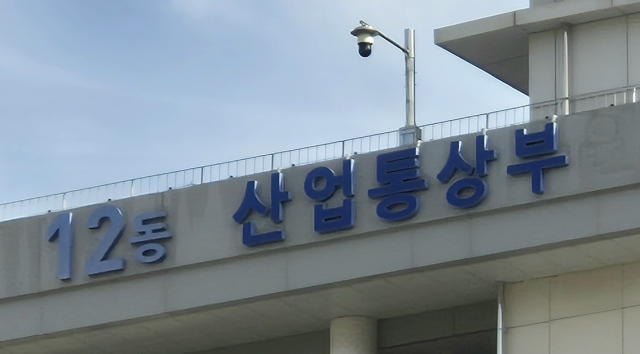
On May 28, the Ministry of Trade, Industry and Energy held the third general meeting of the "Home Appliance M.AX Alliance" at the Electronics Hall, attended by Choi Woo-hyuk, Director of Advanced Industry Policy, and over 80 participating companies and institutions. During the meeting, the ministry outlined plans for the "Home Appliance M.AX Three Major Tasks."
The home appliance industry is facing increasing challenges due to global supply chain disruptions exacerbated by recent conflicts in the Middle East. Coupled with fierce competition from companies in rival nations, the domestic and international landscape is more precarious than ever.
This risk is reflected in the numbers. According to the Korea Customs Service, home appliance exports fell to $6.9 billion last year, a 17% decrease from the previous year. In the current year, exports have only reached $2.246 billion, marking a 6.2% decline compared to the same period last year.
In response, the government plans to fundamentally improve the industry by integrating AI into all aspects of home appliance manufacturing, from production processes to innovative product development, centered around the M.AX Alliance. Specifically, the government will develop specialized manufacturing AI models that reflect the unique characteristics of home appliance production.
As consumer preferences diversify, mixed production—where multiple products are manufactured on a single line—has become essential. To accommodate frequent line changes, the government will develop AI models that manage production and logistics schedules autonomously, utilizing automated guided vehicles (AGVs) and autonomous mobile robots (AMRs).
The initiative will also support the rapid and efficient development of innovative AI-powered home appliances. A roadmap for building AI training data will be established, and a survey of corporate demand will be conducted to systematically collect public data for AI training.
Alongside data construction, the government will initiate the development of universal modules, including standard hardware and software development kits for AI home appliances, to alleviate the economic and technological burdens on companies. An AI home appliance support center will open in July to assist with the entire development process, from product design to prototype production.
To prevent "AI washing"—the misleading practice of claiming AI capabilities for non-AI products—the government will establish standards. The National Institute of Technology and Standards will swiftly prepare national standards for the technical grading of AI home appliances and inter-device security by the end of the year. The goal is to ensure that reliable products that meet quality and security standards can establish a foothold in the market, while also identifying and linking government policy support measures.
The Ministry of Trade, Industry and Energy will operate the Home Appliance M.AX Alliance with a focus on three key functions: manufacturing processes, product innovation and data, and standard cooperation, to execute these three major tasks with urgency.
Choi Woo-hyuk stated, "The overall AI transformation of the manufacturing ecosystem is a necessary strategy for survival in fierce global competition. We will concentrate all policy efforts to ensure that the intelligence of home appliances and the AI transformation of manufacturing processes are organically aligned, establishing global leadership for domestic home appliances."
* This article has been translated by AI.
Copyright ⓒ Aju Press All rights reserved.