

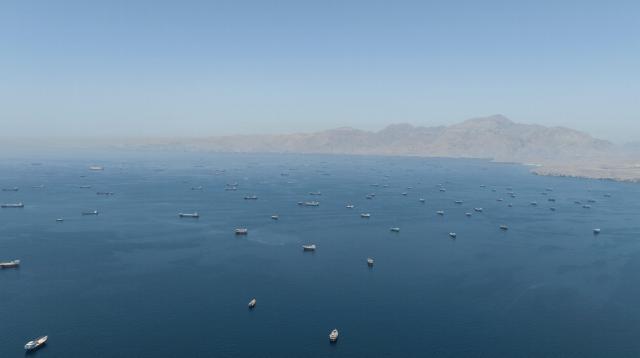
As of late May 2026, the world is closely watching the Middle East once again. The Strait of Hormuz is experiencing ongoing explosions, while the United States and Iran are simultaneously engaging in negotiations and military actions. The White House has indicated that there is "progress," but President Donald Trump has warned that he could "end it all again if necessary." Iran, while expressing a desire to maintain a ceasefire, has criticized U.S. limited airstrikes as a "violation of the ceasefire."
The current situation is characterized by a strange form of warfare that is neither full-scale war nor complete peace. It is not a ceasefire or a formal end to hostilities. Negotiations are ongoing, yet the sounds of conflict persist. This exemplifies a 21st-century gray zone war. However, the essence of this conflict extends beyond mere military clashes; it intertwines issues of nuclear weapons, oil, the dollar system, U.S.-China power competition, and the competition for supply chains in the AI era. The Strait of Hormuz has become a fault line for the entire global order.
A key feature of the current crisis is that war and negotiations are occurring simultaneously. The U.S. and Iran are discussing a memorandum of understanding (MOU) for peace, with both sides signaling that there is "progress." The U.S. State Department and the White House maintain that negotiations have not completely broken down, and Iran has not officially closed the door on diplomatic solutions. However, U.S. forces have also conducted airstrikes on Iranian military facilities near the Strait of Hormuz just two days later, which the U.S. claims are "defensive measures." They reported shooting down four Iranian drones and targeting a ground control station preparing to launch a fifth drone. On the surface, this appears to be a limited conflict, but global financial markets and the international community do not view it as merely a localized clash, given that the Strait of Hormuz is the heart of global oil transportation.
This region is crucial for energy lifelines of manufacturing countries like South Korea, China, and Japan. If the Strait were to be blocked or enter a prolonged state of instability, international oil prices could surge, global logistics could be disrupted, and inflation could rise again.
The U.S. is acutely aware of these stakes. President Trump has cultivated an image as a "president who does not prolong wars." He prefers to pressure and negotiate rather than engage in large-scale ground wars. However, Iran does not operate on the U.S. timetable. While the U.S. seeks speed, Iran uses time as a weapon, a strategy rooted in the ancient survival tactics of Persian civilization. The U.S. is a young superpower with a history of 250 years, while Iran has a legacy spanning 5,000 years. The U.S. has relied on military and financial power to influence the world, but Iran has learned to endure the pressures of foreign powers and empires throughout its long history. Thus, as the U.S. increases military pressure, Iran opts for delay tactics and psychological warfare rather than direct confrontation. In fact, Iran is currently managing tensions rather than launching immediate large-scale retaliation, fully aware of the risks of total war. Its economy is already devastated by sanctions, and internal issues like youth unemployment, rising prices, and systemic fatigue are mounting. Conversely, the U.S. also does not desire a full-scale war, as its economy has not fully escaped inflationary pressures, and a prolonged conflict could pose political burdens for Trump ahead of the elections. Ultimately, the current situation represents a precarious balance where neither side can fully attack nor easily retreat.
Currently, the key issues in U.S.-Iran negotiations can be summarized into four main points. First is the nuclear issue. President Trump has repeatedly emphasized that "Iran's possession of nuclear weapons is absolutely unacceptable." The U.S. is particularly concerned about the 440 kilograms of 60% enriched uranium that Iran possesses, as nuclear experts generally consider uranium enriched to 90% to be weapon-grade. However, uranium enriched to 60% is already deemed a significant risk, as it can be further enriched in a short time. The U.S. believes that it cannot move toward a peace agreement without eliminating or controlling this stockpile. From Iran's perspective, nuclear capability is not merely a weapon; it serves as insurance for regime survival. The case of Libya's Gaddafi regime, which collapsed after giving up its nuclear program, has left a deep trauma for Iran's leadership.
The second issue is the handling of uranium. The U.S. has expressed strong opposition to China and Russia taking Iran's enriched uranium, as both are strategic competitors. What alternatives exist? A third-party management approach seems realistic, particularly involving Pakistan, which is an interesting option. Pakistan is the first nuclear-armed nation in the Islamic world and maintains a strategic relationship with China while not being entirely hostile to the U.S. It also has deep ties with Saudi Arabia. If some of Iran's enriched uranium were temporarily stored in an internationally managed facility in Pakistan under the supervision of the International Atomic Energy Agency (IAEA), the U.S. could reduce proliferation concerns while Iran could maintain some level of dignity. Diplomacy ultimately involves creating an exit strategy that does not leave the other side feeling completely defeated.
The third issue pertains to the Strait of Hormuz itself. This region is not just a maritime passage; it is a vital artery of modern civilization. The global economy continues to operate on oil and LNG. Although we have entered the AI era, semiconductor factories and data centers still rely heavily on substantial power and energy. AI consumes enormous amounts of energy, and data centers, semiconductor plants, cloud servers, and supercomputing AI systems require unimaginable energy resources. This is why U.S. tech giants are competing for nuclear, LNG, and renewable energy resources. Ultimately, the AI era is not merely a "post-oil era" but rather an "era of energy power restructuring." Therefore, the Strait of Hormuz is likely to remain a key variable in the global economy for a long time to come.
For China, the Strait of Hormuz is a lifeline. As the world's largest manufacturing nation and one of the largest oil importers, China's factories, logistics, cities, and industrial zones depend on the flow of Middle Eastern energy. If the Strait were to become unstable in the long term, the Chinese economy could face severe pressure. The U.S. is well aware of this, which is why its strategy extends beyond merely pressuring Iran. It is also connected to controlling China's energy arteries. At this juncture, the Middle East issue is directly tied to U.S.-China power competition. China is strengthening its strategic relationship with Iran, and Russia is doing the same. Meanwhile, the U.S. aims to establish a new Middle Eastern order centered around Saudi Arabia, the UAE, and Israel. Consequently, the Middle East has become a crossroads for a new Cold War.
Whereas the previous Cold War was a clash between liberalism and communism, the current conflict is far more complex, intertwining AI dominance, semiconductor supply chains, energy control, maritime logistics, the dollar system, and digital finance, along with religious and civilizational factors. The issue of the dollar system is particularly significant. The U.S. has controlled the global economy through the dollar. The SWIFT payment network and international financial system are essentially structured around the U.S. Iran's sanctions were ultimately a financial blockade through the dollar system. However, recently, China, Russia, and some Middle Eastern countries have been expanding their de-dollarization efforts, increasing yuan transactions, gold trading, and energy transactions based on their own currencies. While this has not yet shaken the dollar system, the U.S. is feeling a sense of crisis, as one of the core elements of dollar dominance has been the Middle Eastern oil payment system. If the Middle Eastern order shifts from a U.S.-centric model to a multipolar system, the dollar system will inevitably be affected in the long term.
In fact, the conflicts currently experienced in the Middle East are not merely clashes of national interests. They encompass simultaneous conflicts between Jewish civilization and Islamic civilization, Shia and Sunni, and the U.S.-centric order versus a multipolar system. Since the Trump era, the Middle East has begun to create a new flow through the Abraham Accords, establishing a pragmatic coexistence order centered around Israel, the UAE, and Saudi Arabia. However, Iran remains excluded from this framework. Therefore, moving forward, it is essential to transition from the Abraham Accords to the Noah Accords. Judaism, Christianity, and Islam ultimately share a common root. The lineage of Shem, one of Noah's descendants, connects to the spiritual origins of today's Jewish, Arab, and Persian worlds. Ultimately, true peace in the Middle East must begin with the recognition that "one cannot completely eliminate the other."
Currently, the global financial market operates on three massive axes: the AI revolution, U.S.-China power competition, and Middle Eastern risks. So far, global stock markets have been driven by the AI rally, with U.S. AI semiconductor companies and big tech remaining at the center of the market. However, the Middle Eastern variable poses the greatest risk that could disrupt this trend at any moment. If the U.S. and Iran succeed in reaching a limited agreement and stabilize the Strait of Hormuz, global stock markets are likely to continue their AI-driven upward trajectory. Conversely, if negotiations completely collapse and the Hormuz crisis escalates, international oil prices could soar, and global inflation could resurface. The U.S. Federal Reserve may find it difficult to lower interest rates, and the world economy could face the risk of stagflation. Chinese manufacturing and European industries could suffer significant blows, and South Korea would inevitably feel direct impacts.
Although South Korea is geographically distant from the Middle East, it is by no means a safe zone. The South Korean economy is export-driven and heavily reliant on energy imports. Instability in the Strait of Hormuz would directly lead to rising costs for South Korean industries. Semiconductor companies like Samsung Electronics and SK Hynix ultimately thrive on global financial and energy stability. A surge in international oil prices and geopolitical conflicts would inevitably burden the entire South Korean stock market. Therefore, South Korea must simultaneously pursue energy supply chain diversification, strengthen its competitiveness in AI and semiconductor industries, and implement a balanced diplomatic strategy in the Middle East.
Today, the world does not operate solely on military power. We are in an era where energy, AI, finance, supply chains, civilization, and geopolitics move simultaneously. The Strait of Hormuz is not just a body of water; it is a microcosm of the 21st-century world order. Humanity is currently testing a new order over that sea: a system of coexistence rather than a balance of war, a management system of trust rather than the fear of nuclear weapons, and a civilizational imagination that moves beyond the Abraham Accords to the Noah Accords. This is the path for the Middle East and the world to survive together.
※ This article was generated using generative AI and has been reviewed by an editor.
* This article has been translated by AI.
Copyright ⓒ Aju Press All rights reserved.