

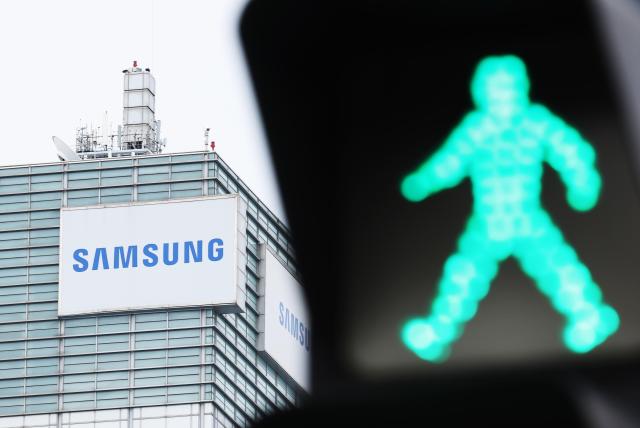
"I should have raised ducks instead of getting a PhD," said HB Lee, a 33-year-old employee in the LSI division of a major South Korean conglomerate.
Such self-deprecating remarks have recently circulated in employee communities. While some support staff in the memory division, benefiting from the AI semiconductor boom, receive bonuses in the tens of millions of won, PhD-level researchers in the loss-making system LSI and foundry divisions receive significantly lower compensation.
Lee noted, "These days, there’s talk that even someone raising ducks in the semiconductor division is getting bonuses of 400 to 500 million won. It’s laughable that compensation depends more on which division you belong to than on actual performance."
South Korea's export-driven economy has traditionally operated on a trickle-down economics model, where profits from large corporations flow down to subcontractors and small manufacturers. However, there are growing concerns that the current performance bonus conflicts in the AI era are creating a new form of trickle-down effect, exacerbating wage disparities, relative deprivation, and labor disputes across the industrial ecosystem.
The competition for performance bonuses, which began in the memory semiconductor sector, is now shaking the distribution standards across South Korean corporate society. The compensation debate sparked by Samsung Electronics and SK Hynix is spreading to the platform, ICT, manufacturing, and bio industries, leading to polarization in the labor market, internal divisions within organizations, and conflicts throughout the supply chain.
Professor Park Byeong-jin of Hanyang University’s Business School stated, "The precedent set by Samsung Electronics regarding performance bonuses is likely to have a domino effect on the entire South Korean labor market and the compensation systems of major corporations. The unlimited bonus structure of the country’s top company is becoming a benchmark that raises the compensation expectations of other corporate unions." He added, "If this trend continues, it could lead to performance bonus inflation across the industry, increasing the cost burden on companies."
The demand for performance bonuses is intensifying across the industrial sector. The Hyundai Motor and Kia unions are demanding bonuses equivalent to 30% of their net profits this year, while the HD Hyundai Heavy Industries union has included a proposal for sharing 30% of operating profits in this year's negotiations.
The Kakao union has raised the possibility of a strike for the first time since its founding, demanding bonuses of 13-14% of operating profits, and LG Uplus is also continuing to demand bonuses at the 30% level. The Doosan Enerbility union, benefiting from a boom in power equipment, has reportedly included a request for a revision of the bonus calculation method in this year's negotiations.
SM, a 33-year-old manager at a domestic automotive company, remarked, "Ultimately, it’s a matter of how to distribute limited resources. There can’t be a win-win structure. If one person takes more, someone else has to take less. In the end, one side has to concede, but realistically, who is going to give up money?"
Within Samsung Electronics, there is growing backlash over the extreme disparities in performance bonuses between divisions.
The joint negotiation team of the Samsung Electronics union announced that a tentative agreement was approved with 73.7% support (46,142 votes) in a vote that closed at 10 a.m. on May 27. The turnout was 95.5%. As a result, Samsung Electronics has temporarily avoided the previously anticipated strike. The agreement includes an average wage increase of 6.2% and the establishment of a "special management performance bonus" for the DS division. This special bonus will be funded by 10.5% of business performance and will be paid in the form of restricted stock units (RSUs). The distribution ratio for the bonus fund is set at 40% for common divisions and 60% for business units. This structure is similar to the bonus system already implemented by SK Hynix, which provides bonuses equivalent to 10% of operating profits.
Under the tentative agreement, employees in the memory division are expected to receive a total bonus of up to 600 million won based on an annual salary of 100 million won, combining the special management performance bonus and the existing excess profit incentive (OPI). In contrast, employees in the loss-making system LSI and foundry divisions are expected to receive around 210 million won. Some employees in the DX division, responsible for smartphones and home appliances, are reported to receive about 6 million won. The nearly 100-fold disparity has led to unprecedented "intra-company conflict" within Samsung Electronics.
Internal dissent among employees in the non-memory and DX divisions continues even after the approval of the tentative agreement. The number of members in the Donghaeng union, primarily composed of DX division employees, surged from about 2,200 to around 12,800 following the announcement of the tentative agreement.
This internal backlash highlights the structural dilemma faced by South Korean companies in the AI boom. They must reward successful divisions while also managing relative deprivation, distrust, and divisions within the organization.
SM stated, "In the past, the company would explain that it was difficult due to public sentiment, but employees no longer accept such explanations. The disparities between divisions have become so pronounced that they begin to question the fairness of the structure itself." He added, "One side claims, 'We made money through good sales,' while the other side argues, 'If we hadn’t supported them, that business wouldn’t have operated at all.' When we start to scrutinize contributions, it ultimately leads to everyone feeling wronged."
The conflict over performance bonuses has evolved beyond simple labor disputes to encompass competition between divisions, conflicts between job categories, tensions between regular employees and subcontractors, and clashes between primary and secondary contractors, as well as conflicts of interest between shareholders and employees.
Particularly within platform and ICT companies, the difficulty of quantifying contributions to revenue generation among developers, marketing, sales, support teams, and management is complicating the conflict.
The atmosphere is similar in booming industrial sectors. Samsung Biologics faced its first strike after negotiations broke down earlier this month, and the Doosan Enerbility union is also demanding changes to the bonus calculation method.
The repercussions have already extended beyond large corporations.
According to a survey on labor costs released by the Ministry of Employment and Labor in September 2025, performance bonuses have emerged as a key variable exacerbating labor market polarization in South Korea. In 2024, bonuses and performance incentives accounted for approximately 24.7% of total wages in large corporations with over 1,000 employees, while small businesses accounted for only about 8%.
The widening gap is attributed to performance bonuses. While the gap in fixed salaries, such as base pay, was 4.71 million won for large corporations and 3.99 million won for small businesses, the average monthly performance bonus and incentive was 1.33 million won for large corporations, nearly four times that of small businesses (340,000 won).
David Song, a 35-year-old employee at a small IT company in Gangnam, expressed, "For some, it’s tough to make ends meet for a month, while conflicts over bonuses in the tens of millions of won feel like a story from another world. Employees in small businesses can’t raise their voices like those in large corporations."
The conflict is also spilling over to subcontractors.
The domestic manufacturing sector relies heavily on numerous subcontractors and outsourced labor. As the scale of performance bonuses grows due to the AI boom, debates are intensifying over whether to extend bonuses to employees of subcontractors in areas such as cafeteria services, cleaning, and security.
JW Kim, a 28-year-old employee in manufacturing, questioned, "Is it reasonable to pay subcontractor employees 80% of the performance bonus just because they work in the same facility?" He added, "Ultimately, this only breeds resentment toward subcontractors."
Concerns are growing that the amendments to the Labor Union Act, which expanded the scope of primary contractors' responsibilities, could lead to demands for negotiations, strikes, and lawsuits from subcontractor unions throughout the supply chain.
In fact, the logistics subcontractor union of SK Hynix has demanded collective bargaining to address performance bonus disparities, and the cafeteria union at Hanwha Ocean has also raised the issue of expanding bonuses.
The debate over performance bonuses has also led to clashes between shareholders and employees. Some investors worry that when corporate performance declines, shareholders bear the losses, while employees may excessively allocate profits during boom periods to bonuses.
In response, Professor Park suggested a realistic alternative: "Instead of simply distributing a percentage of operating profits, it would be better to first reflect the minimum capital costs and dividend resources that should go to shareholders, and then calculate the performance bonus fund based on the remaining economic value added (EVA)."
He also proposed increasing the proportion of long-term stock compensation, such as RSUs, instead of excessive cash bonuses. Bonuses above a certain level should be paid in stock that can be disposed of after 3-5 years, encouraging employees to have a greater stake in the company’s value and stock price appreciation rather than focusing on short-term rewards.
The conflict over compensation is beginning to change the internal atmosphere of companies. Employees are now constantly comparing compensation not only between companies but also within the same company across divisions, job categories, and organizational affiliations.
Engineers in loss-making semiconductor divisions are publicly expressing dissatisfaction online, stating that support staff are receiving higher bonuses simply because they belong to the same organization. Analysts suggest that the community identity that once supported South Korean conglomerates is now being shaken.
Hyun Mo, a 32-year-old employee who struggled to secure a position at a refinery, lamented, "In the past, it was considered an 'elite course' to go to a refinery or automotive company based on an electrical engineering degree, but these days, seeing the semiconductor bonus news makes many employees feel like they’re going crazy."
Ultimately, South Korean companies find themselves at a crossroads between 'organizational stability' and 'performance differentiation' in the AI era.
Professor Park analyzed that Samsung's current performance bonus (OPI) structure has a strong collective reward nature, where if a specific division is profitable, all members within that division receive high compensation together. He stated, "This structure imposes a tremendous burden on companies, as they have to reward 10,000 people equally to retain one key talent."
He continued, "In the future, companies should reduce the proportion of collective performance bonuses and convert some of the saved resources into targeted bonuses (Retention Bonuses) directly awarded to irreplaceable key engineers and high performers to alleviate the overall cost burden and prevent the loss of key talent."
This trend is partially reflected in Samsung Electronics' tentative agreement, which includes provisions for some of the special bonuses to be paid in restricted stock units (RSUs), indicating a shift from a short-term cash compensation structure to a long-term stock-linked compensation system.
* This article has been translated by AI.

Copyright ⓒ Aju Press All rights reserved.