

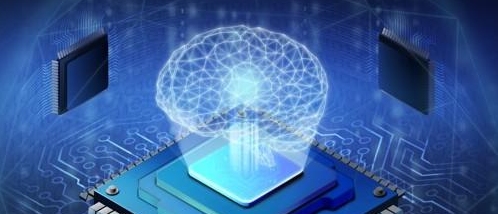
Humanity stands at the brink of a monumental civilizational shift in the 21st century. The steam engine sparked the Industrial Revolution in the 18th century, electricity and oil ushered in the mass production era in the 20th century, and the internet led to the information revolution. Now, artificial intelligence (AI) is emerging as the starting point of a new civilizational revolution that surpasses all previous changes.
Today, AI is not just a technology; it is a universal technology that transforms economies, industries, defense, diplomacy, education, healthcare, culture, and even the concepts of human thought and labor. In the past, steel production determined national power, and oil acquisition influenced a nation's fate. Today, semiconductors and AI are the key determinants of national competitiveness.
Recently, semiconductor expert Professor Kwon Seok-jun from Sungkyunkwan University raised a significant point in an interview. He emphasized that while South Korea has demonstrated a 'Survival Mind' in overcoming crises, the AI era requires a 'Great Mind' to lead the world.
Many experts share this perspective. South Korea has successfully achieved industrialization, democratization, and informatization, but it must now evolve from a follower to a nation that designs a new civilization.
Experts also analyze that the recent rise in the South Korean stock market is related to this trend. The semiconductor supercycle, led by Samsung Electronics and SK Hynix, reflects not just a recovery in the industry but also the anticipated future value in the AI era. The stock market does not evaluate only the present; it anticipates the future. The current value of semiconductor companies is being reassessed as not merely manufacturers of memory chips but as key infrastructure providers for the upcoming AI era.
Particularly, the advancement of generative AI is dramatically increasing the importance of memory semiconductors. As AI evolves from GPT-3.5 to GPT-4 and GPT-5, it must remember more documents, maintain longer conversations, and understand more complex contexts. Experts believe that the core of AI competition will increasingly hinge on storage and memory capabilities rather than just computational speed. As AI begins to think more like humans, the significance of memory will only grow.
For the past 80 years, the computer industry has developed based on the von Neumann architecture, which separates computational and storage units. However, as the performance of CPUs and GPUs has improved, memory has struggled to keep pace, leading to bottlenecks. High Bandwidth Memory (HBM) has emerged as a solution to this issue. Today, the competitiveness of AI data centers can be said to hinge on HBM. However, experts argue that true competitiveness in the AI era will not come from HBM alone but from comprehensive memory solutions that include DRAM, NAND flash, SRAM, and VRAM. In this area, South Korea possesses world-class competitiveness.
The AI revolution does not only boost semiconductors. As data centers proliferate, power demand skyrockets, leading to growth in the power transmission and distribution, transformer, and wiring industries. Autonomous vehicles, robotics, smart factories, and smart logistics are also advancing. Ultimately, the AI revolution is not just an industrial revolution; it is a civilizational transformation that changes entire industries.
In the midst of this massive change, the world is being restructured around four main axes: the United States, China, Taiwan, and Japan.
The United States: The Center of the AI Empire
The leading nation in the AI competition is undoubtedly the United States.
The U.S. possesses all the elements of an AI ecosystem. Companies like OpenAI, Google, Meta, Microsoft, Amazon, NVIDIA, Apple, and Tesla dominate the global AI industry across all levels.
Particularly, NVIDIA is being hailed as the new oil company of the AI era. Just as oil was the lifeblood of industrial society, computational power is the lifeblood of the AI era, and NVIDIA is a key supplier of that power.
However, America's true strength lies not only in technology but also in its ecosystem of world-class universities, research institutions, and venture capital systems. Stanford, MIT, Berkeley, Carnegie Mellon, Harvard, and Princeton produce some of the world's top AI talent each year. Silicon Valley fosters a unique culture that encourages innovation while accepting failure.
The U.S. is the only country that possesses technology, capital, talent, and platforms. It is likely to remain the strongest contender for AI supremacy over the next 20 years.
However, the U.S. has weaknesses. While it excels in design, it relies heavily on Taiwan and South Korea for production. This is why the U.S. has recently invested hundreds of trillions of won in revitalizing its semiconductor manufacturing industry.
China: The AI Journey of 1.4 Billion People
China is the only competitor that can match the U.S.
China's greatest assets are its population and market. The vast data generated by its 1.4 billion people is a significant resource in the AI era. Additionally, the Chinese government has the capacity to push long-term strategies over decades.
China is pursuing a national strategy for semiconductor and AI advancement. Companies like Huawei, SMIC, Baidu, Alibaba, Tencent, and DeepMind are central to China's AI ecosystem.
In particular, China has already reached a considerable level in manufacturing AI, robotics, and smart city sectors. Its pace of factory automation is among the fastest in the world, and it demonstrates competitive strength in electric vehicles, drones, and industrial robots that even make the U.S. uneasy.
China's weakness lies in advanced semiconductors. U.S. export restrictions are a significant burden for China. However, paradoxically, this has strengthened China's resolve for technological self-reliance.
The next 20 years are likely to see a new Cold War between the U.S. and China over AI supremacy.
Taiwan: The Heart of the Global Economy
Taiwan may be a small island nation, but its significance in the global economy is substantial.
This is largely due to TSMC, the absolute leader in the world's advanced foundry market. Major global companies like Apple, NVIDIA, AMD, and Qualcomm all rely on TSMC's production capabilities. Today, the AI industry cannot function without TSMC.
However, Taiwan's greatest variable is geopolitical risk. Any conflict in the Taiwan Strait could disrupt the entire global supply chain. This is why the U.S., Japan, and Europe are pushing for supply chain diversification.
In this context, South Korea's strategic value is increasing, as the world can no longer rely solely on specific regions.
Japan: Dreaming of a Semiconductor Revival
In the 1980s, Japan was the undisputed leader in the global semiconductor industry. Companies like Toshiba, NEC, Hitachi, and Fujitsu dominated the market. However, Japan lost its leadership due to its inability to adapt to the digital revolution.
Recently, Japan has been pursuing a national strategy for semiconductor revival. It still maintains world-class competitiveness in materials and equipment. Many of the essential materials and precision equipment needed for semiconductor manufacturing come from Japanese companies.
The challenges Japan faces include a declining population and aging workforce. Additionally, its relatively conservative corporate culture is seen as a factor limiting innovation speed.
Nevertheless, Japan remains a formidable competitor, particularly in the materials and equipment sectors, where it is still among the best in the world.
Opportunities for South Korea
So, where does South Korea stand?
South Korea possesses the world's leading competitiveness in memory semiconductors. Samsung Electronics and SK Hynix are essentially leading the HBM market, a critical component in the AI era.
As AI advances, the demand for memory is expected to explode, as AI is fundamentally a remembering machine.
However, it must be said that South Korea is still a semiconductor power, not yet an AI power. While strong in hardware, it is weak in platforms. It excels in manufacturing but lacks in software.
We are strong in technology but need to face more challenges in the global ecosystem.
Thus, the task ahead is clear: South Korea must evolve from a semiconductor power to an AI power.
Physical AI Era: A New Leap for South Korea
The key term for the next 20 years will be Physical AI. The era when AI existed only on screens is coming to an end. AI is now becoming robots, vehicles, factories, and logistics centers. It is evolving into drones and smart agricultural machinery, replacing human hands and feet.
South Korea has a unique industrial structure that includes automotive, shipbuilding, machinery, batteries, semiconductors, and telecommunications. This is a rare combination globally.
Therefore, in the Physical AI era, South Korea has ample potential to emerge as a leading nation. In particular, the AI transformation (AX) of manufacturing is a key task that will determine South Korea's future. AI must be integrated into shipbuilding, automotive, steel, and petrochemical industries. Automation in factories, dark factories, and robot-based production systems must be established and exported to global markets.
Declaration of a Second Founding
South Korea now needs a new national vision. The industrialization of the 1960s was the first miracle. The democratization of the 1980s was the second miracle. The informatization of the 1990s was the third miracle.
Now, South Korea must challenge the fourth miracle: a national transformation into an AI powerhouse.
The government must cultivate AI as a top national strategic industry. Companies should expand their research and development investments. Universities must nurture world-class AI talent. Research institutions should focus on developing foundational technologies.
Political factions must cease their disputes and cooperate on national strategy. Businesses need to forge new social agreements for future competitiveness. South Korea already has experience in successfully achieving industrialization, democratization, and informatization.
The question is not whether we can do it; the question is whether we will do it.
The next decade will be a golden time that determines South Korea's fate.
AI is not just an industry; it is a national survival strategy. The AI supremacy competition between the U.S. and China will shape the world order for the next century. South Korea can either be a bystander in this competition or actively participate as one of the three major powers in AI.
Now, South Korea must move beyond a Survival Mind to a Great Mind. It must become a leader rather than a follower, a nation that sets technology standards rather than one that imports them. It should become a new civilization that connects AI, semiconductors, robotics, space industries, biotechnology, and energy.
History has always favored prepared nations. The Industrial Revolution was one such instance, as was the information revolution. The AI revolution will be no exception.
South Korea's time is not over yet. Perhaps the true time for South Korea is just beginning now.
※ This article was generated using generative AI and has been reviewed by an editor.
* This article has been translated by AI.
Copyright ⓒ Aju Press All rights reserved.