

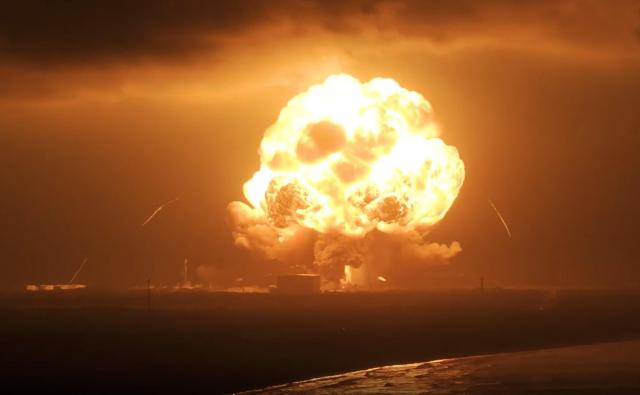
Blue Origin's next-generation rocket, New Glenn, experienced a significant explosion during an engine test. This incident is expected to disrupt the timeline of NASA's crewed lunar exploration program, Artemis.
According to reports from Reuters and other outlets, the explosion occurred on May 28 during an engine static fire test at Launch Complex 36 at Cape Canaveral Space Force Station in Florida, just ahead of a planned launch next week.
Blue Origin announced on social media platform X (formerly Twitter) that "an anomaly occurred during the static fire test" and stated, "We will provide updates as more information becomes available." The company confirmed that there were no reported injuries.
Founder Jeff Bezos also addressed the incident on X shortly after it occurred. He noted that it is too early to determine the root cause but confirmed that an investigation is underway. He emphasized, "We will restore everything that needs to be rebuilt and resume flights."
New Glenn is a large reusable launch vehicle under development by Blue Origin. Industry experts have viewed it as a potential competitor to SpaceX's Falcon 9 and Starship.
The explosion raises concerns about potential delays in NASA's Artemis project. Reuters reported that delays in Blue Origin's development schedule could impact the overall lunar exploration plans.
NASA plans to use lunar landers developed by Blue Origin and SpaceX for the Artemis 4 mission, scheduled for 2028. Recently, NASA signed a contract with Blue Origin worth approximately $280 million to transport exploration equipment to the lunar surface using the uncrewed lunar lander Mark 1 as part of the Artemis program.
The repercussions of this explosion may also affect Amazon's low Earth orbit satellite internet project, Project Kuiper. Industry sources indicate that Amazon is obligated to place more than half of its planned constellation of 3,200 satellites into orbit by July.
Antoine Grunier, a partner at the consulting firm Analysis Mason, noted that SpaceX's Starship took about a year to recover from a launch pad explosion. He predicted that while Blue Origin will eventually recover, it will likely take several months. He added, "Many other launch service providers have also exhausted their spare capacity, which could lead to increased demand for SpaceX's services, resulting in time and financial pressures."
* This article has been translated by AI.
Copyright ⓒ Aju Press All rights reserved.