For Asia, the number itself matters almost as much as the tournament. What once felt like a narrow gate to the sport's grandest stage has widened significantly, as more Asian teams will now compete than ever before, with eight countries from the region - Australia, Iran, Japan, Jordan, Qatar, Saudi Arabia, South Korea and Uzbekistan - having qualified.
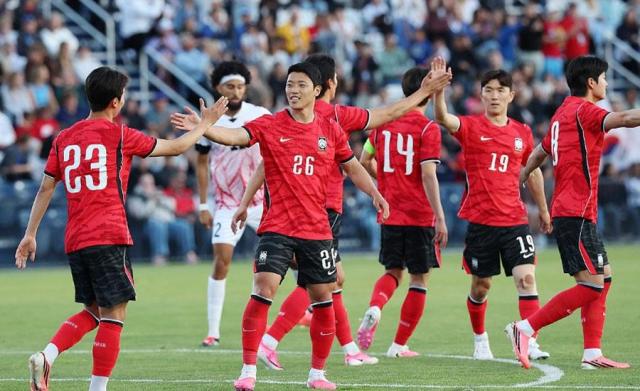
And for South Korea, which made its 11th consecutive World Cup appearance, the moment brings mixed emotions, pride in reaching the tournament again, but also concern about what lies ahead.
The country remains one of the most consistent teams on the global stage, qualifying every four years, while players and coaches have changed and the sport has become faster and more technical. But the steady presence can sometimes hide underlying stagnation.
With the expansion of the World Cup, qualification has taken on a different meaning, especially in Asia. In the past, teams had to compete for only a few spots, making qualification highly competitive. This pressure pushed countries like Japan, Iran, Saudi Arabia and South Korea to constantly improve, develop talent, and stay competitive.
The expanded format gives Asia around eight World Cup berths, which is good news for countries that once saw qualification as nearly impossible. As a World Cup appearance can boost domestic interest, attract investment, and inspire the next generation of players, countries such as Iraq, Uzbekistan, and Viet Nam could benefit the most, potentially making Asian football more diverse and unpredictable.
FIFA, the governing body of the World Cup, is fully aware of this. More teams mean bigger markets, larger audiences, and greater global influence. However, critics say the expansion could weaken the tournament's quality, as weaker teams may lead to more one-sided matches. There are also concerns that qualification may lose some of its meaning if too many countries see it as achievable.
But from Asia's perspective, the change is hard to resist. For decades, European and South American powerhouses have enjoyed structural advantages such as stronger leagues, deeper talent pools and greater representation at major tournaments. Expansion gives the rest of the football world a rare chance to close that gap.
Japan increasingly speaks about winning the World Cup as a realistic goal, not just relying on advancing to the group stage. Saudi Arabia's investment in football has become impossible to ignore, while Iraq and Uzbekistan are grooming ambitious new generations, which is gradually breaking down the long-standing hierarchy in Asian football.
South Korea, meanwhile, has seen its football profile improve, driven by star players including striker Son Heung-min. However, that success has at times masked deeper structural issues.
Should the country now invest more aggressively in youth coaching and infrastructure for domestic players? Should the national team develop long-term strategies that are less dependent on individual stars? These questions are more difficult than assessing tournament outcomes, but they are ultimately the ones that matter.
The expanded 48-team World Cup signals a new era in which South Korea no longer needs to prove it just belongs to the tournament. Now it must prove what it can do once it gets there.
Copyright ⓒ Aju Press All rights reserved.