

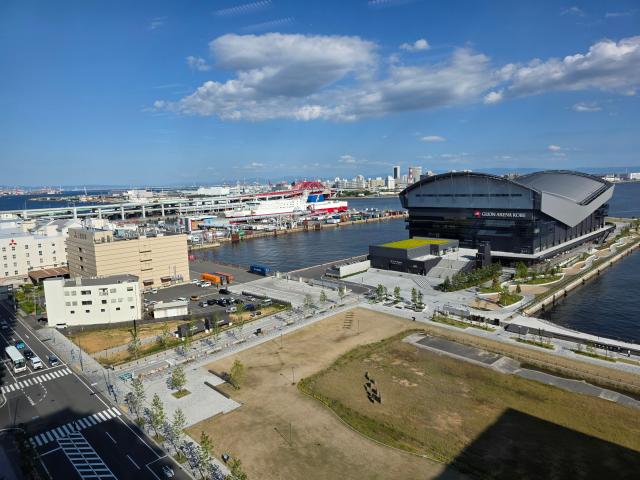
Opened in 1868, Kobe Port is one of Japan's three major trading ports, handling an average of over 2.1 million TEUs annually. The modern port began to take shape in the early 1900s, with significant developments in the new and central wharves by 1940.
Kensuke Kitagawa, an official from the Kobe Port Authority, explained, "From 1965 to 2005, we expanded the port's logistics capabilities by reclaiming land from the sea."
The period from the 1960s to the 1980s was marked by a focus on containerization in port logistics. Until 1963, smaller vessels were used for transportation, but the introduction of container ships transformed maritime logistics. Consequently, the existing port areas began to transition into urban spaces.
Since 1970, the development of Meriken Park Harborland has added entertainment features, attracting tourists. The redevelopment of a former container terminal into Harborland has integrated dining, shopping, and recreational activities in one location.
However, the port's redevelopment faced a setback due to the Great Hanshin-Awaji Earthquake in 1995. Although port facilities were restored within two years, the recovery process incurred significant debt, straining Kobe's finances and delaying redevelopment projects.
The repayment of this debt was completed in 2011, allowing redevelopment efforts to accelerate. Kitagawa noted, "You are currently at the G-Lion Hours building, which houses a museum, aquarium, food court, and residential units." He added, "Across from you is the G-Lion Arena Kobe, a next-generation arena with a capacity of 10,000, operated through private investment on Kobe's land."
Kobe Port Tower, established in 1964, is another key tourist attraction. Following renovations to enhance earthquake resilience in 2024, the tower opened some outdoor observation decks. Visitor numbers, which had previously plateaued at around 300,000 annually, doubled to 600,000 after the reopening.
Kobe City plans to continue its port redevelopment efforts with a focus on "creating new value that connects history and the future" by 2040. Naoki Sekiguchi, an official from the Kobe Port Authority, stated, "We will operate the port primarily for logistics while enhancing tourism and entertainment features. Given that the port has a history of over 100 years, we aim to preserve as many of the historical buildings as possible during redevelopment."
* This article has been translated by AI.
Copyright ⓒ Aju Press All rights reserved.